Flooring Fitness Explained: What to Know Before You Buy
There is nothing quite like the sinking feeling of dropping a 50-pound dumbbell and hearing the unmistakable crack of your garage concrete. Or worse, dealing with aching knees because your plyometrics routine is happening on a bare basement floor. When building out a training space, flooring fitness is often treated as an afterthought, but it is actually the foundation of your entire setup.
Whether you are outfitting a heavy-lifting garage gym or a quiet second-floor yoga space, the right surface protects your subfloor, your joints, and your expensive gear. In this guide, we will break down exactly what you need to know before rolling out the rubber.
Key Takeaways
- Thickness is crucial: Aim for at least 3/8-inch rubber for general strength training, and 3/4-inch for heavy deadlifts.
- Material dictates performance: Avoid cheap EVA foam if you plan on lifting heavy weights, as it compresses and poses a stability risk.
- Installation varies: Interlocking tiles offer easy DIY installation, while rolled rubber provides a seamless, professional look.
- Odor control: Virgin rubber has less off-gassing smell than recycled tire rubber, making it better for enclosed indoor spaces.
Choosing the Right Material
Rubber vs. Foam vs. Gym Carpet Mats
Not all surfaces are created equal. High-density rubber is the gold standard for heavy weights, offering incredible shock absorption and durability. If you are building a dedicated lifting platform, this is non-negotiable. On the other hand, if your routine focuses on mobility, stretching, or light dumbbells, high-quality gym carpet mats or specialized cushioned flooring for gym setups might be more appropriate. These softer options provide excellent tactile grip for bare feet and are much more forgiving during floor exercises.
Matching Your Space and Equipment
Supporting Heavy Racks and Machines
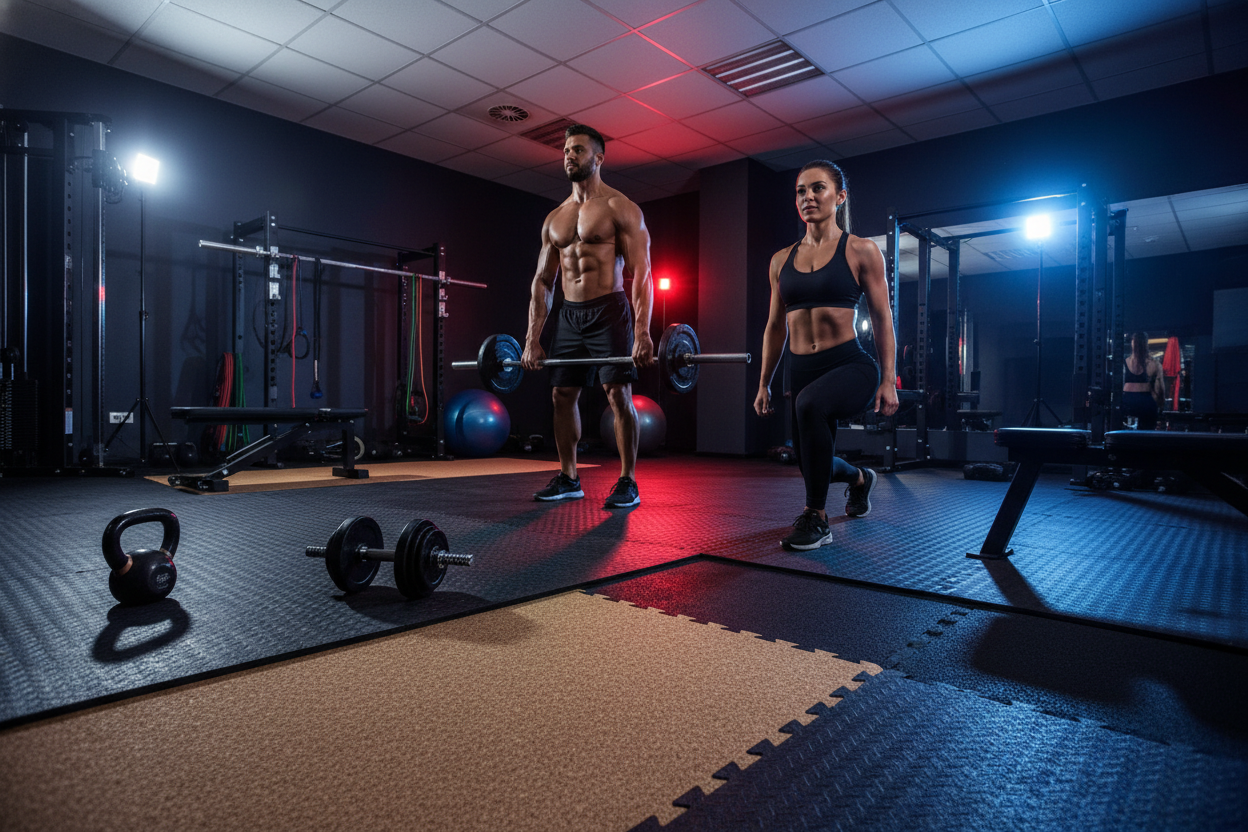
When shopping for flooring exercise equipment compatibility is a major factor. If you place a 400-pound power rack on soft foam tiles, the rack will eventually punch right through to the subfloor. For heavy machines, you need dense vulcanized rubber. When browsing for fitness flooring: rolled rubber is often the top recommendation for large spaces because it minimizes seams where chalk and sweat can accumulate. For a premium aesthetic, a dedicated flooring for fitness studio setup often blends wood-look vinyl over a shock-absorbing underlayment.
From Our Gym: Honest Take
Over the last five years, I have tested everything from cheap hardware store puzzle mats to premium commercial rolled rubber in my own two-car garage gym. Let me be completely honest: skipping high-density rubber was my biggest early mistake. I initially used thin EVA foam tiles to save a few bucks. Within three months, my bench press dug permanent divots into the foam, making the bench wobble dangerously during heavy sets.
I eventually upgraded to 3/4-inch vulcanized rubber horse stall mats. The grip is phenomenal, even when chalked up and sweaty. However, the caveat is the smell. Recycled rubber off-gasses a strong tire odor for the first few weeks. If you are setting up in a spare bedroom with poor ventilation, I highly recommend spending the extra money on virgin rubber or premium interlocking tiles to avoid the headache.
Frequently Asked Questions
How thick should my home gym flooring be?
For general home gym use, 3/8-inch (8mm to 10mm) rubber is the sweet spot. It supports heavy racks and protects against dropped dumbbells. If you are doing Olympic weightlifting or heavy deadlifts, you need at least 3/4-inch thickness, ideally layered over plywood.
Can I just use regular foam puzzle mats?
Foam mats are only suitable for bodyweight exercises, yoga, or very light dumbbell work. They compress under heavy loads, which creates an unstable surface for lifting and can permanently damage the mat.
Do I need to glue down my gym flooring?
In most residential home gyms, no. Heavy rubber mats (like 4x6 foot stall mats weighing 100 pounds each) will stay in place under their own weight and the weight of your equipment. Interlocking tiles also float securely. Double-sided carpet tape can be used at the edges if you experience shifting.