
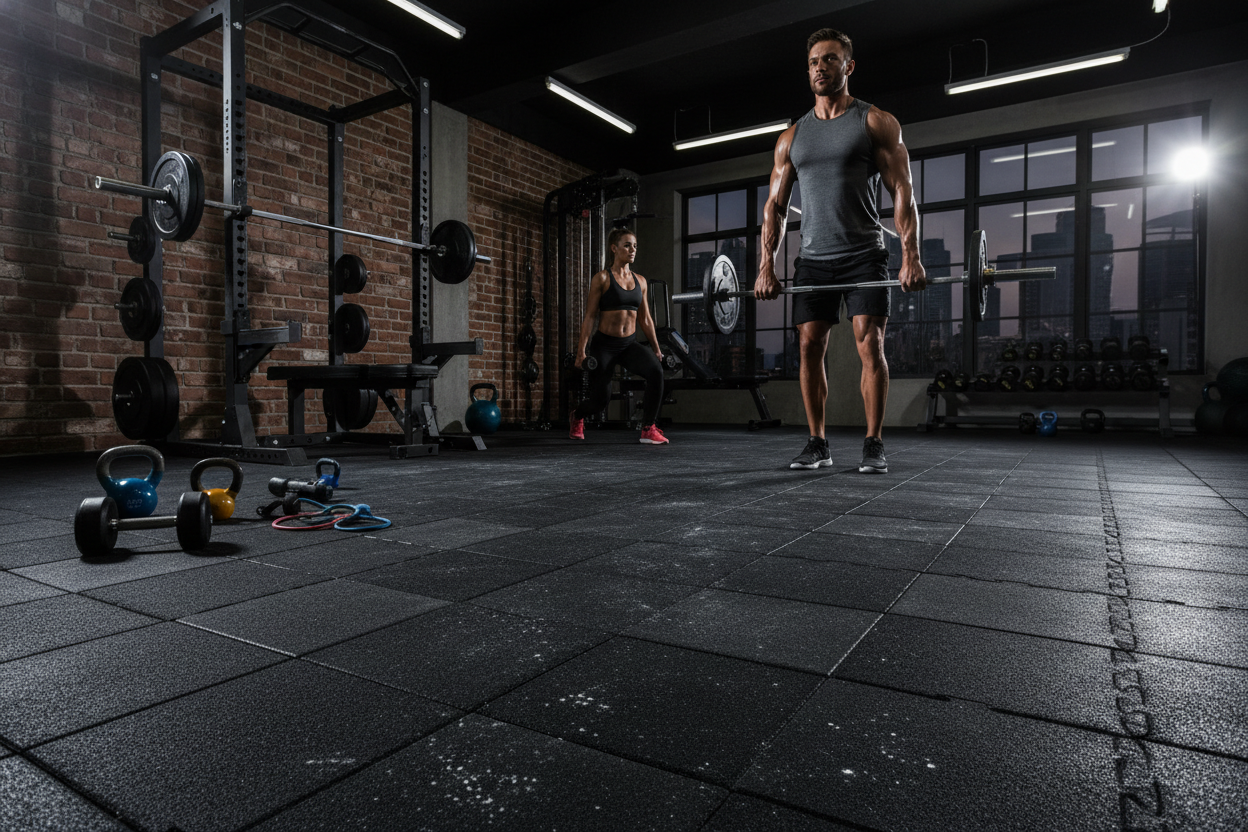
Floor Tiles for Gym: What to Know Before You Buy
Setting up a home lifting space? Nothing kills the excitement faster than dropping a loaded barbell and permanently cracking your garage concrete. Whether you are dealing with a damp basement or a tight apartment corner, investing in proper floor tiles for gym environments is the most critical decision you will make. It dictates what equipment you can safely use, how much noise travels through your walls, and how your joints feel after high-impact plyometrics. This guide breaks down exactly what to look for before laying down your foundation.
Key Takeaways
- Thickness matters: 8mm is the minimum for general fitness, while 3/4-inch is required for heavy barbell drops.
- Material is king: Rubber gym tile flooring outperforms foam in durability, grip, and shock absorption.
- Interlocking vs. Straight Edge: Interlocking tiles offer easier DIY installation without the need for messy adhesives.
- Odor considerations: High-quality vulcanized rubber minimizes the strong tire smell common in budget options.
Choosing the Right Thickness and Material
When shopping for a gym floor tile, you will quickly realize that not all squares are created equal. The biggest mistake home gym owners make is buying cheap EVA foam tiles intended for children's playrooms, expecting them to survive a heavy deadlift session.
Rubber vs. Foam
For any serious strength training, rubber gym tile flooring is non-negotiable. High-density rubber absorbs shock, prevents heavy racks from sliding, and will not compress permanently under the weight of a treadmill. Foam workout flooring tiles are only suitable for bodyweight exercises, yoga, or very light dumbbell work.
Decoding Tile Thickness
If you are setting up a standard garage gym with a power rack and dumbbells, an 8mm to 3/8-inch thickness is the industry sweet spot. However, if you plan on dropping Olympic lifts from overhead, you need to step up to 1/2-inch or even 3/4-inch thick tiles to properly protect your concrete subfloor.
Space Planning for North American Homes
Garage Gyms vs. Spare Bedrooms
Tile gym flooring is incredibly versatile because it adapts to awkward room dimensions. In a typical two-car garage, you might only need an 8x8 foot section dedicated to lifting. Using a modular gym mat tile system allows you to build a custom platform without wall-to-wall installation. For indoor spare bedrooms, consider interlocking tiles with a tighter seam to prevent sweat and chalk from reaching the carpet or hardwood underneath.
From Our Gym: Honest Take
When we built out our testing facility in a standard two-car garage, we initially tried to save money with 1/2-inch agricultural stall mats. While durable, the inconsistent edges made for a slight tripping hazard and trapped dirt. We eventually swapped to precision-cut, 3/8-inch interlocking rubber tiles. The difference in stability was night and day. My stance felt completely locked in during heavy squats because the floor wasn't shifting or compressing under my feet.
However, I'll be honest about the caveat: fresh rubber tiles have a distinct smell. For the first three weeks, the garage smelled a bit like a tire shop. If you are installing these indoors, you absolutely need to wash them with a mild degreaser and leave your windows open with a fan running for a few days before the off-gassing settles down.
Frequently Asked Questions
Is foam tile gym flooring good for heavy lifting?
No. Foam tiles compress easily under heavy weight, creating an unstable lifting surface that can lead to ankle or knee injuries. They also tear easily if you drop a metal dumbbell or kettlebell on them.
How do I clean a rubber gym mat tile?
Maintenance is simple. Vacuum up chalk and dust weekly. For a deeper clean, use a damp mop with a pH-neutral cleaner or a simple mix of water and mild dish soap. Avoid harsh chemicals like bleach, which can break down the rubber over time.
Do I need to glue down workout flooring tiles?
In most home gym scenarios, no. Heavy rubber tiles, especially those with interlocking edges, are heavy enough to stay put under their own weight and the friction of your equipment. Skipping the glue also makes it much easier to move your gym if you relocate.


