Floor Mat Home Gym Guide: Stop Ruining Your Floors
If you have ever winced at the sound of a 45-pound bumper plate crashing directly onto bare concrete, you already know the anxiety of an unprotected workout space. Whether you are battling noise complaints from family members or worrying about foundation cracks, your flooring is the literal foundation of your training. Nailing your floor mat home gym setup is the single most important preventative investment you can make.
In this guide, we will break down exactly how to choose the right protective layer for your specific space, budget, and training style so you can lift heavy with absolute peace of mind.
Key Takeaways
- Material matters most: High-density vulcanized rubber is mandatory for heavy lifting, while EVA foam only suits light yoga or bodyweight work.
- Thickness dictates protection: Aim for at least 3/4-inch thickness if you plan on dropping barbells or heavy dumbbells.
- Interlocking vs. straight edge: Interlocking tiles prevent shifting in high-traffic areas, while straight-edge mats offer a seamless, professional look.
- Subfloor compatibility: Never install heavy rubber directly over plush carpet without a rigid plywood sub-layer to prevent instability.
Choosing the Right Material for Your Space
Not all flooring is created equal. The biggest mistake beginners make is buying cheap, puzzle-piece foam tiles and expecting them to survive a heavy deadlift session.
EVA Foam vs. Vulcanized Rubber
EVA foam is lightweight, inexpensive, and easy to find. However, it compresses permanently under heavy racks and offers zero impact absorption for dropped weights. If you are building a serious lifting space, high-density vulcanized rubber is the gold standard. It absorbs shock, dampens acoustics, and provides the necessary grip for heavy squats. When shopping for a home gym floor mat, prioritize recycled rubber crumb for the best balance of price and durability.
Sizing and Space Planning
Before ordering, you need to map out your exact footprint. Rubber mats are incredibly heavy and difficult to cut, so precise measurements save you hours of frustrating labor.
Garage Gyms vs. Spare Bedrooms
If you are outfitting a two-car garage, standard 4x6 foot horse stall mats or large commercial rolls are highly efficient. They cover ground quickly and minimize seams. For spare bedrooms or basement corners, smaller interlocking rubber tiles (typically 2x2 feet) are much easier to carry up stairs and maneuver around tricky baseboards. Leave a quarter-inch expansion gap around the perimeter, as rubber expands and contracts with temperature changes.
Durability and Maintenance
A premium rubber floor should outlast most of your equipment, provided you treat it correctly.
Keeping Your Mats Pristine
Sweat, chalk, and shoe dirt will eventually build up. Avoid harsh chemical cleaners that can degrade the rubber binder over time. Instead, use a pH-neutral cleaner mixed with warm water and a microfiber mop. For deep cleaning, a soft-bristled deck brush works wonders without scarring the surface.
From Our Gym: Honest Take
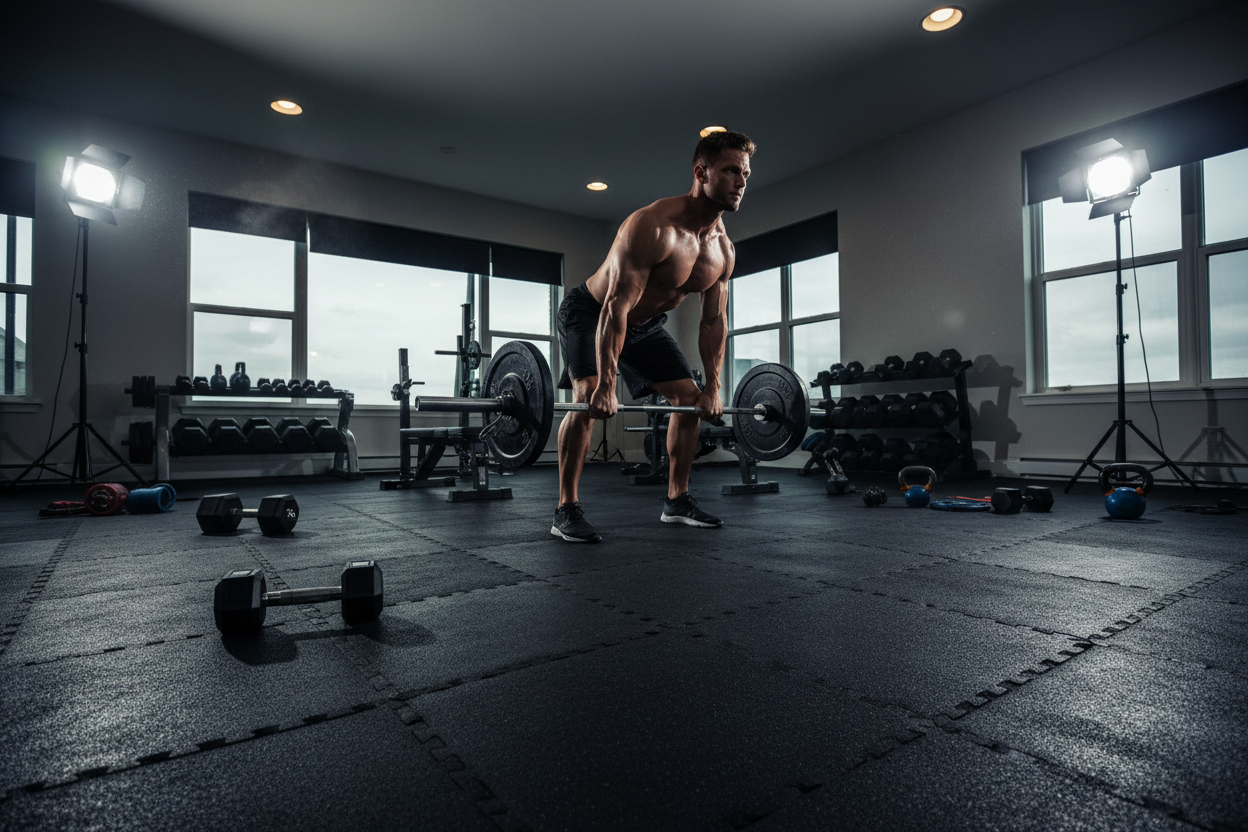
When we first built out our headquarters testing facility, we tried to save money by using 1/2-inch agricultural mats instead of dedicated fitness flooring. It was a mistake. At 6-foot-2 and pulling over 500 pounds on deadlifts, I quickly noticed the mats bottoming out, sending shockwaves right into the concrete slab. We eventually upgraded to 3/4-inch vulcanized rubber tiles.
The grip on the premium tiles was noticeably superior—my feet felt glued to the floor during heavy bench presses. However, I will be completely honest: the initial rubber off-gassing smell was brutal. If you buy fresh rubber mats, plan to leave them outside or in a highly ventilated garage for at least two weeks before locking them in a poorly ventilated basement room.
Frequently Asked Questions
Is a floor mat home gym setup really necessary?
Absolutely. Even if you do not drop weights, the concentrated pressure from heavy equipment like power racks or treadmills will permanently damage concrete, wood, or tile subfloors over time.
How thick should my flooring be?
For general fitness and machine use, 3/8-inch is sufficient. If you are doing Olympic weightlifting, CrossFit, or heavy powerlifting, you need at least 3/4-inch rubber to adequately protect the subfloor.
Can I put rubber gym mats directly over carpet?
It is highly discouraged. Placing flexible rubber over soft carpet creates an unstable, spongy surface that is dangerous for heavy lifting. If you must build over carpet, lay down a layer of 5/8-inch OSB or plywood first to create a rigid subfloor.