Flat Lower Belly Exercises: The Home Gym Training Guide
If you've ever spent thirty minutes doing standard crunches on your garage floor only to end up with a sore neck and zero core activation, you aren't alone. The lower abdominals are notoriously tricky to isolate, especially if you are relying on outdated movements that prioritize hip flexors over deep core engagement.
To truly build strength and stability, you need targeted flat lower belly exercises. In this guide, we break down the mechanics of a proper core routine, the minimal equipment you need for your home gym, and how to execute these movements safely to protect your lower back.
Key Takeaways
- Focus on the transverse abdominis, the deep core muscle responsible for stabilizing the pelvis.
- A proper flat lower stomach workout requires minimal space—just the footprint of a standard yoga mat or weight bench.
- Quality over quantity: Slow, controlled movements yield better results than rapid momentum.
- Lower back contact with the floor is non-negotiable to prevent injury and ensure proper muscle activation.
The Anatomy of a Flat Lower Stomach Workout
When piecing together a functional flat lower stomach workout, it is crucial to understand that you cannot spot-reduce fat. However, you can dramatically improve the tone, strength, and resting posture of your midsection by targeting the correct muscle groups.
Targeting the Transverse Abdominis
The secret to a tighter midsection lies in the transverse abdominis. Think of this muscle as your body's built-in weightlifting belt. Exercises like dead bugs, reverse crunches, and hollow body holds force this deep layer to contract, pulling the abdominal wall inward while protecting your lumbar spine during heavy home gym lifts like squats and deadlifts.
Effective Movements for Your Space
You don't need massive commercial machines to sculpt your core. Whether you are in a cramped apartment corner or a spacious basement gym, you can execute a highly effective flat lower belly workout with almost zero footprint.
Floor-Based vs. Bench Movements
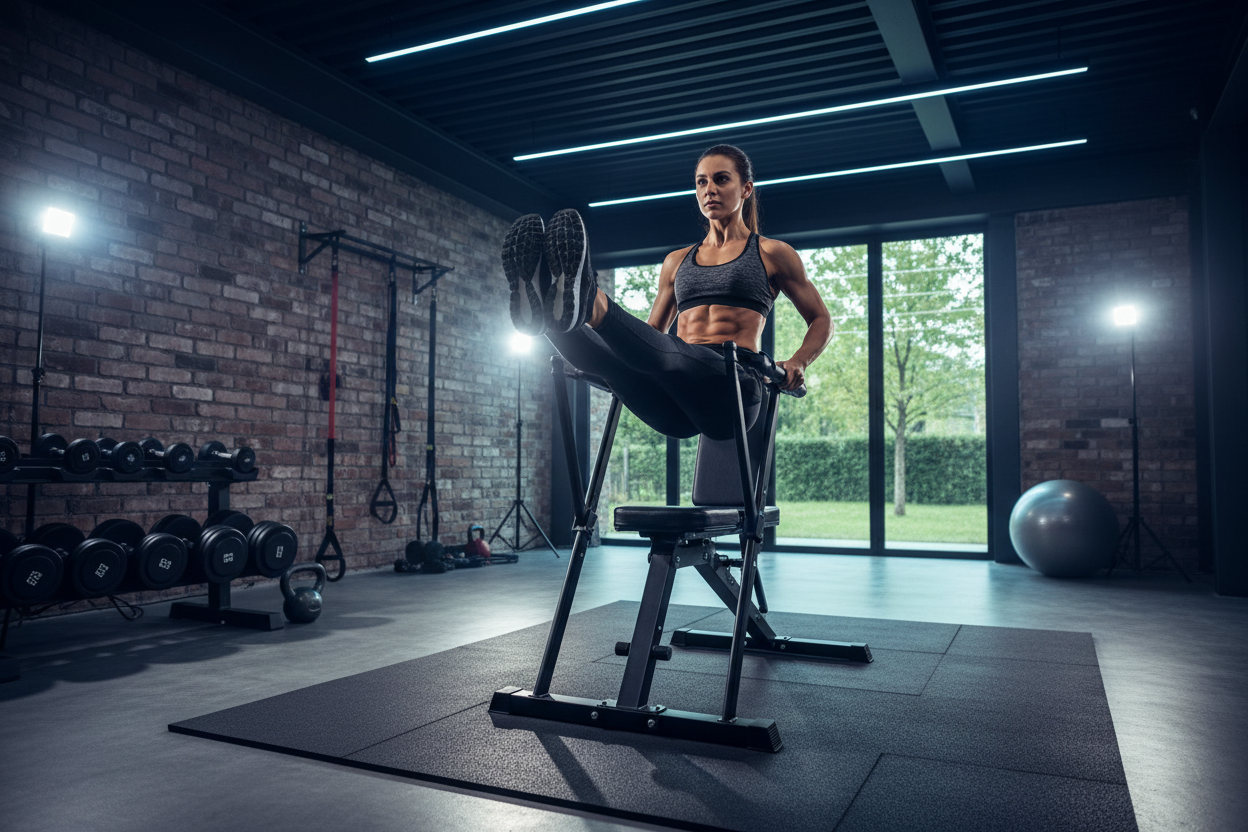
If you are looking for an easy exercise for stomach activation, start on the floor. Lying leg raises and heel taps require only a high-density exercise mat. By pressing your lower back firmly into the floor, you eliminate momentum. If you want to increase the range of motion, move to your flat utility bench. Performing reverse crunches on a bench allows your hips to drop slightly below parallel, increasing the stretch and subsequent contraction of the lower abs.
From Our Gym: Honest Take
We test a lot of equipment, but sometimes the most humbling workouts require the least gear. For years, I struggled to feel my lower abs engaging during hanging leg raises on our power rack. My hip flexors always took over. It wasn't until I stripped it back to the floor that I noticed a difference.
I grabbed one of our extra-thick home gym mats—vital because my garage floor is freezing concrete—and focused solely on pelvic tilts and slow dead bugs. I realized that my lower back was arching a full two inches off the ground during leg extensions. Once I corrected that pelvic tilt, the burn was immediate. The lesson? Don't rush to the pull-up bar for core work until you've mastered the floor mechanics.
Frequently Asked Questions
Do I need specialized equipment for these movements?
No. The beauty of these movements is their simplicity. A supportive, high-density mat is highly recommended to protect your tailbone on hard floors, and a standard flat weight bench can be used to increase your range of motion as you advance.
How often should I do a flat lower belly workout?
Treat your core like any other muscle group. Training it 2 to 3 times a week allows for adequate stimulus and recovery. Overtraining can lead to lower back fatigue, which might compromise your form on heavy compound lifts.
Will these exercises burn lower belly fat?
While these exercises build and strengthen the abdominal muscles, revealing them requires a caloric deficit. Combine this core training with a balanced diet and consistent metabolic conditioning or strength training for the best visual results.