Flat Ab Workout Plan: The Blueprint for Core Strength
If you are tired of doing endless crunches on a thin living room rug only to see zero changes in your midsection, you are not alone. The biggest home gym plateau usually stems from a lack of intentional programming. A proper flat ab workout plan is not just about doing 100 sit-ups a day; it is about strategic tension, progressive overload, and having the right setup to execute movements safely. In this guide, we will break down exactly how to structure your core training for real results without needing a commercial facility.
Key Takeaways
- Diet and body fat percentage dictate visibility, but a structured flatten stomach workout plan builds the foundational muscle.
- You only need 15-20 minutes, 3-4 times a week on your flat stomach workout schedule to see significant strength gains.
- A high-density exercise mat and a few dumbbells or kettlebells are the only gear required for a flat stomach workout plan at home.
- Focus on anti-extension and anti-rotation movements over traditional spinal flexion (like basic crunches).
Designing Your Workout Plan for a Flat Stomach
Shifting from Crunches to Core Stability
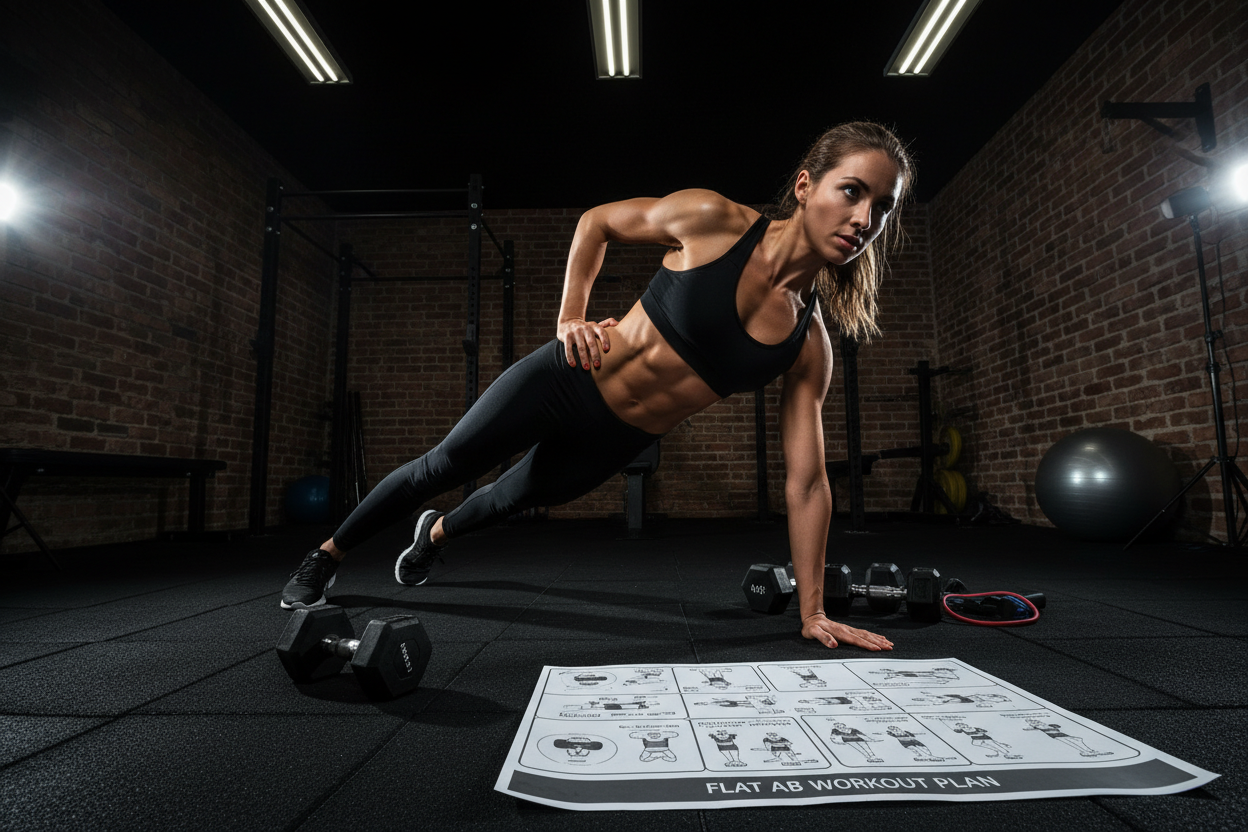
Most people fail because they focus entirely on flexion. A true flat stomach workout program targets the transverse abdominis, obliques, and rectus abdominis as a complete unit. Movements like plank pull-throughs, ab wheel rollouts, and hollow body holds create the deep core tension necessary for a tight, powerful midsection.
Essential Home Gym Gear for Core Training
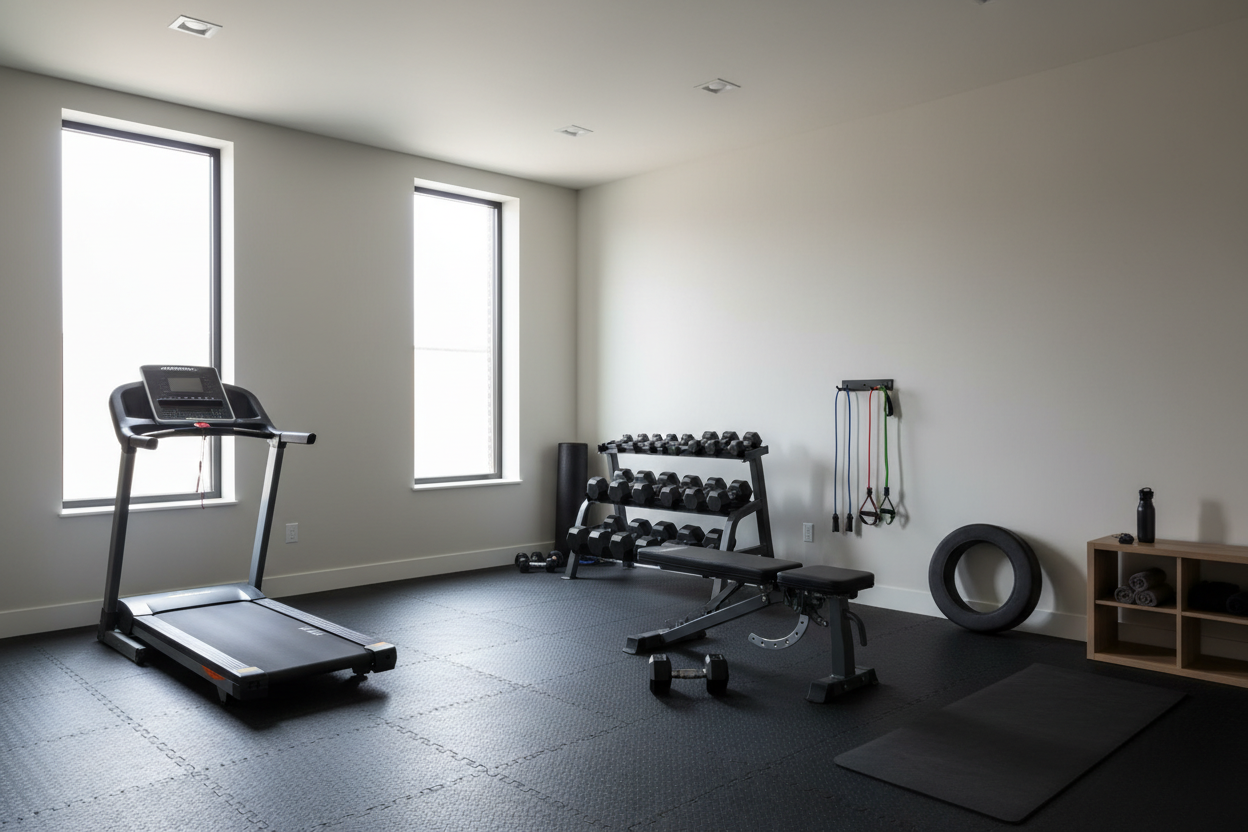
While bodyweight routines are a great starting point, adding resistance accelerates your progress. You do not need a massive cable machine taking up your garage. A set of moderate dumbbells, a high-quality ab roller, and a commercial-grade exercise mat (to protect your tailbone during floor work) are enough to execute a highly effective core routine. Upgrading your floor setup prevents localized pain from distracting you from proper muscle engagement.
Optimizing Your Flat Stomach Workout Schedule
Frequency and Recovery
Treat your abs like any other muscle group. Blasting them seven days a week leads to overtraining and poor form. A balanced flat stomach workout schedule incorporates three to four dedicated core sessions per week, allowing 48 hours of recovery between intense abdominal workouts. This ensures your muscles have time to repair and adapt.
Progression and Overload
To keep seeing results, you must increase the difficulty over time. If a 60-second plank becomes easy, do not just hold it for five minutes. Add a weight vest, elevate your feet on a bench, or transition to an advanced ab wheel rollout. Progressive overload is the secret to a successful flatten stomach workout plan.
From Our Gym: Honest Take
I used to dread core days in my garage gym because doing hollow body holds and V-ups on raw, hard horse stall mats absolutely wrecked my tailbone. Once I started testing our brand's 15mm high-density foam mats, my entire approach changed. I could finally execute my flat stomach workout plan at home without localized pain breaking my concentration. One caveat I will mention: if your garage gets highly humid in the summer, foam mats can get a bit slick during sweaty kettlebell core circuits. Keeping a microfiber towel handy is a must. But overall, upgrading my floor setup was the single best investment for my abdominal training consistency.
Frequently Asked Questions
How long does a workout plan for a flat stomach take to show results?
With consistent training and a dialed-in nutrition plan, you can start feeling a stronger, tighter core within 4 to 6 weeks. Visible aesthetic changes typically take 8 to 12 weeks, heavily depending on your starting body fat percentage and diet.
Do I need heavy equipment for a flat stomach workout program?
Not at all. While an ab wheel, a kettlebell, and a medicine ball can add valuable resistance for progressive overload, you can achieve fantastic foundational results using just your body weight and a supportive exercise mat.
Is a flat stomach workout plan at home as effective as the gym?
Absolutely. Core training is one of the easiest fitness modalities to replicate at home. As long as you maintain intensity, focus on the mind-muscle connection, and progressively overload your movements, your living room or garage gym is just as effective as a commercial facility.