
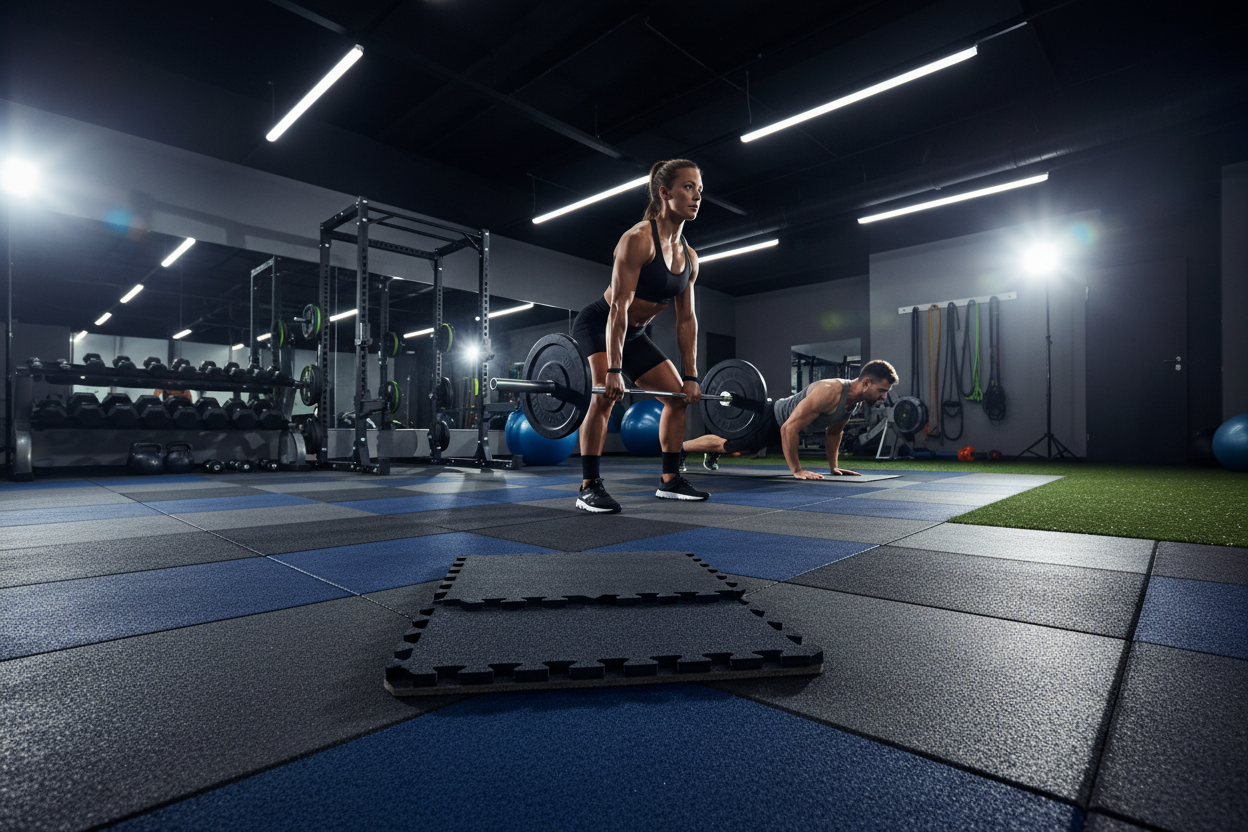
Fitness Studio Flooring Explained: Avoid Costly Mistakes
You have finally bought the power rack, the barbell, and the bumper plates. But the moment you drop a heavy deadlift on bare concrete, you realize you forgot the most foundational piece of your setup. Choosing the right fitness studio flooring isn't just about aesthetics; it is about protecting your subfloor, saving your joints during high-impact workouts, and reducing the crashing noise that drives your family (and neighbors) crazy.
Whether you are outfitting a two-car garage or a spare bedroom, the ground you train on dictates the safety and longevity of your equipment. In this guide, we will break down exactly what you need to know to build a solid foundation for your home workouts, ensuring you invest in the right materials the first time.
Key Takeaways
- Thickness matters: Aim for at least 3/8-inch (8mm) rubber for general strength training and 1/2-inch to 3/4-inch for heavy Olympic lifting.
- Material dictates performance: Vulcanized rubber absorbs shock best, while EVA foam is only suitable for light stretching or bodyweight routines.
- Density equals durability: High-density gym studio flooring prevents heavy equipment from sinking and creating permanent indentations.
- Installation prep is crucial: Proper subfloor cleaning and moisture barriers (especially in basements) extend the life of your flooring.
Decoding Materials: Rubber vs. Foam vs. Vinyl
The Gold Standard: Heavy-Duty Rubber
When it comes to outfitting a serious training space, rubber is the undisputed champion. It offers superior shock absorption, slip resistance, and acoustic dampening. Interlocking rubber tiles are great for easy DIY installation in spare rooms, while rolled rubber provides a seamless, professional look ideal for larger garage setups.
EVA Foam and Vinyl Alternatives
While cheap EVA foam puzzle mats are tempting, they compress under heavy loads, making squats and deadlifts unstable. They are best reserved for light bodyweight exercises. Vinyl flooring with a shock-absorbing backing offers a beautiful, wood-like finish for yoga or dance spaces, but it will not survive dropped dumbbells.
Why Your Source Matters
Not all rubber is created equal. Buying cheap, low-grade mats often results in a gym that smells like a tire fire for months. Partnering with reputable gym flooring manufacturers ensures you are getting low-VOC (Volatile Organic Compound) materials that are safe for indoor, unventilated spaces. A dedicated gym flooring supplier will also provide accurate density ratings, ensuring the matting will not crumble after a few months of heavy use.
Space Planning and Installation Tips
Before ordering, measure your space twice. For garage gyms, account for the slope of the floor toward the door. If you are setting up in a basement, a moisture barrier underlayment is non-negotiable to prevent mold. Leave a 1/4-inch gap around the perimeter of the room when laying your flooring—rubber expands and contracts with temperature fluctuations, and this gap prevents unsightly buckling.
From Our Gym: Honest Take
When we upgraded our main testing facility, we opted for 3/8-inch rolled rubber over our concrete foundation. The grip is phenomenal—my chalked lifters feel completely planted during heavy squat sessions, with zero micro-slipping that you sometimes get on smooth concrete or cheap foam.
However, I will be completely honest: installing rolled rubber is a brutal workout in itself. A 4-foot by 25-foot roll weighs well over 100 pounds. Getting them down a flight of basement stairs required two people and a lot of patience. Also, cutting the rolls to fit around structural pillars using a utility knife took much longer than expected. If you are working solo or have an oddly shaped room, interlocking high-density tiles might save you a weekend of frustration.
Frequently Asked Questions
How thick should my fitness studio flooring be?
For a standard home gym with dumbbells, kettlebells, and a power rack, 3/8-inch (8mm) thickness is the sweet spot. If you are regularly dropping heavy barbells from overhead (Olympic weightlifting), you need at least 1/2-inch to 3/4-inch thickness, ideally paired with a dedicated lifting platform.
Can I install gym flooring directly over carpet?
It is highly discouraged to install heavy rubber mats over plush carpet. The carpet creates an unstable surface, which is dangerous for heavy lifting. It can also trap moisture and damage the carpet underneath. If you must, use a rigid plywood subfloor over low-pile carpet before laying your rubber mats.
How do I clean and maintain rubber gym flooring?
Maintenance is incredibly simple. Vacuum regularly to pick up chalk and dust. For a deeper clean, use a damp mop with a pH-neutral cleaner (like a few drops of dish soap in warm water). Avoid harsh chemicals like bleach or ammonia, which can degrade the rubber over time.


