Fitness Exercise Gear: The Complete Buyer's Guide for 2025
If you've ever stared at an empty garage or a cluttered basement corner wondering how to transform it into a functional training space, you aren't alone. One of the biggest hurdles in starting a home gym is figuring out exactly which pieces of gear will deliver the best return on your investment. Choosing the right equipment for your daily fitness exercise routine shouldn't feel like navigating a minefield of overpriced, space-hogging machines.
Whether your goal is building serious strength, improving cardiovascular health, or just staying consistent with your exercise working out schedule, the right setup changes everything. In this guide, we will break down exactly how to select, space-plan, and program equipment for your home gym without wasting money on gimmicks.
Key Takeaways
- Prioritize versatility: Invest in equipment that supports multiple movement patterns rather than single-use machines.
- Measure twice, buy once: Always account for ceiling height and barbell clearance, not just the footprint of the rack.
- Start with the essentials: A solid power rack, an adjustable bench, and a quality barbell cover 90% of your training needs.
- Consider digital integration: Modern setups can seamlessly pair with e workouts to keep you accountable and progressing.
Maximizing Your Training Application
The foundation of any effective home gym is how well the equipment supports your actual programming. A common mistake is buying gear based on the "wow factor" rather than what fits your specific training style.
Focusing on Compound Movements
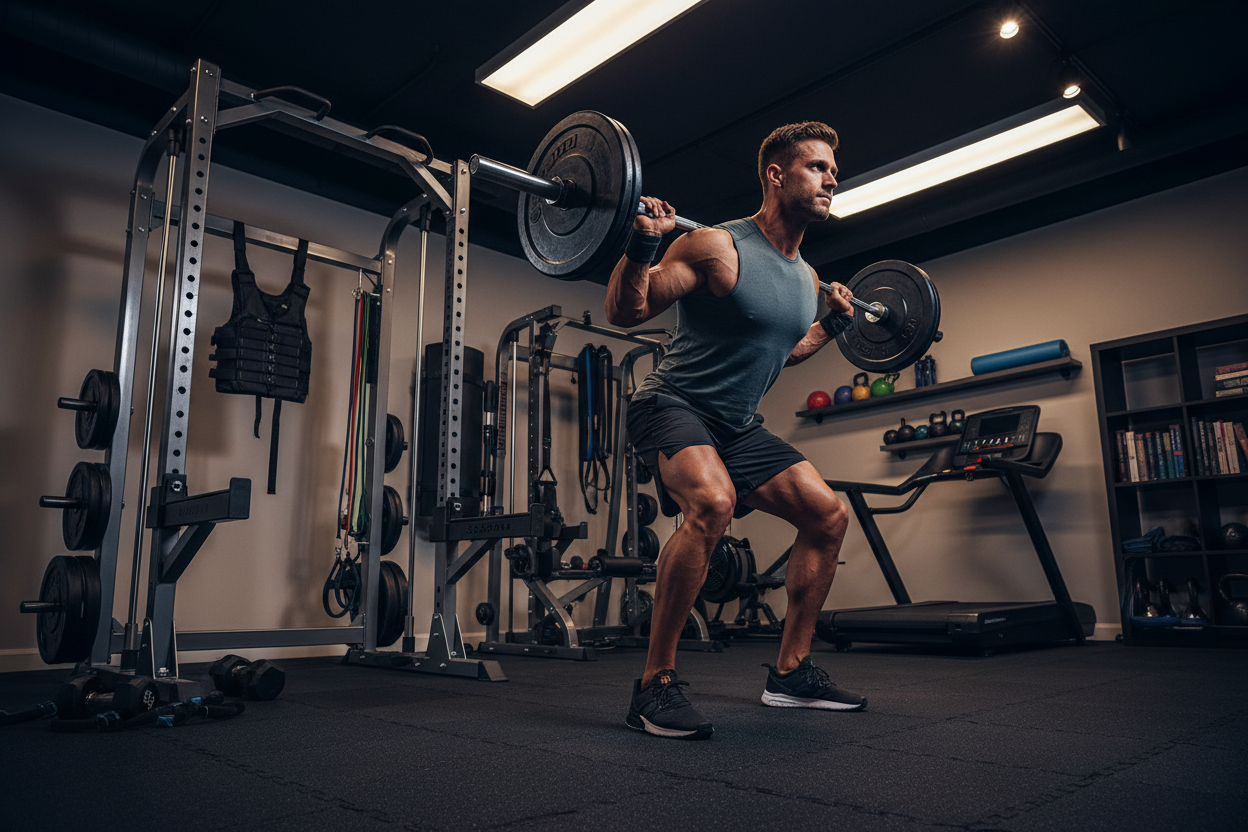
For the best results, your core setup should facilitate heavy, compound lifts. A reliable half-rack or power cage allows you to safely perform squats, bench presses, and overhead presses alone. When you build your space around these foundational movements, every fit exercise you add later—like dumbbell accessories or resistance band work—complements a solid base of strength.
Space Planning for North American Homes
Not everyone has a massive two-car garage to dedicate entirely to lifting. Space efficiency is critical when selecting your gear.
The Garage vs. The Spare Bedroom
If you are setting up in a garage, you have the luxury of concrete floors (once protected by horse stall mats) and typically higher ceilings. Here, a full 84-inch power rack is ideal. However, if you are converting a spare bedroom or basement, ceiling height is your biggest enemy. Look for short racks (under 72 inches) and prioritize adjustable, folding equipment to maintain a livable floor plan.
Value and Budget: Where to Spend vs. Save
Building a home gym is an investment, but you don't need to empty your bank account on day one.
The Buy-It-For-Life Essentials
Never skimp on your barbell or your rack. A cheap barbell will bend under heavy loads, and a flimsy rack is a safety hazard. Spend your primary budget here. You can easily save money by purchasing cast iron plates on the secondhand market or opting for a flat bench initially before upgrading to a premium adjustable bench later.
From Our Gym: Honest Take
We test a lot of equipment, and I've personally built out three different home gyms over the last decade. My biggest regret early on? Buying a cheap, narrow-grip barbell to save fifty bucks. The knurling was practically non-existent, and during sweaty summer garage sessions, my chalked grip constantly slipped during heavy deadlifts.
When I finally upgraded to a 28.5mm multi-purpose bar with aggressive volcanic knurling, it completely changed my pulling power. The caveat? High-quality bare steel or zinc bars require maintenance. After 8 months of daily use in a humid garage, I have to brush the chalk out and apply 3-in-One oil monthly to prevent surface rust. It's a minor chore, but the performance difference makes it 100% worth the effort.
Frequently Asked Questions
Is a dedicated fitness exercise space worth the investment?
Absolutely. The time saved commuting to a commercial gym, combined with the lack of wait times for equipment, often pays for the initial setup cost within the first two years of consistent use.
How much space do I actually need for a basic home gym?
You can build a highly effective strength station in an 8x8 foot space. This provides enough room for a power rack, a bench, and clearance for a standard 7-foot Olympic barbell.
Can I get a good workout without heavy weights?
Yes. If space or budget is tight, starting with high-quality resistance bands, adjustable dumbbells, and a pull-up bar can facilitate an intense full-body routine. You can also pair these with guided digital programs for structured progression.