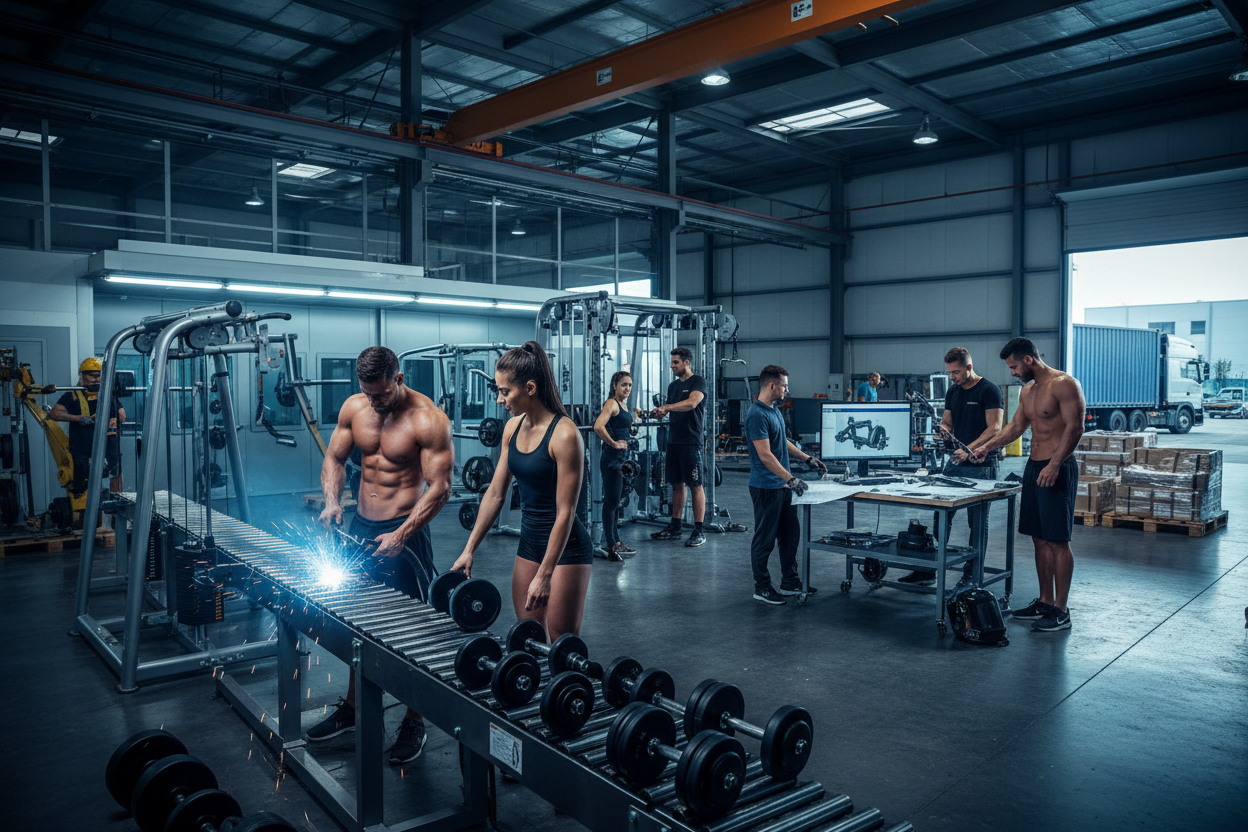
Fitness Equipment Manufacturing: The Blueprint for Premium Quality
Sourcing the right gear is the single biggest bottleneck for new gym brands and facility owners. You have likely seen the glossy catalogs, but the reality on the factory floor often tells a different story. The gap between a rendering and the final product is where businesses lose money. Successful fitness equipment manufacturing isn't just about bending steel; it is about precision engineering, supply chain transparency, and rigorous stress testing.
Key Takeaways regarding Gym Equipment Production
- Material Quality is Non-Negotiable: The gauge of steel (usually 11-gauge for commercial rigs) dictates structural integrity.
- Biomechanics Comes First: Manufacturing gym equipment requires engineering that respects human movement, not just aesthetics.
- The Role of QC: A reliable gym equipment factory must have multi-stage quality control, from raw material inspection to final load testing.
- Lead Times Matter: Understanding the difference between prototyping, production runs, and shipping logistics is vital for project management.
The Engineering Behind the Iron
When we talk about the manufacturing of gym equipment, we are really talking about biomechanics. A leg press might look robust, but if the pivot point is off by a few inches, the user feels the load in their knees rather than their quads. This is where engineering distinguishes premium brands from budget knock-offs.
Top-tier manufacturers use 3D CAD modeling to simulate stress loads before a single piece of metal is cut. They analyze how the equipment handles repeated impact. If you are sourcing equipment, ask for the engineering specs, not just the dimensions. You need to know the tensile strength of the cables and the load rating of the pulleys.
Selecting the Right Gym Equipment Factory
Finding a partner for gym equipment manufacturing is a vetting process, not a shopping trip. Many suppliers on Alibaba or similar platforms are trading companies, not actual factories. You need a direct line to the production floor.
Assess the Welding Capabilities
Look at the welds. Are they robotic or manual? Robotic welding offers consistency that is hard to beat at scale. However, high-end custom pieces often require the deft hand of a master welder. When manufacturing fitness equipment, the weld is usually the failure point. If the bead looks porous or uneven, walk away.
Powder Coating and Finishing
The finish is the first line of defense against rust and sweat. A cheap factory will spray paint over mild steel. A quality manufacturer uses a multi-stage process: sandblasting to remove impurities, a zinc-rich primer, and then electrostatic powder coating. This ensures the grip remains tacky (for knurling) and the frame resists chipping when plates bang against it.
Common Mistakes in Manufacturing Gym Equipment
The most expensive mistake is ignoring tolerances. In construction, a millimeter might not matter. In fitness equipment, a 2mm variance can mean a weight stack gets stuck halfway up the guide rod.
Another issue is prioritizing aesthetics over function. Flashy plastic shrouds might look good in a brochure, but they often rattle and crack after a month of heavy use. Focus on the frame, the bearings, and the upholstery density. High-density foam is uncomfortable at first but maintains support for years; soft foam feels great in the showroom but flattens out within months.
My Personal Experience with Fitness Equipment Manufacturing
I learned the hard way that specs on paper don't always translate to the gym floor. Years ago, I consulted on a project sourcing custom rigs for a functional fitness facility. The factory promised 3x3 inch, 11-gauge steel. On paper, it was perfect.
When the sample arrived, I noticed something immediately off about the powder coat—it was too slick. Real grip needs a specific texture, almost like fine sandpaper, or it becomes dangerous once sweat is introduced. But the real deal-breaker was the J-cups. They were laser-cut, but the bending tolerance was off by perhaps 3mm. This meant that every time I racked the barbell, the plastic liner caught on the upright, requiring me to physically yank the cup to adjust it.
It wasn't a structural failure; the rig wouldn't collapse. But that subtle friction, that lack of "fit and finish," ruined the user experience. It taught me that in this industry, you don't just inspect the steel; you have to inspect the interaction between the moving parts. If it rattles, wobbles, or sticks during the prototype phase, it will be a disaster in a commercial environment.
Conclusion
The fitness industry is flooded with equipment, but quality manufacturing remains rare. Whether you are building a home gym line or outfitting a commercial facility, prioritize the engineering and material science over the price tag. A lower upfront cost usually means higher maintenance costs down the road.
Frequently Asked Questions
How do I verify the quality of a gym equipment factory remotely?
Always request raw video footage of the production line, specifically the welding and quality control stations. Additionally, hire a third-party inspection agency to visit the factory and perform a random sampling check before the final payment is released.
What is the standard lead time for manufacturing fitness equipment?
Standard lead times range from 45 to 90 days. This includes material procurement, production, assembly, and packaging. Custom designs or prototypes will extend this timeline significantly.
Why is 11-gauge steel the standard for manufacturing gym equipment?
11-gauge steel (approx. 3mm thick) provides the optimal balance of structural rigidity and cost. Thinner steel (14-gauge) may flex under heavy loads, while thicker steel (7-gauge) is often overkill and unnecessarily expensive for standard gym applications.