Fitness Equipment For Trainers: What You Actually Need
Starting your coaching journey or taking your business on the road comes with a unique set of challenges. Chief among them: figuring out exactly what gear to invest in without draining your budget. As a coach, you need versatile, durable tools that deliver results for a wide variety of clients, whether you're operating out of a two-car garage or driving from living room to living room.
Investing in the right fitness equipment for trainers is the foundation of a professional, scalable business. In this guide, we'll break down exactly what belongs in your arsenal, what you can skip, and how to build a setup that commands premium rates.
Key Takeaways
- Prioritize versatility: Choose items that can scale regressions and progressions for any fitness level.
- Start small: A basic personal trainer equipment starter kit is all you need to launch your business.
- Consider portability: If you travel, the weight-to-utility ratio is your most important metric.
- Invest in durability: Client use puts significantly more wear and tear on gear than solo home gym use.
Building Your Personal Trainer Starter Kit
The Absolute Must-Haves
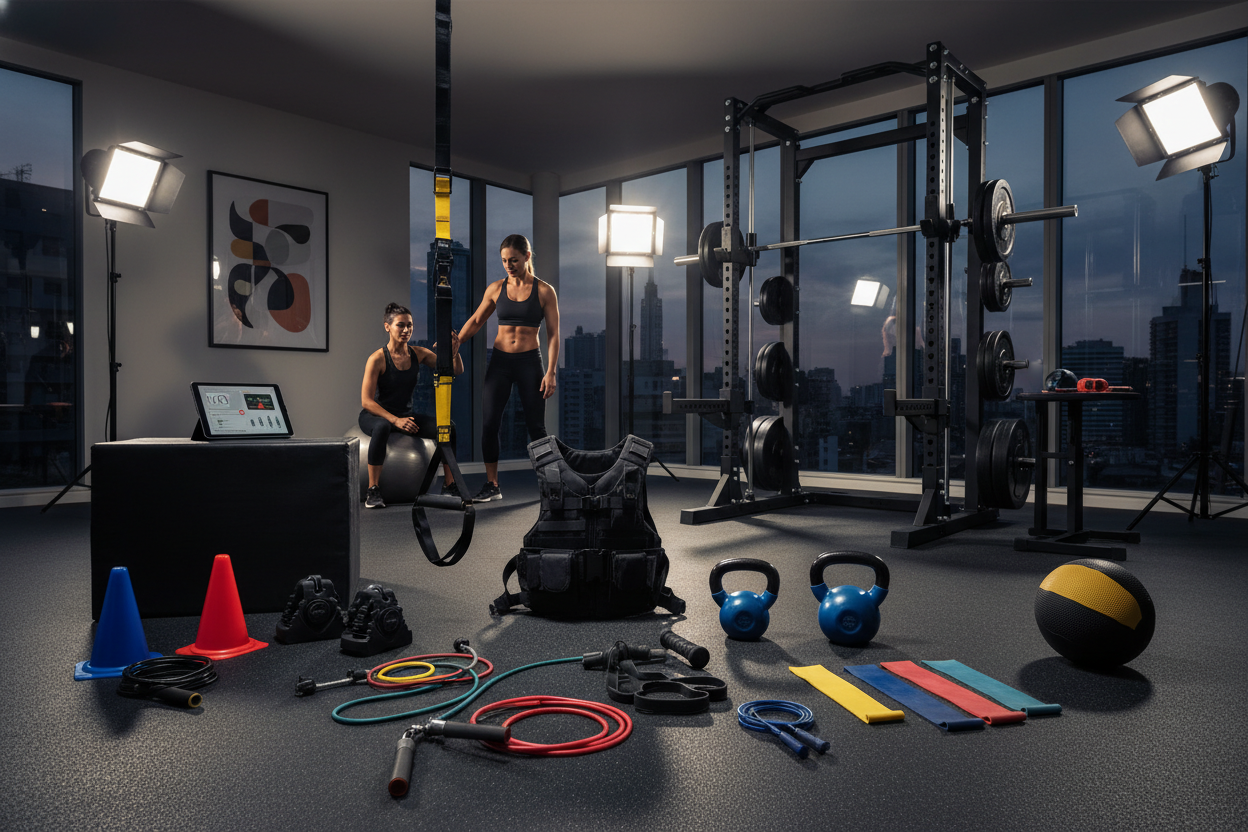
When assembling your baseline personal training tools, focus on the big movers. You don't need heavy machinery to get results. A pair of adjustable dumbbells, a comprehensive set of resistance bands, and a suspension trainer are non-negotiable personal trainer must haves. These three items alone allow you to train push, pull, hinge, and squat movement patterns with infinite variations for any client.
Mobile Personal Training Equipment
If you're a coach on the go, your trunk is your storage room. Traveling personal trainer equipment needs to be compact, lightweight, and easy to sanitize. Swap bulky traditional kettlebells for sandbags that can be emptied or adjustable kettlebell handles. A high-quality jump rope, an agility ladder, and a set of mini-bands round out a highly effective personal training kit that won't destroy your car's suspension.
Durability vs. Budget: Sourcing Your Gear
When to Splurge on Personal Trainer Gear
Not all personal trainer supplies are created equal. When it comes to anything bearing a client's full body weight—like a suspension trainer, a pull-up bar, or a plyo box—always opt for commercial-grade materials. The liability of a cheap strap snapping mid-row isn't worth saving forty dollars. Look for reinforced stitching and high-gauge steel.
Cost-Effective Additions
Conversely, you can save money on items like yoga mats, foam rollers, and basic PVC pipes for mobility work. These items will naturally wear out and need replacing anyway, so there's no need to buy the luxury versions when first building out your personal trainer equipment starter kit.
From Our Gym: Honest Take
When I first started my mobile coaching business out of my Honda Civic, I made the rookie mistake of buying fixed-weight hex dumbbells. Hauling 150 pounds of iron up three flights of apartment stairs for a single client session got old fast. Switching to a premium set of adjustable dumbbells was the best investment I ever made for my mobile personal training equipment setup. Yes, the initial $400 price tag stung, but the time and back-pain saved paid for itself in a week. One caveat: the locking mechanisms on adjustable dumbbells can be delicate, so I always make sure to rack them myself rather than letting clients drop them at the end of a tough set.
Frequently Asked Questions
What is the most important piece of equipment for a new trainer?
A high-quality suspension training system is arguably the most valuable tool. It allows you to train any client, regardless of their fitness level, and weighs less than two pounds, making it perfect for both home gyms and park workouts.
How much should a personal trainer equipment starter kit cost?
You can build a highly effective, professional-grade starter kit for between $300 and $600. Focus on adjustable dumbbells, bands, a thick mat, and a suspension trainer before expanding into specialized gear.
Can I run a training business with just bodyweight exercises?
While possible, having dedicated personal trainer gear adds perceived value to your service and allows for measurable progressive overload. This tangible progress is crucial for long-term client retention and satisfaction.