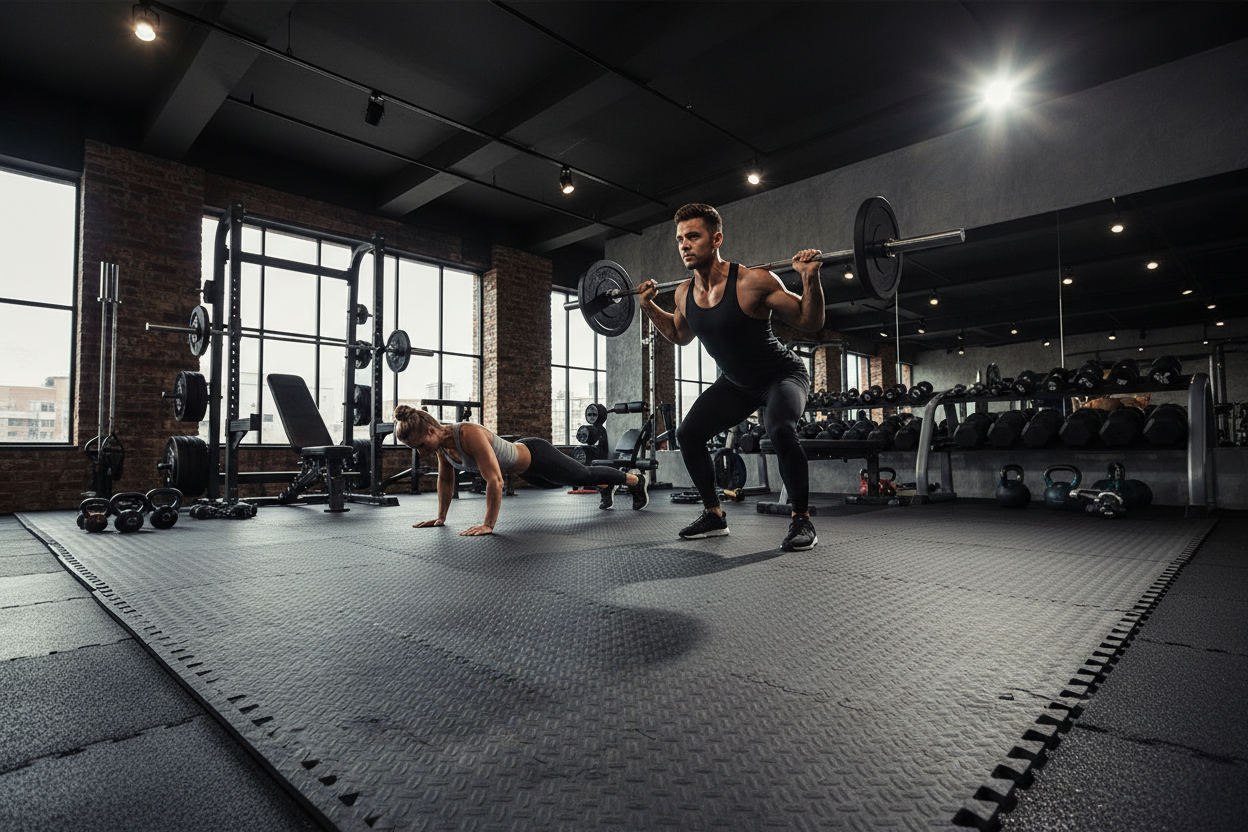
Extra Large Foam Mat: Stop Ruining Your Floors and Joints
If you are tired of doing burpees on a cold concrete garage floor or worrying about scuffing your basement hardwoods, you are not alone. A solid foundation is the most overlooked upgrade in a home gym. Upgrading to an extra large foam mat instantly transforms a harsh, unwelcoming area into a dedicated training zone that protects both your joints and your property.
In this guide, we will help you figure out exactly what type of mat you need to elevate your space without wasting money.
Key Takeaways
- Density dictates durability: Higher density EVA foam resists tearing during high-intensity workouts.
- Thickness matters: Aim for at least 3/4-inch to 1-inch thickness for joint protection during plyometrics.
- Not for heavy lifting: Foam is excellent for bodyweight, HIIT, and yoga, but not designed for dropping heavy barbells.
- Interlocking vs. Roll-out: Interlocking tiles offer customizable sizing, while single-piece extra large mats prevent seam separation.
Choosing the Right Density and Thickness
Why 1/2-Inch Usually Isn't Enough
When shopping for flooring, it is easy to gravitate toward the cheapest option. However, standard 1/2-inch mats often bottom out during explosive movements. For a dedicated workout space, a 3/4-inch to 1-inch thickness provides the necessary shock absorption to save your knees and ankles from unnecessary impact.
Gym Mats vs. Play Mats
Be careful not to confuse a high-density workout mat with an extra large foam play mat designed for toddlers. While play mats are soft and great for crawling, they lack the structural integrity to withstand the friction of training shoes, kettlebells, and cardio equipment. Always check the density rating before buying.
Sizing Up Your Workout Space
Garage and Basement Clearances
The beauty of an oversized mat is that it defines your workout area without requiring wall-to-wall installation. A standard 6x8 foot or 8x10 foot mat comfortably fits a single user performing dynamic lateral movements like skaters or lunges. If you are setting up in a tight apartment corner, measure your wingspan plus two feet to ensure you have enough clearance to move freely without stepping off the edge.
Keeping Your Mat in Top Condition
Sweat, chalk, and shoe dirt will eventually build up. Fortunately, closed-cell EVA foam is water-resistant. A simple wipe down with a damp cloth and a mild soap solution keeps the surface sanitary. Avoid harsh chemical cleaners, as they can break down the foam's texture over time and leave it dangerously slick.
From Our Gym: Honest Take
We have been testing a 6x8 foot, 8mm high-density foam mat in our facility's mobility and HIIT corner for the past six months. The grip is fantastic—even during sweaty mountain climbers, my hands stay firmly planted without slipping. The shock absorption is noticeably superior to the standard rubber stall mats we use in the power rack area.
However, here is the honest caveat: if you leave a heavy kettlebell or a dumbbell resting on the foam overnight, it will leave a temporary indentation. It usually rebounds within a few hours, but I highly recommend storing your weights on a separate storage rack rather than leaving them sitting on the mat.
Frequently Asked Questions
Is a foam mat safe for heavy deadlifts?
No. Foam mats are designed for shock absorption during bodyweight exercises, yoga, and light dumbbell work. Dropping heavy barbells will punch right through the foam and damage your subfloor. For heavy lifting, you need high-density vulcanized rubber.
Can I put a treadmill or power rack on top of an extra large foam mat?
It is not recommended. Heavy equipment will permanently compress the foam, causing the machine to become unstable and wobble during use. Use hard rubber mats or keep the equipment directly on the solid floor.
Do foam mats slide around on hard floors?
A high-quality, heavy-duty mat should stay relatively put, but dynamic movements can cause creeping on slick surfaces like laminate or polished concrete. Adding a non-slip rug pad underneath or using double-sided carpet tape on the corners is an easy fix.