Exercises for Body Fitness: Maximizing Your Home ROI
Introduction: Redefining the Home Workout
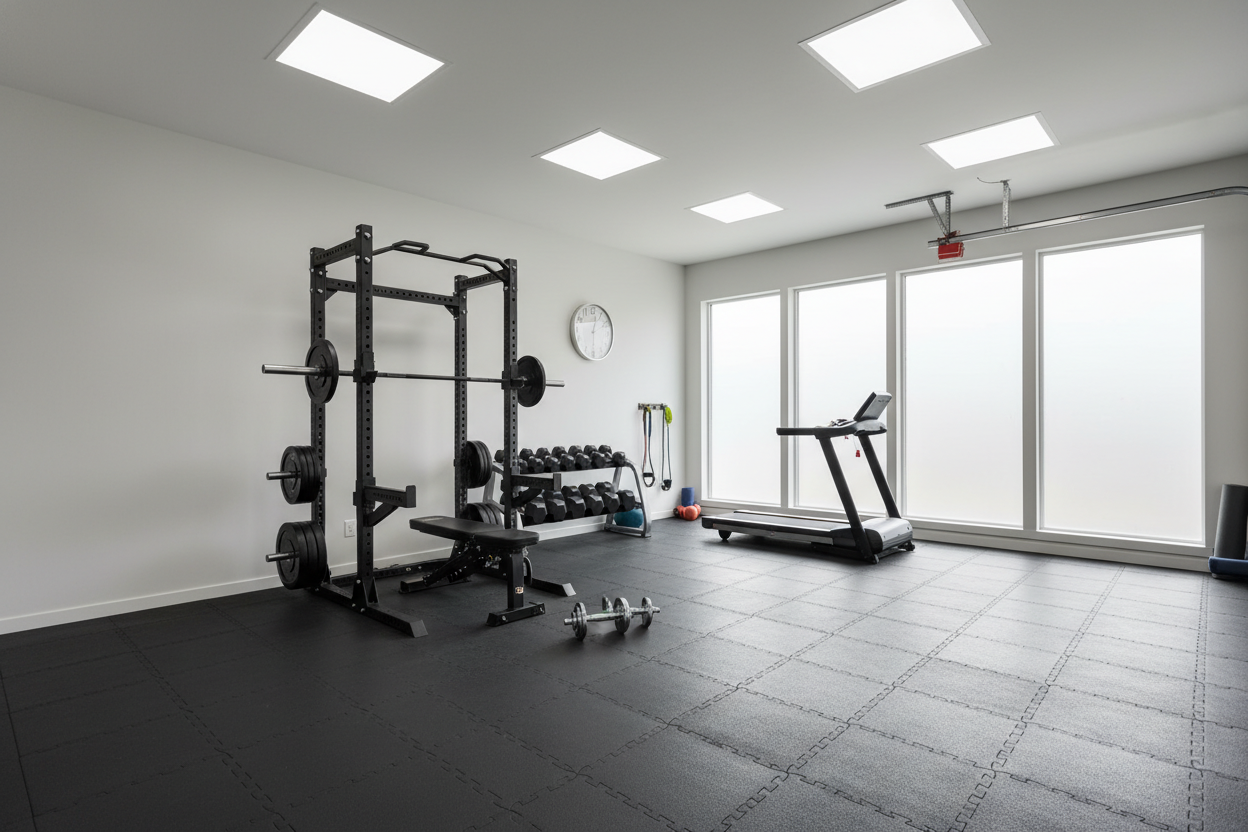
I've consulted for dozens of busy professionals whose home gym is literally a 6x6 foot patch of rug between the sofa and the TV. Usually, they come to me frustrated after trying to squeeze in midnight workouts in a cramped apartment. They all ask the same thing: how do I get actual results without buying a massive power rack or waking up the neighbors? The truth is, you don't need a commercial setup to achieve comprehensive physical conditioning. What you need is a highly efficient selection of exercises for body fitness.
By stripping away the fluff and focusing on high-yield compound movements, you can trigger serious muscle growth and fat loss in a fraction of the time. Let's look at how to maximize your training return on investment right in your living room.
Quick Takeaways
- Focus on multi-joint compound movements to maximize calorie burn and functional strength.
- A single pair of adjustable dumbbells (e.g., 5-52.5 lbs) is all the equipment you truly need.
- Density circuits and EMOM formats condense a 60-minute session into a brutal 30-minute block.
- Progressive overload can be achieved through tempo manipulation, not just heavier weights.
Why Compound Movements Rule the Roost
When your training time is limited to a 30-minute window before your morning commute, isolation exercises like bicep curls are a terrible return on investment. You need movements that recruit multiple muscle groups simultaneously. Compound movements burn more calories, trigger a superior hormonal response, and build functional strength much faster.
If you are an absolute novice who hasn't worked out in years, I usually recommend starting with a beginner's home blueprint to establish baseline movement competency before tackling these higher-intensity compound circuits. But once you have the basics down, you need to transition to high-yield programming. I've tested this approach with clients using nothing more than a single 35 lb kettlebell and a pull-up bar. The resulting cardiovascular demand and muscular fatigue rival any 90-minute bodybuilding split.
The Core Exercises for Body Fitness
To build a complete, balanced physique, you don't need fifty different exercise variations. You only need to hit four main movement categories. By organizing your routine around a squat, a hinge, a push/pull, and a loaded carry, you ensure every major muscle group is stimulated. This minimalist approach prevents muscle imbalances and keeps your home workouts brutally efficient.
Squat Variations for Lower Body Power
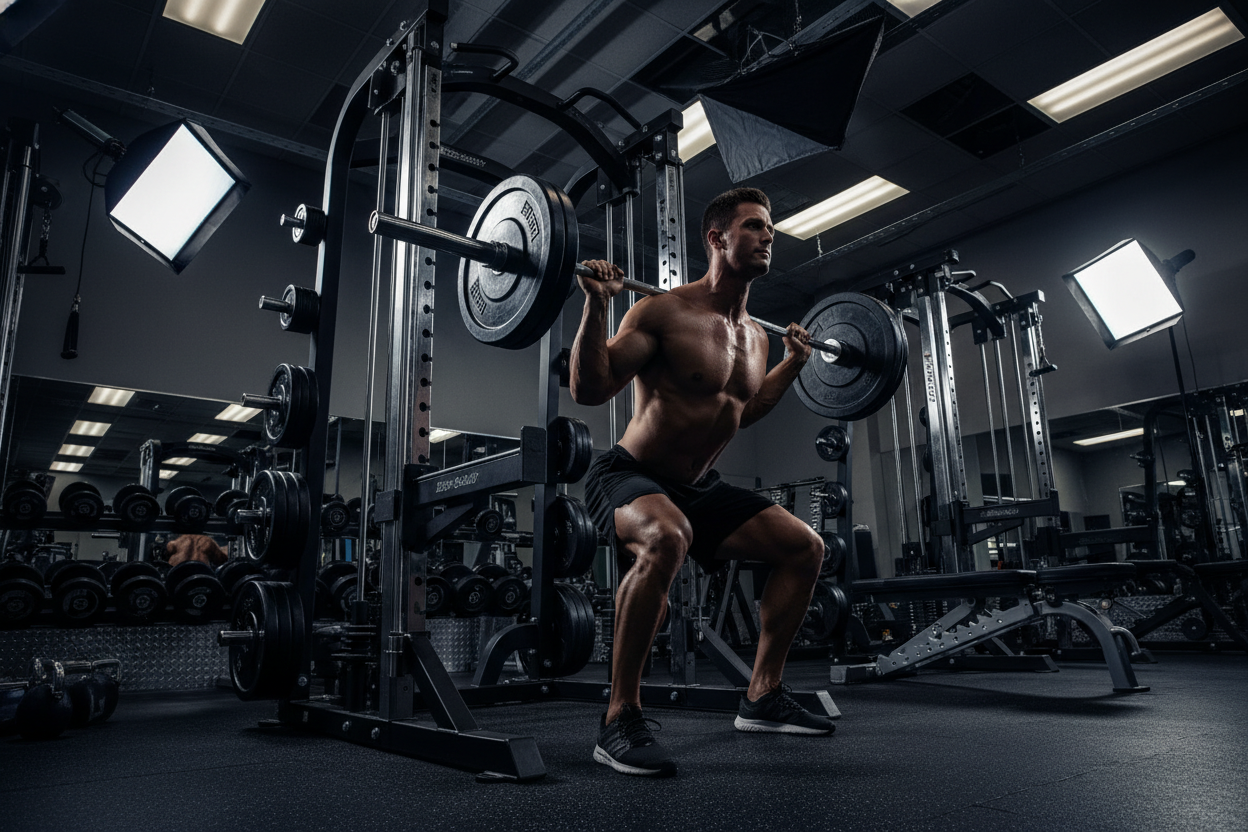
The squat is non-negotiable. For home setups where a barbell is out of the question, goblet squats and split squats are your premier choices. Grab a single heavy dumbbell or kettlebell—usually anywhere from 25 to 50 lbs depending on your strength level—and hold it vertically against your chest. The front-loaded position of the goblet squat forces your core to fire aggressively to keep your torso upright.
Once you can easily hit 15 reps of goblet squats, transition to Bulgarian split squats. Elevate your rear foot on a couch or a 16-inch plyo box. Holding just two 20 lb dumbbells, this unilateral movement will absolutely torch your quads and glutes while exposing any left-to-right strength imbalances. The beauty of split squats is the low equipment requirement; you max out the muscle long before you run out of weight.
Hinge Movements for Posterior Chain Health
Most of my clients sit at a desk for eight to ten hours a day. This leads to dormant glutes and tight hip flexors. To counteract this, we rely heavily on hinge movements like Romanian deadlifts (RDLs) and kettlebell swings.
For RDLs, grab a pair of adjustable dumbbells. Push your hips back as if you are trying to close a car door with your glutes. Keep the weights dragged closely down your shins. You'll feel a deep stretch in your hamstrings. If you prefer dynamic power, kettlebell swings are unmatched. A standard 16kg (35 lb) or 24kg (53 lb) bell takes up virtually zero floor space but delivers a massive cardiovascular and posterior chain stimulus. I've had clients completely cure their lower back stiffness just by incorporating 100 swings a day into their routine.
Push and Pull Mechanics for Upper Body
Balanced upper body health requires an equal ratio of pushing to pulling. For the push, strict push-ups and overhead presses are foundational. Don't rush the push-up. A proper rep means a tight core, elbows tucked at a 45-degree angle, and your chest physically touching the floor. If standard push-ups are too easy, elevate your feet on a chair to shift the load onto your upper chest and front deltoids.
For the pull, dumbbell rows are incredibly space-efficient. Brace one hand on a bench or your sofa, keep your back flat, and row a heavy dumbbell to your hip. I typically program sets of 8-12 reps here. Pull-ups are also fantastic if you have a sturdy doorway bar, but rows are often more accessible and safer for the elbows during high-volume home training.
I personally tested a popular pair of 50 lb adjustable dumbbells for these exact push/pull mechanics over six months. While the compact size was brilliant for my tiny apartment, the honest downside was the bulky dial mechanism on the end of the weights. It occasionally scraped my thighs during heavy rows. Still, the space savings made them worth the compromise.
Loaded Carries for Functional Core Stability
Loaded carries are the ultimate, often-overlooked secret weapon for tying the upper and lower body together. Think of farmer's walks and suitcase carries as moving planks. You pick up heavy weights, grip them hard, and walk.
If you have a narrow hallway, grab two 40 lb dumbbells and pace back and forth for 45 seconds. Your forearms will burn, your traps will scream, and your core will be forced to stabilize your spine against the shifting load. Suitcase carries—holding a weight in only one hand while walking—are even better for lateral core stability. They actively fight the rotational forces that cause lower back injuries.
Structuring Your Fitness Body Exercises
Knowing the movements is only half the battle. To get actual results, you need to structure these fitness body exercises effectively. For maximum cardiovascular and muscular benefit in a short window, I program density circuits or EMOM (Every Minute on the Minute) formats.
A classic 20-minute EMOM works like this: Minute 1, perform 12 goblet squats. Minute 2, execute 10 dumbbell rows per arm. Minute 3, knock out 15 push-ups. Minute 4, do a 40-second farmer's walk. Minute 5, rest. Repeat this block four times.
You are doing a high volume of work in a compressed timeframe, keeping your heart rate elevated the entire time. It eliminates the temptation to scroll on your phone between sets. You just watch the clock and work.
Scaling Up Without Buying More Gear
Eventually, your 50 lb dumbbells will feel light. But you don't need to immediately purchase a heavier set. You can apply progressive overload by manipulating the exercise execution.
Start using tempo changes. A 4-second eccentric (lowering) phase on a split squat makes 20 lbs feel like 50 lbs. Add pause reps, holding the bottom of your goblet squat for three full seconds before exploding up. Unilateral work is another great scaling tool. Transitioning from two-legged RDLs to single-leg RDLs instantly doubles the load on the working leg. If you want a deeper dive into these advanced strategies, check out my guide on progressing without new gear. It will save you hundreds of dollars in unnecessary equipment upgrades.
Conclusion: Consistency Over Complexity
At the end of the day, executing basic movements consistently will always outperform complex, fad-driven routines. You don't need a basement full of commercial machines to get strong and lean. Stick to the squats, hinges, pushes, pulls, and carries. Master the form, push the intensity, and watch your body transform right in your living room.
Frequently Asked Questions
How many days a week should I do this routine?
For most busy professionals, three to four days of full-body training is optimal. This allows for adequate recovery while providing enough stimulus to build muscle and burn fat.
Do I need a mat for home workouts?
While not strictly necessary, a high-density rubber mat (at least 6mm thick) protects your floors from dropped dumbbells and provides joint cushioning for floor exercises like push-ups.
Can I build muscle with just 30-minute workouts?
Absolutely. Muscle growth is driven by mechanical tension and metabolic stress. If you use challenging weights and strict rest periods like an EMOM format, 30 minutes is more than enough time to trigger hypertrophy.