Exercise Rowing Machines: The Total Body Workout You’re Missing
Walk into any commercial gym, and you will likely see a row of machines sitting empty while there is a line for the treadmills. This is a massive missed opportunity. Exercise rowing machines are arguably the single most efficient piece of kit for building endurance and power simultaneously, yet they remain intimidating to many.
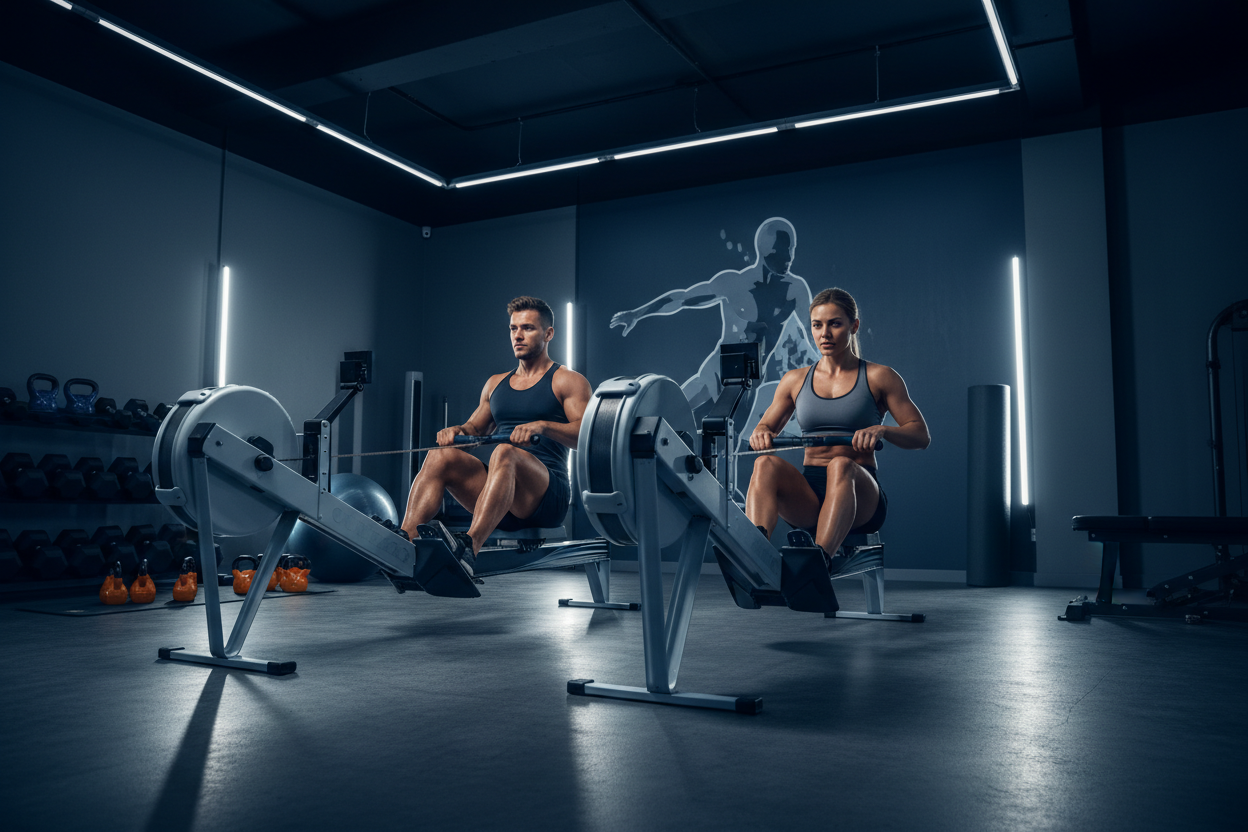
If you are looking for a workout that torches calories without destroying your knees, the rower is the answer. It isn’t just about pulling a handle; it is about generating force through the floor. Whether you are looking to buy rower machine models for a home setup or just want to stop embarrassing yourself on the rowing machine for gym workouts, understanding the mechanics is non-negotiable.
Key Takeaways
- Full-Body Engagement: Unlike cycling, a rower for exercise engages 86% of your muscles, including quads, hamstrings, glutes, core, and lats.
- Low Impact High Yield: It offers high-intensity cardiovascular training with minimal impact on joints, making it ideal for longevity.
- Resistance Matters: The feel of the stroke changes drastically between air, magnetic, and water resistance models.
- Legs First: The most common error is pulling with the arms too early. The power must originate from the leg drive.
Why the Rower is the King of Efficiency
When we talk about fitness equipment rowing machine options, we are talking about time management. You don’t need an hour on this machine. Twenty minutes of focused intervals on rower gym equipment can rival an hour of steady-state running.
The magic lies in the "triple extension." Just like a deadlift or a clean, the rowing stroke requires you to extend your ankles, knees, and hips in a coordinated explosion. This recruits the largest muscle groups in your body. Because you are moving more mass, your heart has to work significantly harder to pump oxygenated blood to those tissues.
The Physiology of the Stroke
Many beginners view rowing machine exercise equipment as an upper-body tool. This is physiologically backward. A proper stroke is 60% legs, 20% core, and only 20% arms. If your biceps are burning before your quads, your form is off.
Choosing the Right Resistance Type
If you are planning to add exercise equipment rower units to your garage, you need to know the difference in resistance mechanics. This dictates the "feel" of the row.
Air Resistance (The Standard)
Found in most CrossFit boxes and commercial gyms (think Concept2). The harder you pull, the more resistance the fan generates. It is honest and infinite. However, it is loud. If you live in a thin-walled apartment, your neighbors will hate you.
Magnetic Resistance
These use magnets to create drag on the flywheel. They are nearly silent and offer a consistent resistance that doesn’t fluctuate based on your pull speed. This is often the preferred exercise equipment rowing choice for home use where noise is a concern.
Water Resistance
These feature a tank of water with a paddle. The resistance is dynamic (like air) but feels smoother and sounds like a boat moving through a river. The aesthetic is great, but maintenance involves water purification tablets.
Common Mistakes That Kill Progress
Using a rower for exercise requires technical proficiency. The most dangerous mistake is shooting the slide. This happens when your legs push back, but your handle stays still, causing your lower back to round and take the entire load.
Keep your core braced at the "catch" (the start of the movement). Imagine you are leg-pressing the machine away from you, rather than pulling the handle toward you. The handle should only move once the legs are nearly fully extended.
My Training Log: Real Talk
I have spent hundreds of hours strapped into various rowers, and I need to be honest about the reality of this machine. It isn't all smooth sailing and endorphins.
The first thing you will notice isn't the cardio fatigue; it's the grip. When I first started doing 2,000-meter time trials, my hands would give out before my lungs. You develop a very specific set of calluses right at the base of your fingers. No amount of lotion fixes that—you just earn them.
Also, let’s talk about the "rower butt." If you buy a budget machine with a hard plastic seat, longer sessions (30+ minutes) become a battle of numbness. I eventually had to buy a separate thin silicone pad for my home rower. It doesn't look cool, but it allows me to focus on my split times rather than shifting my weight every thirty seconds trying to get feeling back in my glutes. And finally, there is the "monitor tunnel vision." When you are in the middle of a hard interval, staring at that split/500m number becomes hypnotic. You stop hearing the fan and stop feeling your legs; you just exist to keep that number under 2:00. It’s brutal, but it’s meditative.
Conclusion
Exercise rowing machines are not for the faint of heart, but they are the most rewarding tool you can own. They demand coordination, grit, and power. Whether you choose air, magnetic, or water, the result is the same: a bulletproof engine and a posterior chain that won't quit. Don't let the machine gather dust. Strap in, drive with your heels, and respect the distance.
Frequently Asked Questions
Can I lose belly fat using a rowing machine?
Yes. Because rowing recruits so many muscle groups simultaneously, it burns a high number of calories per minute compared to stationary cycling. Combined with a caloric deficit, it is highly effective for fat loss.
Is rowing bad for your back?
Rowing is actually good for strengthening the back, provided your form is correct. However, if you round your spine or pull with your back before engaging your legs, you risk injury. Proper form is critical.
How long should a beginner row for?
Start with 10 to 15 minutes. Focus on technique rather than intensity. Break it down into intervals, such as 3 minutes of rowing followed by 1 minute of rest, to maintain form as you fatigue.