
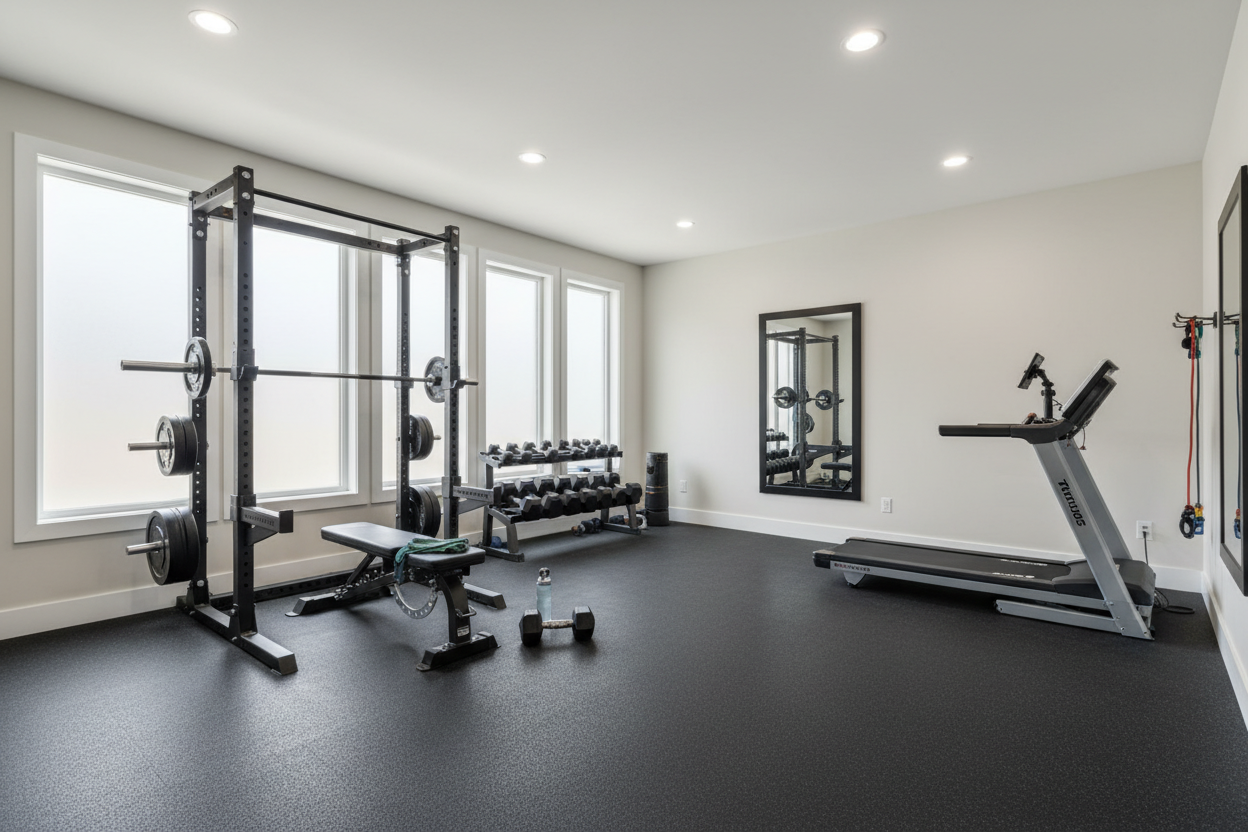
Exercise Plan Home Strategy: Why Zero Setup Beats Motivation
It is 6:00 PM. You just walked into your cramped apartment after a long commute. You know you should train, but your kettlebells are buried in the hall closet, and the living room rug needs to be rolled up before you can start. So, you sit on the couch instead. I have seen this exact scenario play out with dozens of clients. You do not lack willpower; you have too much friction.
Creating an effective exercise plan home setup is not about hype videos or pre-workout powder. It is about engineering an environment where starting takes zero thought. If your setup requires moving a coffee table, you have already lost the mental battle.
Let's build a routine that happens automatically, bypassing your brain's natural desire to take the path of least resistance.
Quick Takeaways
- Keep your physical setup time under 60 seconds to bypass motivation hurdles.
- Claim permanent floor space so you never have to unroll mats daily.
- Stick to 'always ready' gear like adjustable dumbbells instead of complex rigs.
- Use a core-first warmup to transition mentally from work mode to workout mode.
- Track progress with pen and paper to avoid digital distractions mid-workout.
The Trap of the High-Friction Home Workout
Most people blame themselves when they skip a living room workout. They think they are lazy. As a trainer who has designed setups in tiny city studios and dusty basements, I can tell you the real culprit is activation energy. This is the physical and mental effort required just to begin.
Think about the typical home fitness plan. First, you push the heavy oak coffee table aside. Then, you dig through a bin to find your resistance bands. Next, you untangle them, unroll a curling yoga mat that refuses to lay flat, and finally try to remember what exercises you were supposed to do. By the time you are ready to lift, your brain has already found three excuses to quit.
Your environment dictates your habits. In a commercial gym, the space is dedicated entirely to moving weight. At home, your living room is designed for relaxing. When those two purposes clash, relaxing always wins. The secret to consistency is eliminating the transition time between sitting on the couch and doing your first rep. If your setup takes more than sixty seconds, it is too complex.
Core Principles of a Zero-Friction Space
To fix the friction problem, you have to claim permanent territory. You do not need a massive garage; a dedicated 6x6 foot corner is enough. The goal is to create a visual and physical boundary that signals it is time to work.
The absolute first step is laying down a permanent floor covering. Rolling and unrolling a flimsy foam rectangle every afternoon is a massive barrier. I always tell my clients to invest in a large exercise mat for home gym use and leave it exactly where it is. Place it under the edge of the sofa or in the corner of the home office. When the mat is always flat and ready, the hardest part of the workout—showing up—is already done.
Keep the floor clear of clutter. Do not let this space become a storage area for laundry baskets or dog toys. It needs to remain sacred. I once had a client who kept dropping her routine because she had to move her kids' blocks every time she wanted to do a push-up. We taped off a 5x7 section in her basement, laid down heavy-duty rubber, and banned all toys from that zone. Her consistency skyrocketed instantly.
Building the 'Always Ready' Station
Your gear needs to follow the same zero-friction rule. Avoid anything that requires screwing in pins, hanging complex pulley systems over doorways, or moving heavy benches. You want equipment you can grab and press immediately.
A pair of adjustable dumbbells ranging from 5 to 52.5 lbs is the holy grail here. They sit quietly in the corner, take up less than two square feet, and replace an entire rack of weights. Pair that with a single heavy kettlebell, usually 16kg or 24kg depending on your strength level, for explosive movements.
I personally tested a popular dial-adjusted dumbbell set extensively over six months, putting them through over 1,000 reps of thrusters, rows, and presses. They are incredibly space-efficient, but here is the honest downside: they are bulky around the edges, making tight movements like goblet squats slightly awkward. Still, the trade-off of not having to swap weight plates manually is worth it for the friction you save.
Structuring Your Frictionless Weekly Split
A great setup is useless without a solid plan. Your home routine should alternate movement patterns, not require entirely different equipment setups each day. An upper/lower split or a full-body alternating split works best.
Here is a simple, highly effective split that requires zero gear swapping:
- Monday: Lower Body Push & Upper Body Pull (Goblet squats, dumbbell Romanian deadlifts, single-arm rows).
- Wednesday: Upper Body Push & Lower Body Pull (Floor presses, overhead dumbbell presses, kettlebell swings).
- Friday: Full Body Metcon (Dumbbell thrusters, push-ups, hollow body holds).
Notice how none of these days require dragging a bench into the middle of the room. You can perform every single exercise standing or lying directly on your permanent mat. The rep ranges should hover between 8 and 15, pushing close to failure on the last set.
Eventually, you will adapt to this routine. Instead of buying complex new machines to challenge yourself, you just need to manipulate the variables. Understanding how a fitness plan for home needs periodization is crucial for long-term progress. You can slow down the eccentric phase of your squats to 4 seconds, or increase your total weekly sets, without ever altering your physical setup.
The Core-First Activation Protocol
Transitioning from answering emails to lifting heavy weights is jarring. You need a bridge. I use a Core-First Activation Protocol with my clients. It requires zero equipment and takes exactly three minutes.
Drop onto your mat. Do 30 seconds of dead bugs, 30 seconds of bird-dogs, and a 60-second forearm plank. Finish with 60 seconds of glute bridges. This sequence fires up your central nervous system and physically forces you to leave the workday behind.
If you want to dive deeper into core engagement and turn this warmup into a larger part of your routine, I highly recommend checking out this exercise plan for a flat stomach. It breaks down the exact mechanics of bracing your midsection, which protects your lower back when you transition to your heavy dumbbell work.
Tracking Progress Without Breaking Flow
The final piece of the zero-friction puzzle is how you track your wins. Fumbling with a complex spreadsheet on your phone mid-workout is a massive distraction. It pulls you right back into the digital world you are trying to escape.
Keep it analog. Buy a cheap spiral notebook and a pen. Leave them on the floor right next to your weights. Write down your exercises, sets, and reps before you start the warmup. As you finish a set, just tally a mark next to it.
This simple act of writing down your numbers keeps you honest and ensures you are progressively overloading your muscles over time. When your tracking system is as frictionless as your physical setup, consistency becomes your baseline, not a daily struggle.
FAQ
How much space do I actually need for a frictionless home gym?
A 6x6 foot area is the sweet spot. It gives you enough room to lie down flat for floor presses and extend your arms fully for lateral raises without hitting a wall or furniture.
Can I build muscle with just adjustable dumbbells?
Absolutely. By focusing on progressive overload and manipulating rep tempos, a pair of dumbbells going up to 50 pounds can easily support years of muscle growth.
What if I live in a second-floor apartment?
Focus on controlled eccentrics and swap jumping movements for static holds. A thick, high-density exercise mat will also absorb significant impact and reduce noise transmission to your downstairs neighbors.

