Exercise Mat for Outdoors: The Definitive Guide for 2024
Taking your training session into the fresh air changes the game, but it also changes the equipment requirements. If you have ever tried to do burpees on a driveway using a standard yoga mat, you know exactly what happens: the material shreds, you feel every pebble, and the wind flips the corners up constantly. Finding the right exercise mat for outdoors isn't just about comfort; it is about safety and equipment longevity.
Key Takeaways
- Density over Thickness: For an outdoor workout mat for concrete, high-density rubber prevents "bottoming out" better than thick, soft foam.
- Closed-Cell Construction: Essential for a waterproof outdoor exercise mat to prevent mold growth and water absorption from rain or morning dew.
- UV Resistance: Standard indoor mats will crack and crumble under direct sunlight; look for UV-stabilized materials.
- Texture and Grip: Outdoor fitness flooring requires aggressive texturing to prevent slipping when humidity or sweat levels rise.
Why Your Indoor Mat Fails Outside
Most gym mats are designed for temperature-controlled, smooth environments like hardwood or laminate studios. When you transition to an outdoor fitness mat, the variables change drastically. The primary enemy is abrasion.
Concrete, asphalt, and even wooden decking act like sandpaper against soft PVC or TPE mats. Within a few sessions of mountain climbers or jump squats, you will notice flaking. Furthermore, standard mats lack the thermal insulation required to separate your body from freezing ground in autumn or scorching pavement in summer.
Choosing Materials: The durability Hierarchy
When selecting workout mats for outside, the material composition is the single most important factor. Here is how they stack up.
1. Vulcanized Rubber (The Gold Standard)
This is the same material used in horse stall mats. It is heavy, dense, and virtually indestructible. If you are looking for outdoor gym flooring ideas that can stay outside year-round, this is it. It handles heavy dumbbells and high-impact cardio without denting.
2. High-Density EVA Foam
Often seen as interlocking tiles, this serves well as temporary flooring for outdoor gym setups on grass. It provides cushion but lacks the abrasion resistance of rubber. It is best for bodyweight movements, not heavy lifting.
3. Closed-Cell PVC
For a portable outdoor sports mat, high-grade PVC works well. It is lighter than rubber but tougher than standard foam. Ensure it is labeled as a waterproof outdoor exercise mat so it can be hosed down after a muddy session.
Terrain Specifics: Matching the Mat to the Ground
Your choice of outdoor gym mat depends entirely on what lies beneath it.
The Concrete and Asphalt Solution
You need an outdoor workout mat for concrete that focuses on shock absorption. However, avoid "squishy" mats. If a mat is too soft, you will sink through it and hit the hard ground (bottoming out). You need a dense, 6mm to 8mm rubber mat that provides a firm barrier against the hard surface.
The Grass and Dirt Solution
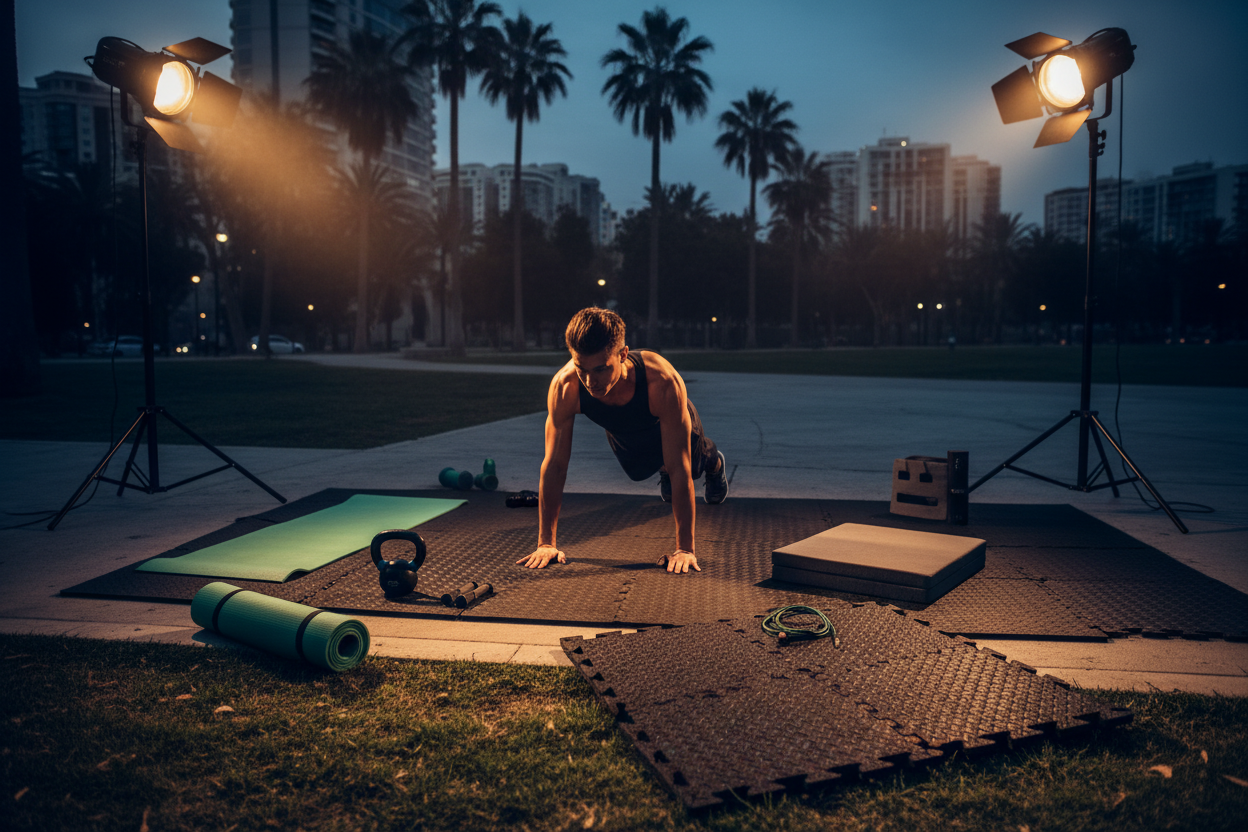
uneven ground requires a rigid structure. Thin roll-up mats will conform to every lump and hole in the grass, twisting your ankles. Here, interlocking outdoor gym floor mats work best. They create a flat, artificial platform over the uneven turf, effectively creating a stable outdoor gym floor.
Permanent vs. Portable Setups
Are you building a dedicated space, or are you training in the park?
Permanent Outdoor Gym Flooring
If you are laying down outdoor exercise flooring that will remain exposed to the elements 24/7, you need drainage. Look for outdoor gym flooring waterproof tiles with perforated surfaces or channels underneath. This prevents water from pooling, which stops bacteria buildup and keeps the surface grip reliable.
Portable Outdoor Workout Flooring
For the athlete on the go, weight is the trade-off. A heavy rubber gym mat outdoor setup is great to use but a nightmare to carry. Look for a "roll-out" mat with a weighted perimeter. The weighted edges prevent the wind from curling the mat up—a common annoyance during outdoor planks.
My Personal Experience with exercise mat for outdoors
I learned the hard way that indoor gear doesn't translate to the driveway. A few years ago, I took my favorite $100 natural rubber yoga mat outside for a HIIT session on my asphalt driveway. It was a humid July morning.
Two things happened that specs sheets don't tell you. First, the heat transfer. The black asphalt had baked in the sun, and within ten minutes, the heat radiated through the thin mat so intensely that I couldn't hold a plank. Second, the grit. After the workout, I rolled the mat up. Small shards of gravel and dried leaves stuck to the sweaty bottom side. When I rolled it, that grit pressed into the top surface, pitting and scarring the "sticky" side I relied on for grip. I ruined a premium mat in 45 minutes.
Now, for my outdoor rig, I use a 3/4-inch thick recycled rubber horse stall mat. It's ugly, it smells a bit like tires when the sun hits it, and it weighs 100 pounds. But I drop kettlebells on it, leave it in the rain, and scrub it with a deck brush. It offers the only true stability I've found that mimics a commercial gym floor.
Conclusion
Building an outdoor training habit is excellent for your mental and physical health, but respect the environment. Don't sacrifice your joints or your expensive indoor gear. Whether you choose heavy-duty rubber for a permanent outdoor fitness flooring setup or a high-density portable mat, prioritize UV resistance and washability. The right gear makes the difference between a distracted workout and a focused one.
Frequently Asked Questions
Can I leave my exercise mat outside in the rain?
Only if it is specifically designed as outdoor gym flooring waterproof material. Vulcanized rubber and perforated plastic tiles can withstand rain. Porous foam or open-cell yoga mats will absorb water like a sponge, leading to mold and deterioration.
What is the best thickness for an outdoor workout mat on concrete?
For an outdoor workout mat for concrete, aim for at least 6mm to 8mm if using high-density rubber. If you are using softer foam, you may need 1/2 inch or thicker to prevent feeling the hard ground, though this sacrifices stability for balance exercises.
How do I clean an outdoor gym mat?
Most outdoor exercise flooring is rugged. You can usually use a garden hose and a mild dish soap solution. Scrub with a stiff-bristled broom or brush to remove mud from the texture, then let it air dry completely in the sun to prevent fungal growth.