Exercise Machine Types: The Definitive Guide to Gym Gear
Stepping onto a gym floor or outfitting a space at home often introduces a confusing array of pulleys, levers, and benches. Exploring different fitness equipment is the clearest way to transform unfamiliar hardware into an effective strength program. Rather than wandering between empty racks, categorizing these tools helps lifters target specific physical adaptations with clarity.
Understanding how exercise equipment manipulates force lets you match each apparatus to personal goals. Whether setting up a home gym equipment deals layout or navigating commercial facilities, mastering these tools ensures every training block runs efficiently without wasted motion.
Categorizing Different Fitness Equipment by Movement Pattern
Not all machines generate resistance through identical mechanics. Weight stacks isolate leverage curves, while tension pulleys challenge stability across multiple movement planes. Grouping gear by functional purpose allows an athlete to rotate movements without overloading joints.
Selectorized Weight Machines
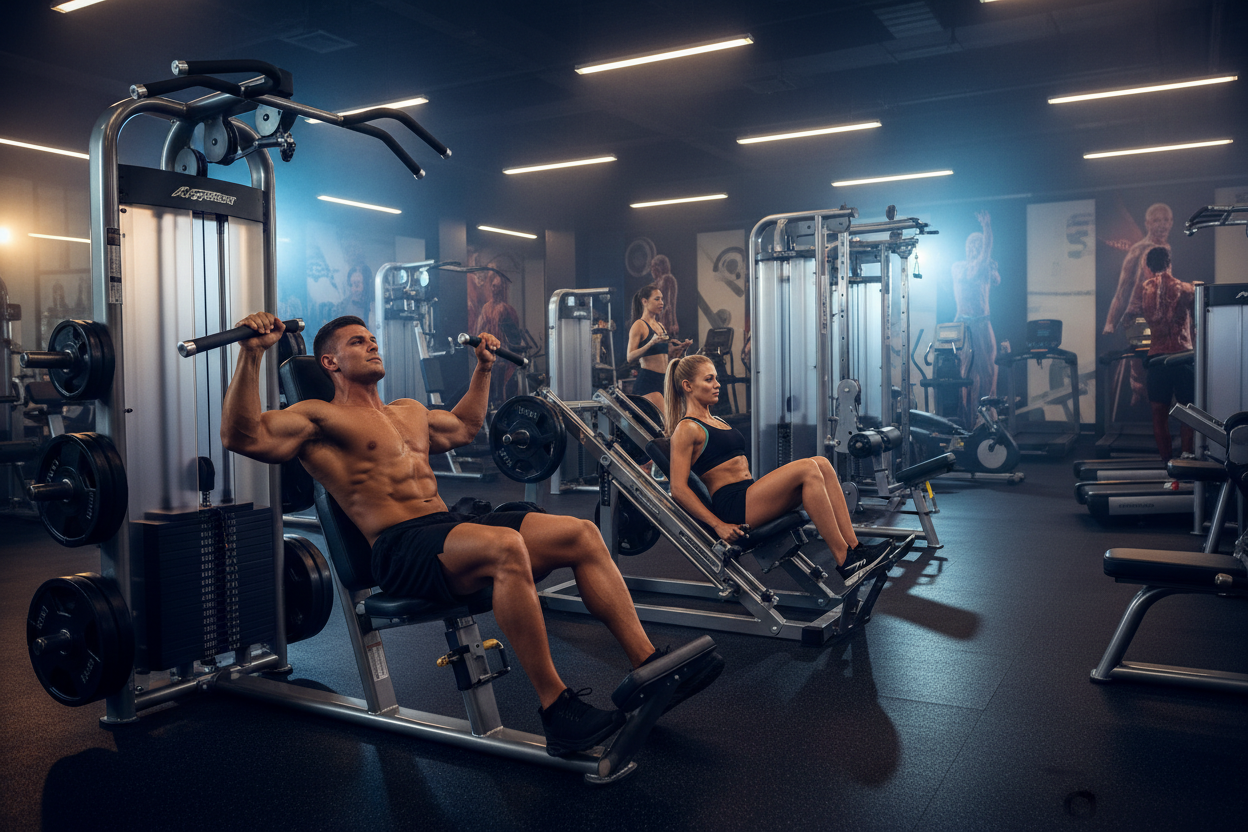
Selectorized units rely on an enclosed weight stack connected by a coated cable or steel band to a guide track. Moving an individual selector pin alters resistance immediately. Units like the chest press machine, leg extension machine, and leg curl machine enforce fixed planes that shield joints during fatigue. Because the machine manages balance, lifters can safely target major muscle groups without dedicated spotters.
Plate-Loaded Leverage Equipment
Plate-loaded machinery blends barbell mechanics with guided tracks. Lifters slide separate weight plates directly onto receiver horns, engaging mechanical linkages that naturally track human strength curves. A plate-loaded leg press machine or incline press machine allows heavier loading while preserving mechanical stability. This setup is a staple in dedicated strength equipment rooms because it allows granular weight jumps using standard iron or urethane plates.
Cable Machines and the Functional Trainer
Pulleys provide continuous resistance along dynamic paths, making them distinct from gravity-dependent free weights.
Cable Machines in Everyday Training
Standard cable machines feature adjustable pulley trolleys mounted on upright posts. Because cables sustain resistance through the complete range of motion, they generate sustained mechanical tension regardless of posture. Exercises like cable crossovers and tricep pushdowns maintain steady force profiles at both starting stretch and terminal lockout.
Building Around a Functional Trainer
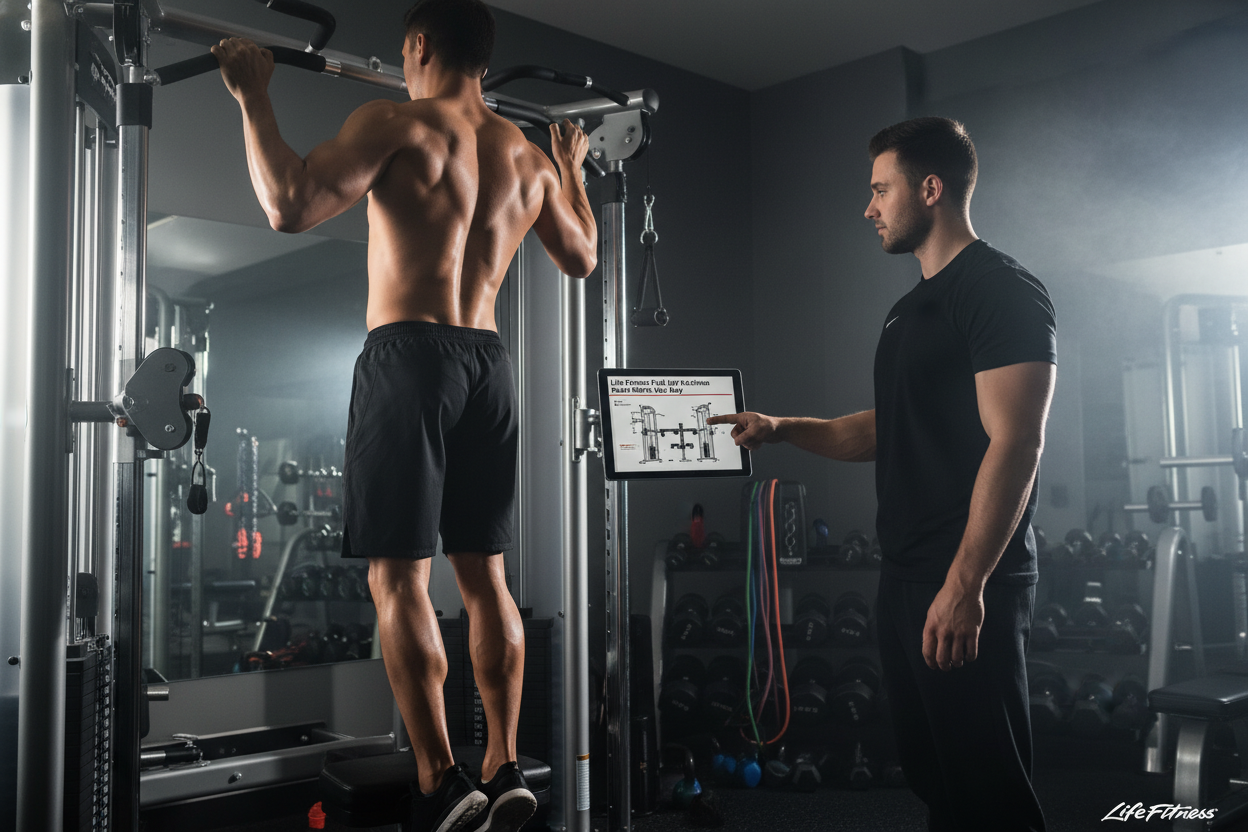
A dual-stack functional trainer stands out as versatile equipment for any dedicated training area. Utilizing dual adjustable pulleys, a functional trainer accommodates wide, athletic movement paths that mimic athletic patterns. Many functional trainer units also integrate a pull up bar, enabling progressive body weight exercises alongside cable work.
Integrating a functional trainer within a home gym provides commercial-grade versatility in a compact footprint. Lifters can shift between rotary torso chops, cable rows, and overhead presses on a single functional trainer frame without swapping heavy hardware. For those seeking comprehensive home gym equipment, a durable functional trainer often forms the central backbone of the entire installation.
Free Weights Versus Exercise Machines
Balancing free weights with fixed exercise machines creates well-rounded resistance training adaptations.
The Role of Free Weights
Dumbbells, barbells, and kettlebells challenge external balance. Barbell exercises such as squats, deadlifts, and bench presses demand complete stabilization from core and upper body stabilizers. Weight lifting with loose iron recruits deep postural musculature while reinforcing motor coordination across compound movements.
Exercise Machines for Targeted Loading
While barbells require total stabilization, dedicated exercise machines excel at isolating fatigued tissues. Following heavy bench presses with sets on a chest press machine enables safe training to fatigue. Combining free weights with selectorized units helps lifters balance general coordination with focused hypertrophy.
Equipment for Home Gym Spaces
Curating a compact training environment requires balancing functional versatility against available floor space.
Selecting Fundamental Home Gym Equipment
Building a home gym rarely requires replicating every commercial apparatus. When space is constrained, selecting adaptable cornerstones prevents clutter while supporting progression. Before acquiring pieces, review advice on different fitness equipment guide to keep planning structured.
- An adjustable bench paired with free weights covers core strength training exercises.
- A functional trainer provides cable options without requiring separate single-station weight stacks.
- Specialty bars like an ez curl bar reduce wrist strain during upper body isolation routines.
- Floor accessories, including push up bars and a supportive exercise ball, enable supplemental body weight exercises and core drills.
Cardiovascular Equipment and Conditioning Tools
Conditioning tools develop aerobic capacity and muscular endurance alongside strength work. A compact rowing machine engages legs, core, and upper body in a smooth, continuous sequence. A stationary bike or standard exercise bike offers low-impact cadence work suitable for high intensity interval training. For metabolic circuits, anchoring battle ropes alongside a rower provides conditioning options without demanding permanent mechanical footprints.
Tailoring Gym Equipment to Fitness Levels
Equipment selection should evolve alongside a lifter's experience, mobility, and specific fitness routine requirements.
Beginner Considerations
New trainees benefit from the guided pathways of selectorized exercise machines. Tools like the leg press machine reduce balance hurdles, letting lifters learn proper bracing while building confidence. Incorporating guided weight machines alongside an exercise bike establishes steady habits with minimal intimidation.
Intermediate and Advanced Programming
As lifters advance across varied fitness levels, periodization requires wider training variety. Lifters often start sessions with free-weight barbell exercises or heavy bench presses before transitioning to cable machines, a functional trainer, or plate-loaded stations for high-volume isolation. To inspect quality nuances before investing, consult tips on 5 red flags when browsing fitness equipment for sale online.
Editorial Reflections on Machine Mechanics
Over years of handling iron across warehouse facilities and compact basements, I have noticed that machine biomechanics vary widely between manufacturers even when the labels list identical loads. A worn bushing or an uncalibrated lever arm can completely alter how fifty pounds feels during a repetition. Inspecting pulley tracks, cable tension, and frame rigidity firsthand always reveals far more about an apparatus than reading its specification sheet.
Frequently Asked Questions
What are the top gym equipment essentials for home workouts?
A versatile setup typically centers on an adjustable bench, modular free weights with weight plates, and a functional trainer or pull up bar. Adding a stationary bike or rowing machine rounds out cardiovascular conditioning.
What is the 3-3-3 rule gym framework?
The 3-3-3 rule is a structuring method often used to organize a workout routine. It commonly refers to selecting three exercises per session, performing three working sets per exercise, and targeting three primary muscle groups across weekly training sessions to maintain consistency.
How do cable machines compare to free weights for muscle endurance?
Cable machines provide constant tension throughout the complete arc of motion, keeping tension on muscle groups without resting points. Free weights rely on vertical gravity lines, offering dynamic stabilization that complements cable work.