Exercise for the Thighs: The Definitive Strength Guide for 2024
Leg training is often the most misunderstood component of fitness. Many people skip it entirely, while others endlessly cycle through ineffective movements that strain the knees without stimulating growth. If you are looking for effective exercise for the thighs, you need to look past the trends and focus on biomechanics.
The goal isn't just to move weight from point A to point B. It is to place specific tension on the quadriceps, hamstrings, and adductors to force adaptation. Whether you want size, strength, or endurance, the principles remain constant. This guide cuts through the noise to show you exactly how to structure your lower body training for actual results.
Key Takeaways: Thigh Training Essentials
- Prioritize Compound Movements: Multi-joint lifts like squats and lunges recruit the most muscle fibers for maximum efficiency.
- Understand the Anatomy: Effective thigh workouts must target the front (quads), back (hamstrings), and inner/outer thigh muscles.
- Progressive Overload is King: You must gradually increase weight, reps, or tension over time to see changes.
- Form Over Heavy Weight: Controlling the eccentric (lowering) phase yields better results and prevents knee injury compared to ego-lifting.
Understanding the Anatomy of a Thigh Workout
Before grabbing a barbell, you need to understand what you are trying to target. A well-rounded workout for thighs addresses the leg as a complete unit rather than just the front of the leg.
The Quadriceps (The Pushers)
These are the large muscles on the front of your thigh. They are primarily responsible for extending the knee. To target these, your knees usually need to travel forward over your toes (within your mobility limits) during movements like squats or split squats.
The Hamstrings (The Pullers)
Located on the back of the thigh, these oppose the quads. They bend the knee and extend the hips. Neglecting them is a common cause of knee injuries and imbalances. A proper thigh exercise routine always balances quad work with hamstring work.
The Compound Foundation
Isolation movements have their place, but the foundation of any exercise for thigh development is compound lifting. These movements allow you to load the most weight safely.
The High-Bar Squat
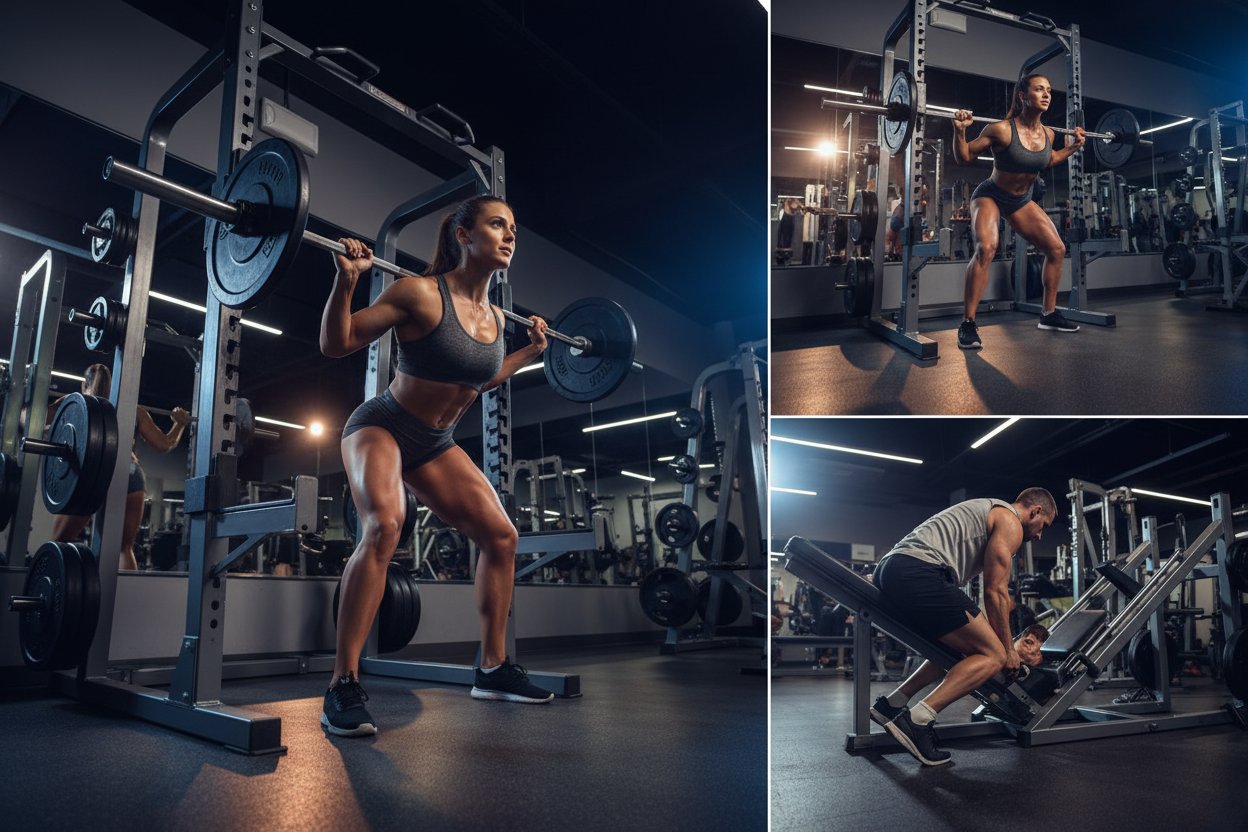
The squat is non-negotiable for most trainees. By placing the bar higher on your traps, you keep your torso upright, which shifts more mechanical tension onto the thighs rather than the lower back. The key here is depth; stopping halfway down cheats your adductors and glutes out of activation.
The Bulgarian Split Squat
This is arguably the most effective unilateral exercise for the thighs. By elevating the rear foot, you isolate the front leg. This fixes strength imbalances between your left and right side. It forces the stabilizing muscles to work overtime, creating deep muscle exhaustion without requiring massive spinal loading.
Isolation for Specific Growth
Once the heavy lifting is done, you use isolation to finish the muscle. This is where you can safely push to failure without risking injury.
Leg Extensions
While functional trainers often hate on this machine, it is one of the only ways to fully shorten the rectus femoris (a specific quad muscle) effectively. Keep your hips pressed into the pad and control the descent. Do not kick the weight up; squeeze it up.
Lying Leg Curls
This targets the hamstrings in a knee-flexion pattern. A common mistake here is lifting the hips off the bench as the weight comes up. Keep your hips glued down to ensure the hamstrings do all the work.
My Training Log: Real Talk
Let's step away from the textbook for a second. I want to share my personal experience with exercise for the thighs because the "science" doesn't always prepare you for the reality of a hard leg session.
I remember specifically when I switched from standard back squats to high-rep Bulgarian Split Squats. On paper, it looked like a lighter day. In reality, it was brutal. The specific feeling wasn't just muscle fatigue; it was a distinct, sickening burn in the 'teardrop' muscle (VMO) right above my knee.
The most humbling moment wasn't in the gym—it was leaving it. I walked out to my car and my leg actually buckled when I stepped off the curb. There is a specific "wobble" you get when you've truly exhausted the motor units in your thighs. It feels like your nervous system is trying to send a signal, but the line is dead. If you finish a thigh workout and you can briskly jog up a flight of stairs without gripping the railing, frankly, you didn't train hard enough.
Conclusion
Building strong legs doesn't require a library of fifty different movements. It requires mastering a few key patterns and executing them with violent intensity and perfect control. Stick to the basics, track your numbers, and respect the recovery process.
Frequently Asked Questions
Can thigh exercises reduce leg fat specifically?
No. Spot reduction is a myth. While thigh exercise will build muscle underneath the fat, giving the leg a shapelier appearance, losing the fat layer requires a caloric deficit through nutrition.
How often should I train my thighs?
For most natural lifters, training legs twice a week is the sweet spot. This frequency allows for sufficient volume to stimulate growth while providing enough days for the central nervous system to recover.
What if I have knee pain during squats?
Knee pain often stems from poor ankle mobility or weak hips, not the squat itself. Try switching to a box squat or a reverse lunge, which places less shear force on the knee joint, until your mobility improves.