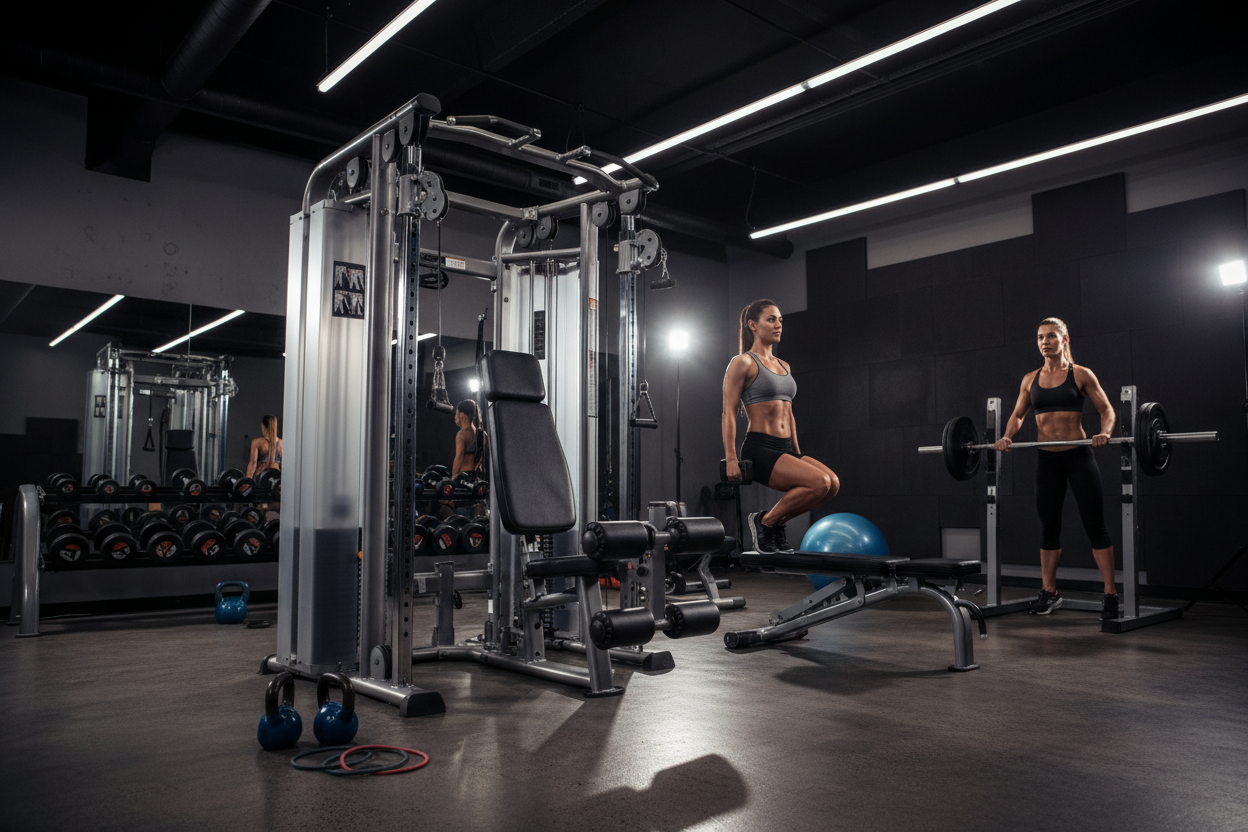
Exercise Equipment Multi Gym: Avoid These Buying Mistakes
Building a home gym usually means playing a frustrating game of Tetris with your floor plan. You want to squat, bench, row, and do cable work, but you only have a 10x10 spare bedroom or a crowded garage. That is exactly why an exercise equipment multi gym is often the smartest anchor piece for North American homes.
By consolidating dozens of movements into one station, you save money and floor space. But not all systems are created equal. In this guide, we will break down how to choose the right all-in-one system without sacrificing workout quality or emptying your wallet.
Key Takeaways
- Multi-gyms consolidate 5-10 individual stations into one compact footprint, saving massive amounts of space.
- Look for dual-weight stacks or high-capacity plate-loaded systems to ensure long-term progressive overload.
- Measure your ceiling height carefully; you need at least 84 inches of clearance for most overhead cable stations.
- Smooth pulley ratios (ideally 2:1) are critical for functional training and isolation movements.
Specs That Actually Matter
Weight Stacks vs. Plate-Loaded Systems
When comparing multi exercise machines, the resistance mechanism dictates both the price and the feel of your workout. Selectorized weight stacks offer quick pin-changes, which is perfect for drop sets and fast-paced circuit training. Plate-loaded systems, on the other hand, are usually more budget-friendly and allow you to utilize your existing Olympic weight plates to push heavier loads.
Pulley Ratios and Cable Quality
Never overlook the cables. Aircraft-grade steel cables with a protective nylon coating ensure longevity and prevent snapping under heavy loads. Additionally, check the pulley ratio. A 2:1 ratio means moving 100 pounds feels like 50 pounds, offering a smoother, longer range of motion ideal for functional trainers and athletic movements.
Maximizing Your Home Gym Space
The Footprint Reality Check
A standard multi-gym requires roughly a 6x8 foot dedicated space, plus a 2-foot buffer zone around the perimeter for safe operation. If you are setting up in a basement, watch out for low ductwork or drop ceilings that might interfere with lat pulldown bars or pull-up stations.
From Our Gym: Honest Take
We recently tested a popular dual-stack multi-gym over a 6-month period in our unheated garage facility. The versatility is undeniable, but here is my honest takeaway: the standard 160-pound weight stacks are fantastic for upper body work, but if you are an experienced lifter, you will likely max them out on seated leg presses within a year.
Also, I noticed the factory-lubricated guide rods started sticking during humid July workouts. A quick wipe down with a silicone-based lubricant solved the issue instantly, but it is a vital maintenance step most product manuals gloss over. If you are a competitive powerlifter, a multi-gym will not replace your heavy power rack. But for bodybuilding, hypertrophy, and general fitness, it is an incredible space-saver that gets used daily.
Frequently Asked Questions
Is an exercise equipment multi gym worth the money?
Yes, if you value space efficiency and exercise variety. While the upfront cost is higher than a basic bench and dumbbells, it is significantly cheaper than buying separate commercial machines for every muscle group.
Can you build muscle with a multi-gym?
Absolutely. Multi-gyms provide constant tension through cables and guided paths, which is excellent for muscle hypertrophy, isolation exercises, and safely pushing yourself to failure without needing a spotter.
How much space do I actually need?
Plan for an absolute minimum of 50 square feet. You need room not just for the machine footprint, but also for the full extension of the cables, your body positioning, and any attachments like a leg press plate or pec deck.