Exercise Equipment Guide: The Only Blueprint You Need for Real Gains
Walking onto a gym floor can feel like entering a cockpit without flight training. You see rows of steel contraptions, pulleys, and levers, and the intimidation sets in. You aren't alone. Most people stick to the treadmill simply because the weight room looks like a complex puzzle they can't solve.
This exercise equipment guide is designed to cut through that noise. We aren't just going to name machines; we are going to look at the mechanics of why you should use them, when to switch to free weights, and how to build a physique without wasting time on ineffective gear.
Key Takeaways
- Function over Form: Understand that machines offer stability for isolation, while free weights demand coordination for compound strength.
- The Big Three Categories: Group equipment into Selectorized Machines (pin-loaded), Plate-Loaded (leverage), and Free Weights.
- Safety Mechanisms: Modern gym machines explained simply—they are designed with fixed paths to prevent injury during failure.
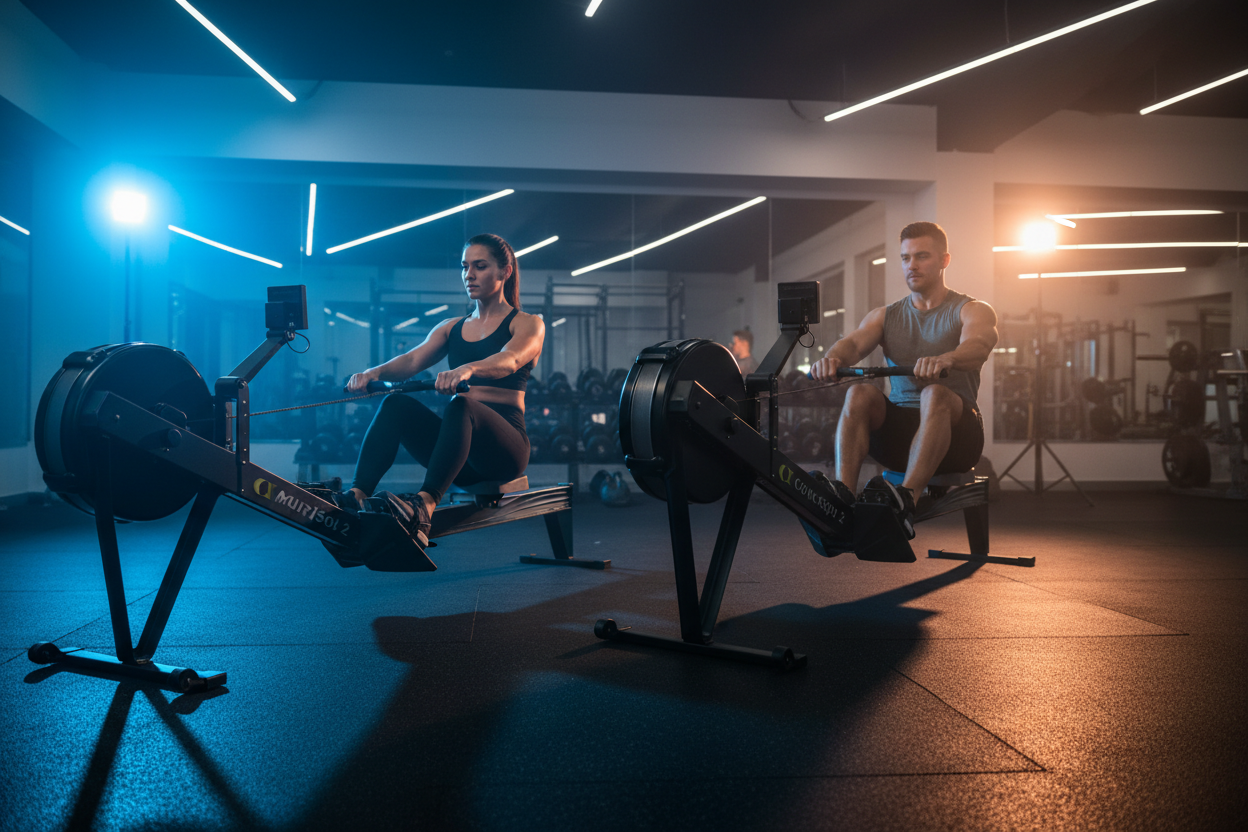
- Cardio Nuance: Not all cardio machines are equal; rowers recruit posterior chains while ellipticals focus on low-impact movement.
The Philosophy Behind the Gear: Gym Equipment Explained
Before you grab a handle, you need to understand the categorization. A proper fitness equipment guide starts by separating tools based on stability. The more stable the machine, the less your core has to work, allowing you to focus entirely on the target muscle.
1. Selectorized Machines (The Pin Stack)
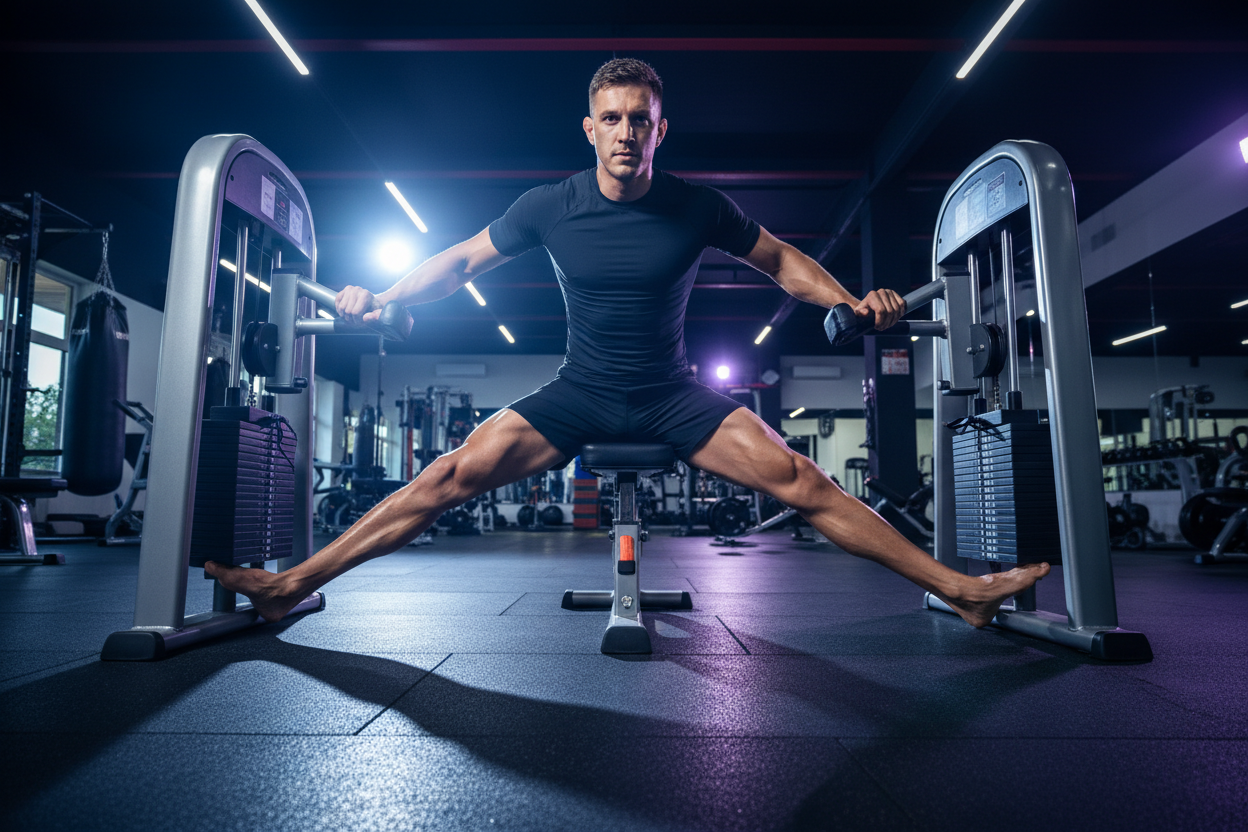
These are the machines with a stack of rectangular weights and a pin. They are ideal for beginners or for isolating a muscle at the end of a workout. Because the machine dictates the path of motion, you cannot "cheat" the form as easily as you can with dumbbells.
2. Plate-Loaded Machines
Often branded as "Hammer Strength," these require you to load round iron plates onto pegs. This is the bridge between machines and free weights. They offer the safety of a fixed path but the heavy-loading potential of a barbell. In any comprehensive guide to gym machines, these are rated highest for hypertrophy (muscle growth) without the risk of getting crushed.
3. Free Weights
Dumbbells, barbells, and kettlebells. These provide zero stability. You must stabilize the load yourself. This recruits secondary muscles and burns more calories, but the learning curve is steeper.
Guide to Gym Equipment: The Essential Machines
Let's strip away the fluff. If you walk into a commercial facility, these are the primary stations you need to master.
The Leg Press
Think of this as a squat without the spinal compression. It targets the quads and glutes. The science here is simple: by bracing your back against the pad, you remove the limiting factor of lower back strength. This allows you to load the legs significantly heavier than you could with a barbell on your back.
The Lat Pulldown
This is your vertical pull. It mimics a pull-up but allows you to adjust the weight to less than your body mass. The key here isn't just pulling the bar down; it's depressing the scapula (shoulder blades). Many gym exercise equipment guides fail to mention that if you hunch your shoulders, you turn this back exercise into a bicep workout.
The Cable Crossover
Cables provide "constant tension." Unlike a dumbbell, where gravity only pulls down, a cable pulls in the direction of the wire. This means your muscles are under tension during the entire range of motion, creating a different stimulus for growth compared to free weights.
Common Mistakes: Stop Using Gym Machines Like This
Even the best gym machine guide can't help you if your execution is flawed. The most common error is "momentum surfing."
If you are on a chest press and you slam the weights forward and let them crash back down, you aren't training muscles; you're testing the machine's durability. The eccentric phase (lowering the weight) causes the most muscle damage (the good kind). Control it. Take three seconds to lower the weight.
My Training Log: Real Talk
I want to step away from the technical definitions for a second and talk about the actual feel of this stuff. I’ve spent thousands of hours in rusty garage gyms and high-end health clubs, and there are nuances specs don't tell you.
Take the knurling (the rough texture) on a barbell. In a cheap gym equipment guide, they just call it a "grip." But in reality, there's a massive difference between the aggressive, cheese-grater knurling on a powerlifting bar that shreds your shins during a deadlift, and the slippery, passive chrome on a cheap commercial gym bar. I remember failing a heavy pull not because I was weak, but because the bar was so slick with sweat and cheap plating that it rolled right out of my fingers.
Another thing is the "friction drag" on selectorized machines. I once trained at a hotel gym where the cable machine felt like I was pulling through wet cement because the guide rods hadn't been oiled in a decade. It changes the resistance curve completely. When you're following a guide to gym equipment, remember that maintenance matters as much as mechanics. If the cable stutters, drop the weight and focus on the squeeze, or you'll snap a tendon trying to push through the friction.
Conclusion
Navigating the gym floor doesn't have to be a source of anxiety. Whether you are using a chest press or a barbell, the goal is progressive overload—doing a little more than you did last time. Use this exercise equipment guide as a map. Start with the machines to build your confidence and base strength, and slowly migrate to free weights as your coordination improves. The best equipment is simply the one you use consistently.
Frequently Asked Questions
What is the best gym equipment for beginners?
Selectorized machines (pin-loaded) are the best starting point. They stabilize your body and dictate the range of motion, significantly reducing the risk of injury while you build foundational strength.
Can I build muscle using only machines?
Yes, absolutely. While free weights are superior for stabilizer muscles and functional strength, machines are excellent for hypertrophy (muscle growth) because they allow you to safely push your muscles to absolute failure.
How do I know if I'm using the machine correctly?
Check the diagram usually printed on the machine's tower. However, the golden rule is silence: the weight stack should not slam when you lower it. If the plates clang, you are moving too fast and using momentum rather than muscle.