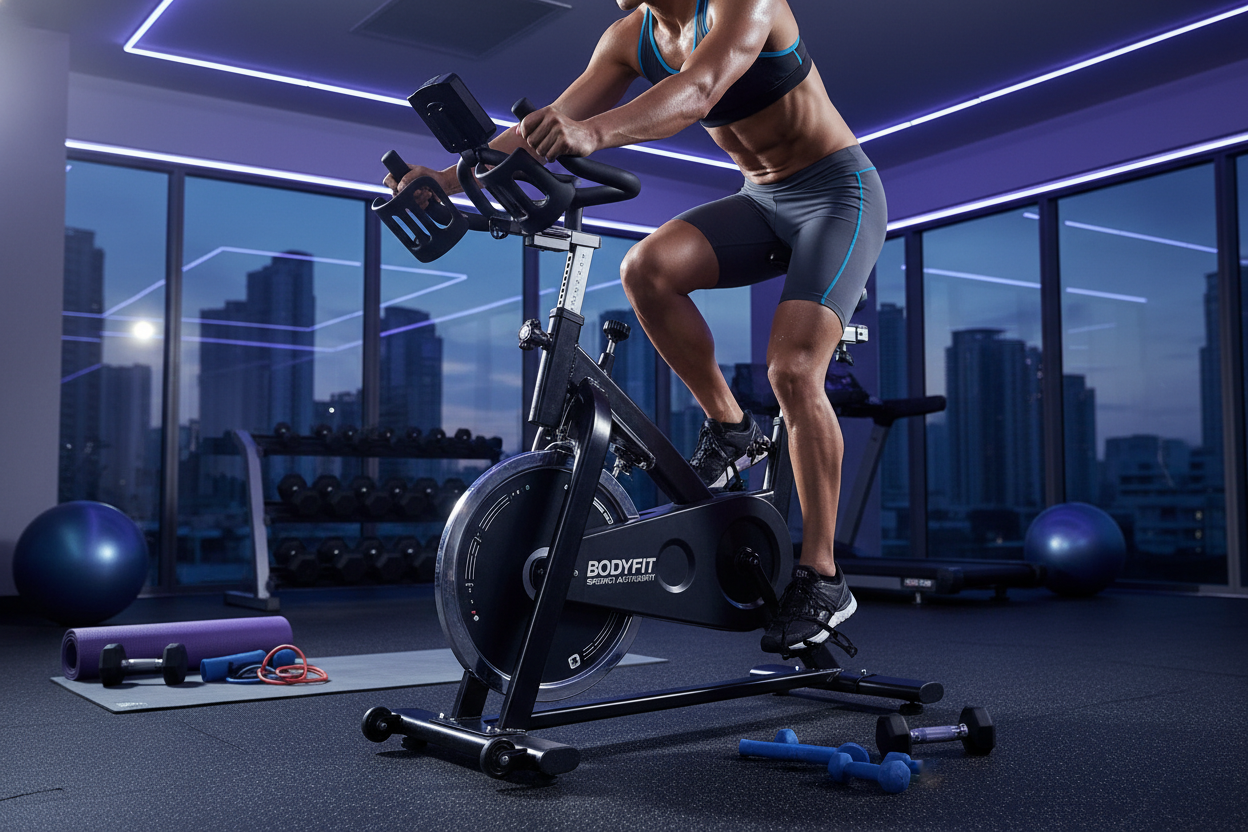
Exercise Equipment Commercials: What They Hide From Buyers
We've all been there—it's late at night, and an infomercial promises a total body transformation with just five minutes of work a day. But separating reality from the hype in exercise equipment commercials can save you thousands of dollars and endless frustration. If you are building a home gym, you need to know how to look past the sweaty fitness models and flashy claims to evaluate the actual biomechanics, footprint, and build quality of the gear being sold.
Whether you are outfitting a tight apartment corner or a spacious two-car garage, learning to decode these marketing campaigns is your first step toward a functional, lasting home gym setup.
Key Takeaways
- Never trust the footprint shown in a fitness equipment ad; always verify the exact dimensions and ceiling clearance requirements.
- Look past "proprietary resistance" marketing jargon and check the actual weight capacity and resistance mechanisms.
- If an exercise equipment advertisement promises spot reduction or effortless results, treat it as a major red flag.
- Commercial-grade claims in consumer ads often just mean thicker steel gauges—always check the warranty to confirm true durability.
Decoding the Fitness Equipment Ad: What to Look For
Evaluating Real-World Space and Footprint
One of the oldest tricks in the book for exercise equipment ads is shooting the product in a massive, brightly lit studio with a wide-angle lens. This visual trick makes bulky machines look sleek and compact. Before you hit "add to cart," pull out the measuring tape. You need to account for not just the machine's footprint, but the active working space. For example, a functional trainer might only be 48 inches wide, but you need an additional three feet on either side to perform cable crossovers. Always check the ceiling clearance as well, especially if you are setting up in a basement.
Translating "Proprietary" Resistance Claims
Many commercials boast about "revolutionary" or "patented" resistance systems. While some of these innovations are genuine, many are just clever ways to mask the use of cheap bungee cords or low-grade magnetic flywheels. When evaluating a fitness equipment ad, look for concrete numbers. What is the maximum resistance in pounds? Is the resistance curve linear or variable? Raw iron and high-quality selectorized weight stacks have stood the test of time for a reason. If a brand won't disclose the actual resistance equivalent, proceed with caution.
The Reality of As-Seen-On-TV Build Quality
Steel Gauge and Weight Capacities
Every exercise equipment advertisement seems to claim their product is "gym quality" or "commercial grade." In the North American home gym market, true commercial quality usually means 11-gauge steel with heavy-duty hardware. Many heavily advertised home products use thinner 14-gauge or even 16-gauge steel, which can wobble under heavy loads. Always check the maximum user weight capacity and the maximum load capacity. A rack with a 300-pound limit might be fine for a beginner, but you will quickly outgrow it as your strength increases.
From Our Gym: Honest Take
A few years back, I bought a highly advertised folding cable machine after seeing it plastered across late-night fitness equipment ads. The commercial made the transition between exercises look incredibly seamless, and the space-saving design appealed to my cramped garage setup.
The reality? The cable pulleys were noticeably sticky right out of the box, and at 6'2", the track simply wasn't tall enough for me to get a full stretch on lat pulldowns—something the product page conveniently left out. However, I will say the heavy-duty powder-coated frame was surprisingly solid, and it hasn't shown a single speck of rust after three years in a humid, uninsulated garage. The lesson here is to always check the max user height and pulley ratios, rather than relying on the flashy video edits of a fitness equipment advertisement.
Frequently Asked Questions
Are products shown in exercise equipment commercials actually worth buying?
Some are genuinely innovative and provide great value for home gym owners, but many rely on gimmicks. Always verify the specifications, read independent reviews, and look past the marketing claims to assess the actual build quality.
Why do fitness equipment ads always claim to target belly fat?
Marketers know that core fat is a common pain point for consumers. However, spot reduction is a fitness myth. You cannot burn fat in a specific area just by working the muscles underneath it. Equipment that claims otherwise is using deceptive marketing.
How can I tell if an exercise equipment advertisement is misleading?
Look out for vague terminology, promises of effortless results, and a lack of concrete specifications. If the ad focuses more on lifestyle imagery than the actual mechanics, weight limits, and dimensions of the machine, it is likely hiding an inferior product.