Exercise bike at home: Is it actually worth the investment?
Let's face it: dragging yourself to a crowded spin studio at 5 AM or battling freezing rain to get your miles in can quickly derail your fitness goals. Having an exercise bike at home eliminates the commute, putting complete control of your cardio routine right in your living room, garage, or basement.
But before you pull the trigger on an indoor exercise bike, you need to know how to match the equipment to your specific space, budget, and training style. This guide will help you navigate the noise and find the perfect fit for your home gym setup.
Key Takeaways
- Resistance matters: Magnetic resistance offers a silent, maintenance-free ride compared to traditional friction pads.
- Space is minimal: Most home gym bikes require a footprint of just 4 feet by 2 feet, making them ideal for apartments.
- Adjustability is crucial: Look for 4-way adjustable seats and handlebars to accommodate multiple users safely.
- Flywheel weight dictates feel: A heavier flywheel (30+ lbs) provides a smoother, more road-like experience.
Choosing the Right Home Fitness Bike
Flywheel Weight and Resistance Types
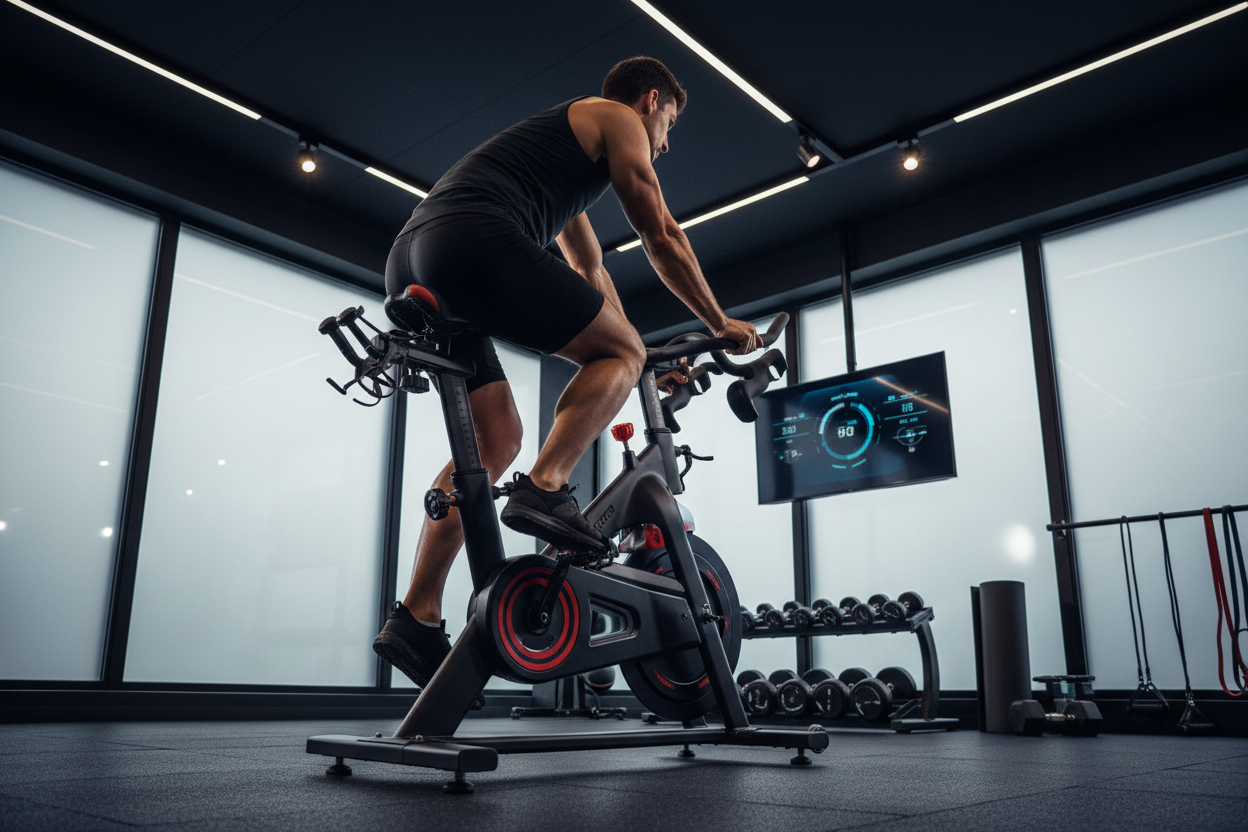
When evaluating a home fitness bike, the flywheel and resistance mechanism are the beating heart of the machine. If you are serious about indoor bike fitness, you will generally choose between friction and magnetic resistance. Magnetic models use powerful magnets to create tension against the flywheel. They are virtually silent, which is a massive bonus if you share walls or work out while the house is asleep. Friction models use felt pads that physically squeeze the wheel; while they are often cheaper, they require replacing the pads and can be noisy.
Space Planning and Exercise Bike Storage
Will it fit your apartment or garage?
One of the biggest advantages of an in home bicycle is its compact nature. Unlike massive treadmills or functional trainers, most exercise bikes for home use require a footprint of about 48 inches long by 24 inches wide. However, you should leave at least 24 inches of clearance on all sides for safe mounting and dismounting. If you are tight on space, consider exercise bike storage solutions like transport wheels. High-quality models feature heavy-duty polyurethane wheels mounted on the front stabilizer, allowing you to tilt and roll the bike into a closet or corner when not in use.
Training: Getting the Most Out of Your Setup
Tailoring the Fit for Every Rider
An exercise home cycle is only effective if it is comfortable. Biomechanics play a huge role in preventing knee and lower back pain. When searching for an exercise bike for woman, or for shorter riders in general, 4-way adjustability (up/down and forward/back for both the seat and handlebars) is non-negotiable. Many standard women's exercise bike setups also benefit from swapping out the stock saddle for one that accommodates wider sit bones, ensuring a comfortable ride during long endurance sessions on your bike home gym.
From Our Gym: Honest Take
I have tested dozens of home fitness cycle models over the past five years, from budget e-commerce finds to premium studio-grade machines. One thing most product pages will not tell you is how much sweat actually drips onto the frame during intense intervals. On cheaper friction-resistance models, I have seen rust form on the flywheel casing in under six months of heavy use. That is why I always recommend spending the extra $150 to $200 for a magnetic resistance training bicycle with a rear-mounted flywheel. It keeps the moving parts out of the 'sweat zone.' At 6-foot-2, I also learned the hard way that checking the maximum inseam height is crucial—my knees hit the handlebars on two different entry-level models before I upgraded to a commercial-grade frame.
Frequently Asked Questions
How much space do I need for an exercise bike at home?
You will need a minimum floor space of 4 feet by 2 feet for the bike itself, plus an additional 2 feet of clearance around the perimeter for safety. If you plan to do out-of-the-saddle climbing, ensure you have adequate ceiling height.
Are home gym bikes loud?
It depends entirely on the resistance type. Magnetic resistance bikes are virtually silent, making them perfect for apartments or early morning workouts. Friction resistance bikes produce a noticeable 'whooshing' sound that can increase as the brake pads wear down.
What should I look for in an exercise bike for a woman?
The most critical feature is micro-adjustability. Look for a bike with a 4-way adjustable seat and handlebars to accommodate different torso and arm lengths. Additionally, you may want to invest in a saddle specifically designed for female anatomy, as stock saddles on unisex bikes can sometimes cause discomfort.
How do I protect my floors from an indoor exercise bike?
Always place a high-density PVC equipment mat under your bike. Not only does this protect hardwood or carpet from heavy indentations, but it also catches corrosive sweat and dampens vibrations, further reducing noise.