Exactly What Does Thrusting Your Hips Mean for Glute Growth?
I remember the first time I dragged a flat bench into the middle of the power rack and started loading plates for hip thrusts. The local gym-bros looked at me like I was performing an exorcism. They were busy doing their eighth set of quarter-squats, while I was trying to figure out why my pelvic bone felt like it was being crushed by a 45-pound iron bar. It is a weird-looking movement, I get it. But if you actually care about building a posterior chain that does more than just fill out a pair of jeans, you have to get over the awkwardness.
- Hip thrusts provide maximum tension on the glutes at the short position (the top).
- A chin-tuck and rib-down cue is mandatory to save your lower back.
- You can likely lift significantly more here than you can squat or deadlift.
- Proper equipment, like a thick bar pad and a non-slip bench, is non-negotiable.
The Elephant in the Gym: Breaking Down the Movement
So, what does thrusting your hips mean in a way that actually builds muscle? Strip away the social media fluff and it is essentially horizontal hip extension against resistance. While a squat or lunge loads the glutes in a stretched position, the hip thrust—often technically called a glute hip press—hits them hardest at the top of the rep where the gluteus maximus is fully contracted.
Because the weight is resting directly over your hips rather than on your back, you are not limited by your spinal erectors or your grip strength. This is why it is the undisputed king of glute isolation. You are driving your hips toward the ceiling, pivoting on your shoulder blades, and forcing the largest muscle in your body to do 100 percent of the heavy lifting. It is not about 'humping' the air; it is about controlled, violent hip extension.
Stop Guessing: Figuring Out How Much Hip Thrust Weight to Lift
I see two types of people: those who treat the bar like it is made of glass and those who load six plates and move the bar two inches. Neither is growing. When deciding how much hip thrust weight to use, you need to understand that your glutes are capable of incredible force. However, that force is useless if your lower back is doing the work because you went too heavy, too fast.
The internet is full of influencers claiming a 500-lb good hip thrust weight is the standard for beginners. It is not. For your first working sets, aim for a weight that allows you to pause at the top for a full second. If you cannot hold the contraction and your hips drop immediately, the bar is too heavy. Most men can start with 95 to 135 lbs, while many women find 65 to 95 lbs a solid starting point for what weight to use for hip thrusts.
Finding Your Baseline Safely
If you are staring at a barbell and wondering what is a good weight to hip thrust for your specific body, start with zero. Seriously. Do three sets of 20 bodyweight reps. If you cannot feel your glutes 'cramping' by rep 15, your mind-muscle connection is broken. Once bodyweight is easy, move to a 45-lb barbell. Add 10-lb plates weekly until your form starts to break. That is your true baseline.
Nailing the Setup So You Do Not Destroy Your Spine
Bad thrusting techniques exercise choices are the fastest way to a herniated disc. First, find a bench that is roughly 16 inches high. If it is too high, you will overextend your back to reach the top. If it is too low, you will lose range of motion. Your shoulder blades should be the pivot point, not your neck.
The biggest mistake? Looking at the ceiling. Keep your chin tucked to your chest and your gaze forward. This keeps your spine in a neutral 'hollow body' position and prevents your lower back from arching. You also need to load a free weight hip thrust using a high-quality, thick foam pad. I have tried using a rolled-up yoga mat or a towel; they do nothing. Buy a dedicated squat sponge or you will end up with bruises that look like you survived a car wreck.
Getting Off the Floor: The Gear That Actually Helps
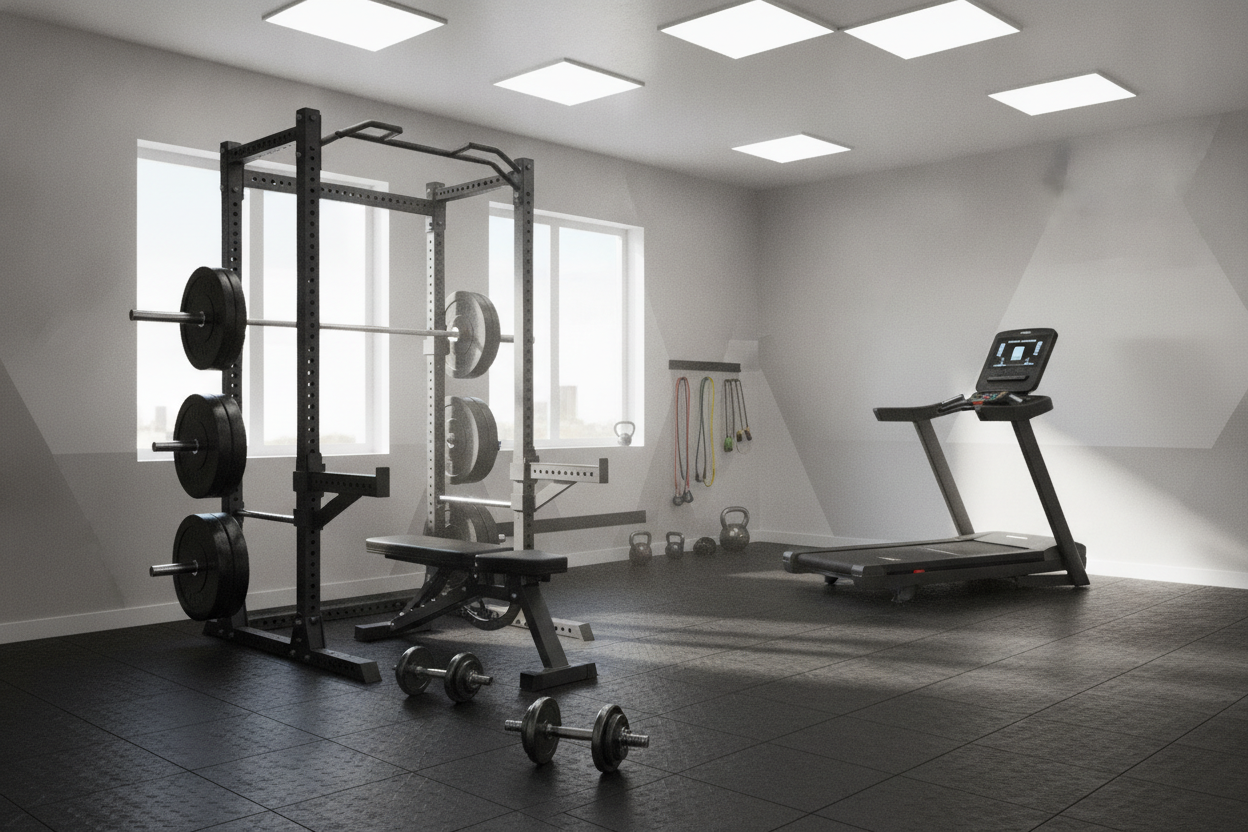
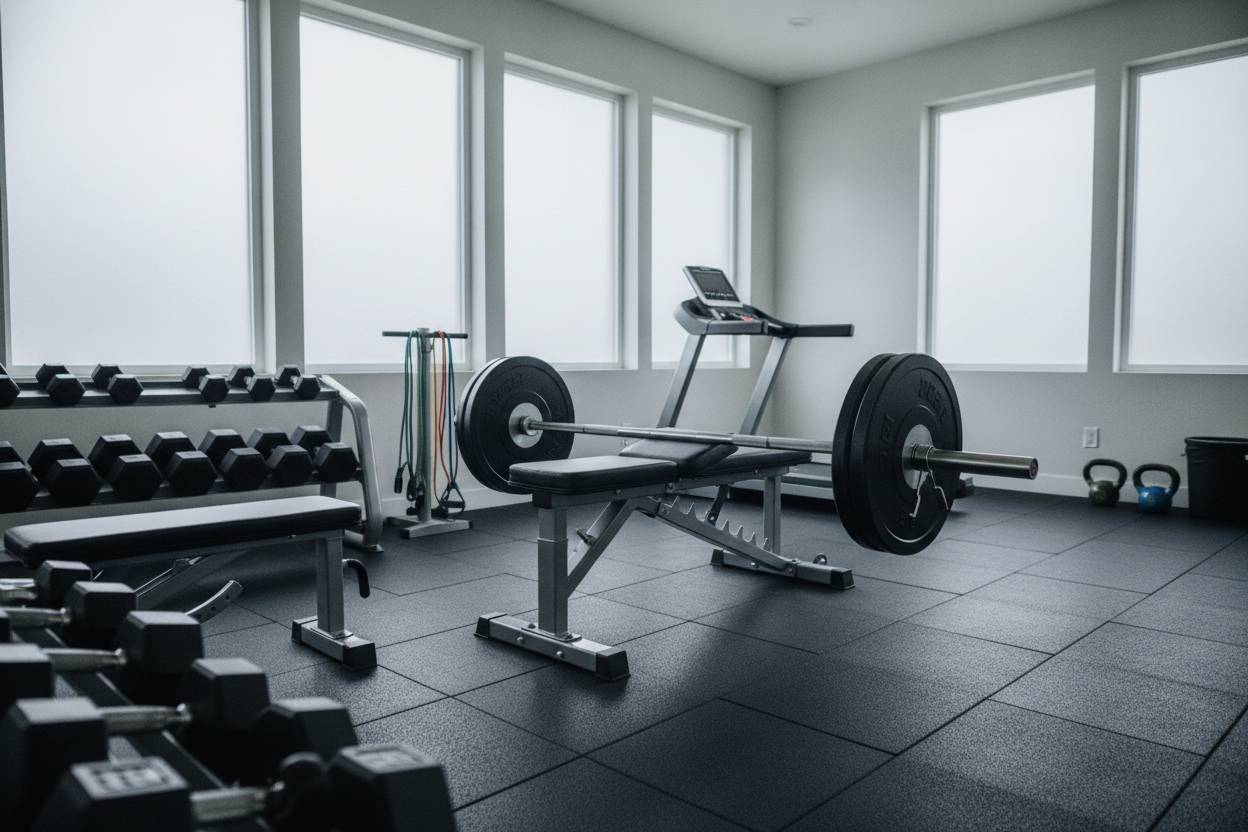
In my garage gym, I started with a standard flat bench pushed against a wall. It worked, but it slid. If you are serious, you need an adjustable weight bench that is heavy enough to stay put when you are driving 300 lbs against it. A light, cheap bench will flip or slide, which is a great way to end up on a gym fail compilation.
If you have the space and the budget, dedicated weight lifting machines like a plate-loaded hip thrust unit are superior for pure hypertrophy. They eliminate the stability requirement and the annoying setup time of rolling a barbell over your legs. But for most of us, a sturdy bench and a barbell are the gold standard for building real-world power.
My Biggest Mistake
Early on, I thought 'more weight equals more glutes.' I loaded up 405 lbs and started cranking out reps. My back hurt for a week. I realized I wasn't actually using my glutes; I was using momentum and my lumbar spine to 'whip' the weight up. I dropped back to 225 lbs, focused on a three-second eccentric and a hard squeeze at the top, and my glutes grew more in two months than they had in the previous year. Leave your ego at the rack.
FAQ
Is hip thrusting better than squatting?
For glute-specific growth, yes. Squats are limited by your back and quad strength, whereas thrusts put the tension directly on the glutes without as much systemic fatigue.
Why do my knees hurt when I hip thrust?
Your feet are likely too close to your butt. Move your feet forward until your shins are vertical at the top of the movement. This shifts the load from the quads to the glutes.
How many times a week should I do them?
Two to three times is the sweet spot. The glutes are large muscles that can handle volume, but you need at least 48 hours between heavy sessions to recover.