Exactly What Are Weight Machines? (And Why I Don't Hate Them)
I spent years in a dusty garage gym thinking anything with a pulley was for people who didn't want to work hard. I'd glare at the leg press while loading my third plate for back squats, convinced that what are weight machines except expensive clothes hangers for the uninitiated? I was wrong, and my beat-up lower back eventually told me so. If you've ever felt intimidated or dismissive of the circuit floor, it's time to look at the gear for what it actually is: a tool for precision.
- Machines use a fixed or semi-fixed path to guide your movement.
- They remove the balance requirement, letting you focus entirely on the target muscle.
- Perfect for training to absolute failure without needing a spotter.
- They aren't 'easier'—they just change where the stress is applied.
Hold Up—What Is a Weight Machine, Exactly?
At its simplest, a weight machine is a piece of strength equipment that constrains your movement to a specific path. Unlike a dumbbell that can wobble in any direction, a machine is on tracks. You sit down, grab the handles, and the machine dictates where your hands or feet go. It's built-in form coaching, though it's not always perfect for every body type.
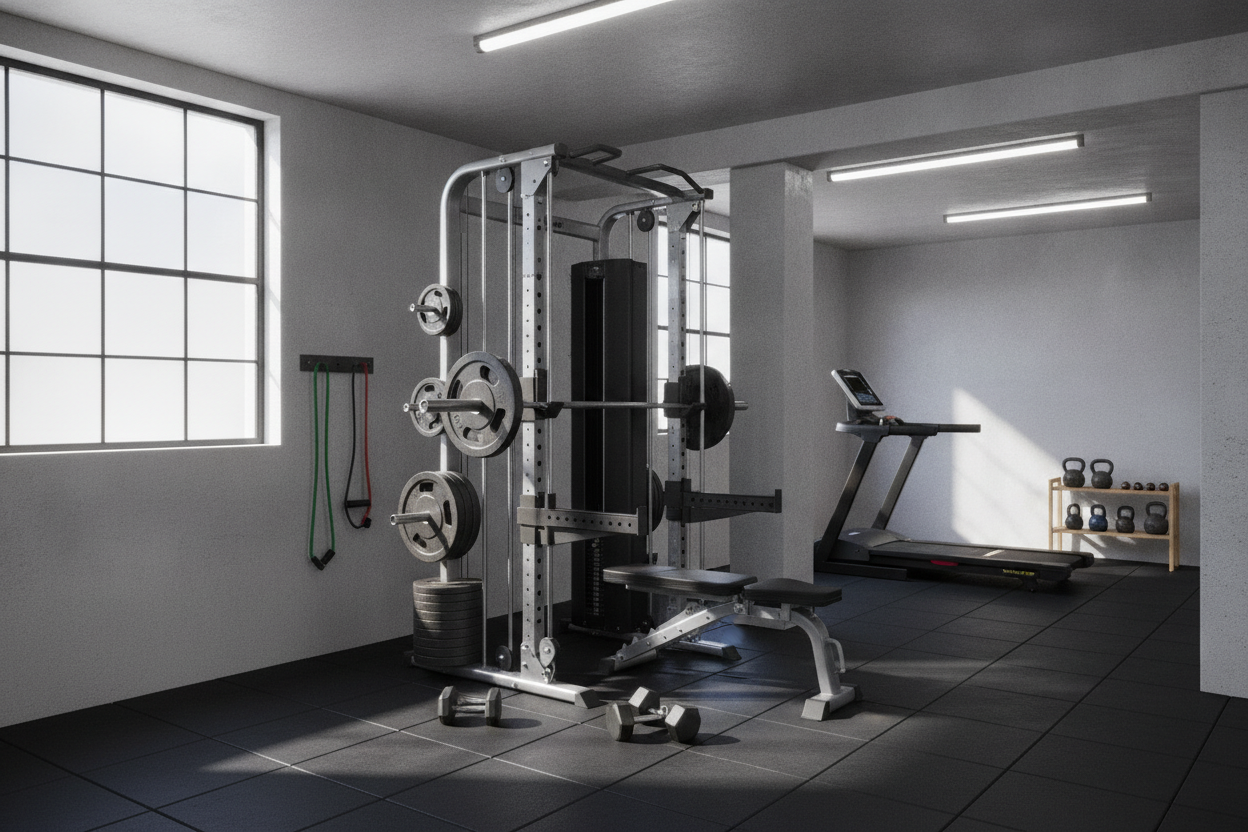
The anatomy is pretty standard across the board. You've got the weight stack (the bricks), the guide rods (the vertical poles the bricks slide on), and the pulleys. If you're a nerd like me, you'll notice the 'cams'—those oval-shaped wheels. These are designed to change the resistance throughout the lift, making it heavier or lighter where your muscles are strongest or weakest. It’s biomechanics disguised as a big hunk of iron.
The 3 Types of Machines You'll Actually Encounter
Not all machines are built the same. First, you have 'selectorized' machines. These are the ones with the pin. You want to lift 150 lbs? Stick the pin in the 150 slot and go. They are the kings of convenience and usually found in every commercial gym from Planet Fitness to Gold's.
Then you have 'plate-loaded' or leverage machines. Think Hammer Strength. You actually have to walk over, grab a 45-lb plate, and slide it onto a peg. These feel more like free weights because there’s no cable friction. The resistance is direct. Finally, there's the hybrid—the Smith Machine. It’s a barbell on a fixed vertical track. It’s the middle ground that purists love to mock, but bodybuilders swear by for high-volume lunges and presses.
The Real Difference When You Drop the Barbell
When you're under a barbell, your brain is panicking about two things: moving the weight and not falling over. Your stabilizers—those tiny muscles in your shoulders, core, and hips—are working overtime. This is why what are free weight exercises and why I ditched machines was my mantra for a decade. I thought if I wasn't stabilizing, I wasn't 'really' lifting.
But here's the catch: stabilization is a double-edged sword. If your core gives out before your quads do during a squat, did you actually give your quads a good workout? Probably not. Machines remove the 'falling over' part of the equation. They allow you to isolate a specific muscle group and hammer it until it has no choice but to grow, without your lower back screaming for mercy.
Are They Actually Better for Building Muscle?
If your goal is hypertrophy (muscle growth), machines might actually be superior in some contexts. When I'm comparing a machine vs free weight lift, I'm looking at the stability-to-output ratio. Because the machine handles the balance, I can push my chest or legs to 100% mechanical failure. I don't have to worry about a 225-lb bar crushing my windpipe if I can't finish the last rep.
In my own training, I've found that my best growth happened when I stopped trying to be a hero with free weights alone. Using a chest-supported row machine, for example, lets me pull way more weight than a bent-over barbell row because my lower back isn't the limiting factor. You can generate more raw force when you feel secure. That's just science, not laziness.
The Final Verdict: Don't Be a Free-Weight Snob
The best routine isn't 'machines vs weights'—it's both. I usually start my sessions with a heavy compound movement like a deadlift or overhead press to hit those stabilizers. But once I'm gassed? I head straight for the machines. It allows me to add volume and intensity safely when my form would otherwise start to break down on a barbell.
My Biggest Machine Mistake
I once tried to max out a leg extension machine that hadn't been lubed since the Bush administration. The cable snapped mid-rep because of the friction heat and age. The lesson? If the guide rods look bone-dry or the movement feels 'crunchy,' walk away. A bad machine is worse than no machine at all. Always check the cable tension before you load the whole stack.
FAQ
Are weight machines good for beginners?
Yes. They provide a safe environment to learn the basic movement patterns without the risk of dropping a heavy bar on yourself. Just don't stay on them forever; you still need to learn how to move your own body in space.
Do machines burn as many calories as free weights?
Generally, no. Because you aren't using your core and stabilizer muscles to stay upright, your total energy expenditure is slightly lower. But for building muscle, that trade-off is often worth it.
Can you get strong using only machines?
Absolutely. You can build incredible force production on a leg press or a hack squat. However, that strength might not translate perfectly to 'real world' tasks like moving a couch, where balance is required.