EVA Foam Floor Mat: Stop Wrecking Your Home Gym Floors
If you have ever tried doing burpees on a cold concrete basement floor, or winced as a dumbbell clanked directly onto your hardwood, you already know the value of good gym flooring. Building a home gym requires protecting your joints, your equipment, and your property's foundation. Enter the eva foam floor mat.
But before you cover your entire garage in cheap foam, you need to know what this material can (and cannot) handle. In this guide, we will break down exactly how to choose the right flooring setup, whether you are building a dedicated yoga studio or a heavy-duty strength training space.
Key Takeaways
- Thickness matters: Standard 1/2-inch mats are great for bodyweight exercises, but you need at least 3/4-inch to 1-inch thickness for equipment support.
- Not for heavy drops: While an eva foam mat provides excellent cushioning, it will not protect your subfloor from a 400-pound deadlift drop (you need horse stall mats or high-density rubber for that).
- Easy installation: An eva foam floor interlocking mat system allows you to assemble a custom gym footprint in minutes without adhesives.
- Water-resistant: Closed-cell EVA foam repels sweat and moisture, making maintenance incredibly simple.
Choosing the Right EVA Foam Floor
Thickness and Density Ratings
The biggest mistake home gym owners make is buying the thinnest eva foam floor tiles they can find. If your primary workouts involve yoga, stretching, or light calisthenics, a 3/8-inch or 1/2-inch eva mat will provide plenty of comfort. However, if you plan to place a stationary bike, adjustable bench, or light free weights on it, you should upgrade to at least 3/4-inch thickness. High-density eva foam interlocking mats will resist compressing and tearing under moderate loads much better than the budget options found at big-box stores.
Tiles vs. Rolls
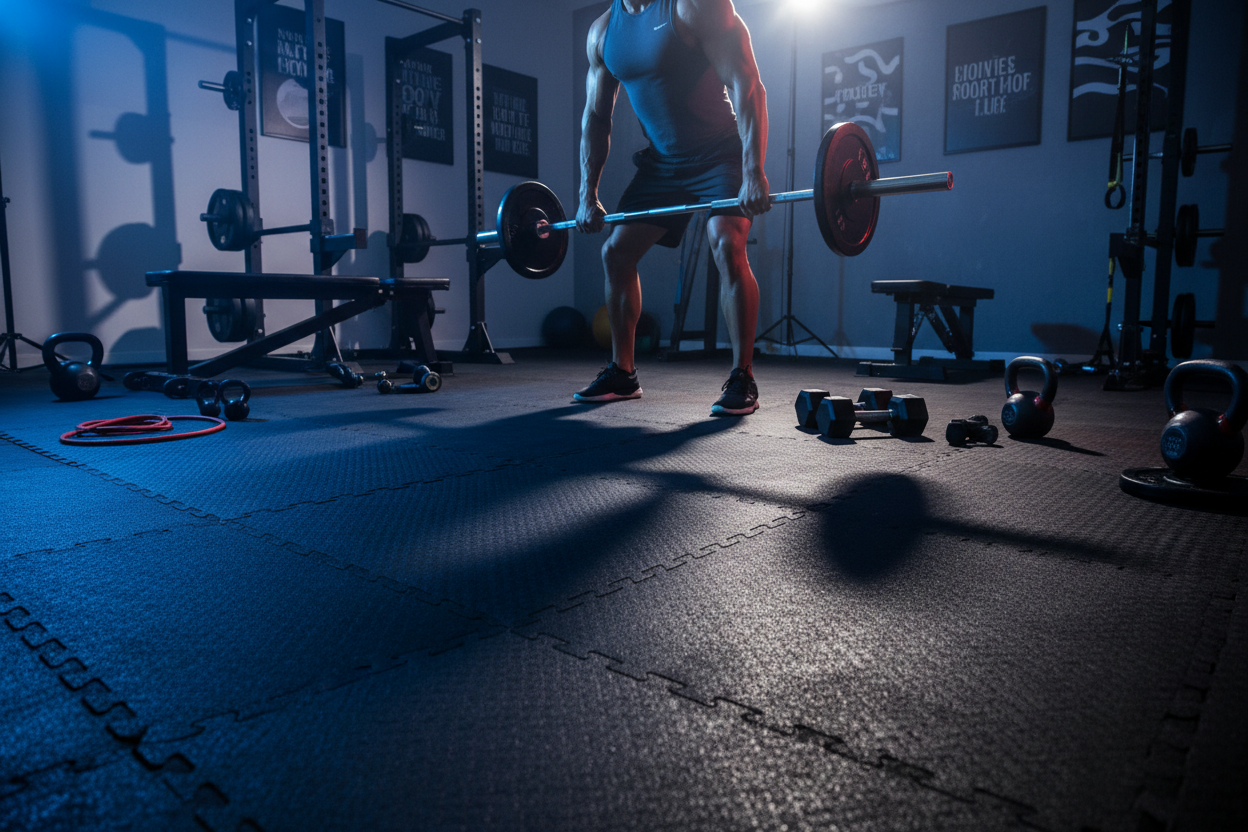
When planning your space, you generally have two choices: interlocking eva foam mats or eva foam flooring rolls. Rolls are excellent for covering long, uninterrupted stretches of floor (like a basement corridor), but they can be cumbersome to install alone. Conversely, eva floor tiles offer modular flexibility. If one eva tile gets damaged by a dropped kettlebell, you can replace that single piece rather than tearing up the whole room.
Planning Your Home Gym Space
Measuring and Edging
Most eva foam squares measure 24x24 inches (4 square feet). When calculating your needs, always order 10% to 15% more than your room's square footage to account for cutting around corners and pillars. A major benefit of an eva foam floor is how easy it is to customize—a simple utility knife is all you need to trim the edges flush against your baseboards. Many premium eva foam interlocking tiles also come with detachable border pieces to give freestanding mat areas a clean, finished look without exposed puzzle teeth.
Performance and Limitations
Where EVA Excels (and Where It Fails)
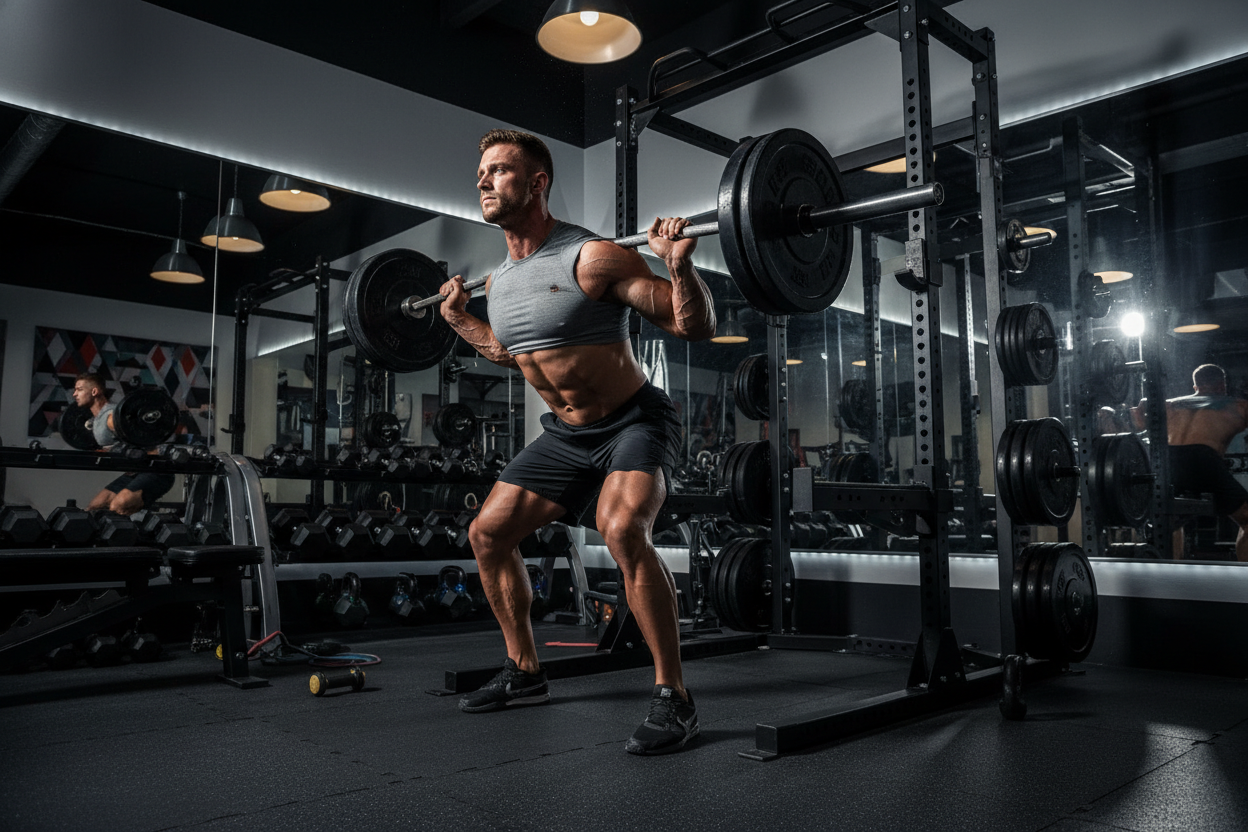
An eva floor mat is the undisputed king of barefoot comfort and thermal insulation. It creates a barrier between you and a freezing garage floor. However, we have to be realistic about strength training. If you bolt a heavy power rack onto standard eva foam tiles, the rack will sink into the foam over time, creating instability. For heavy lifting zones, we recommend a hybrid approach: use high-density rubber mats directly under your squat rack, and surround the rest of the room with a comfortable eva foam floor.
From Our Gym: Honest Take
When I first converted my single-car garage into a training space, I covered the entire 200-square-foot area with 1/2-inch interlocking eva foam mats. For the first few months of dumbbell workouts and kettlebell swings, it was a dream. The thermal barrier made a huge difference during Canadian winters.
But here is the honest truth: once I upgraded to a 300-pound power rack and started doing heavy barbell work, the foam under the rack's feet compressed permanently to paper-thin levels. The rack developed a slight wobble. I ended up cutting out the foam squares directly under the rack and replacing them with 3/4-inch rubber stall mats. The EVA foam is still perfect for my stretching and plyometric zones, but if you are pushing serious weight, do not expect foam to act like commercial gym rubber.
Frequently Asked Questions
Is an eva foam floor mat safe for hardwood floors?
Yes, EVA foam is generally safe and will not scratch hardwood. However, if your hardwood has a delicate finish, dirt trapped between the mat and the wood can cause micro-abrasions over time. It is best to sweep thoroughly before laying down your eva foam interlocking mats.
Can I park my car on eva floor tiles in a garage gym?
No. The weight of a vehicle will permanently crush the cellular structure of an eva foam mat. If your garage serves a dual purpose, you will need to pick up the tiles before pulling your car in, or invest in heavy-duty PVC or vulcanized rubber flooring.
How do I clean an eva foam floor?
Because it is a closed-cell material, an eva foam floor will not absorb sweat or spills. Simply sweep or vacuum (without a motorized beater brush) to remove debris, and mop with warm water and a few drops of mild dish soap. Avoid harsh chemicals like bleach, which can degrade the foam.