
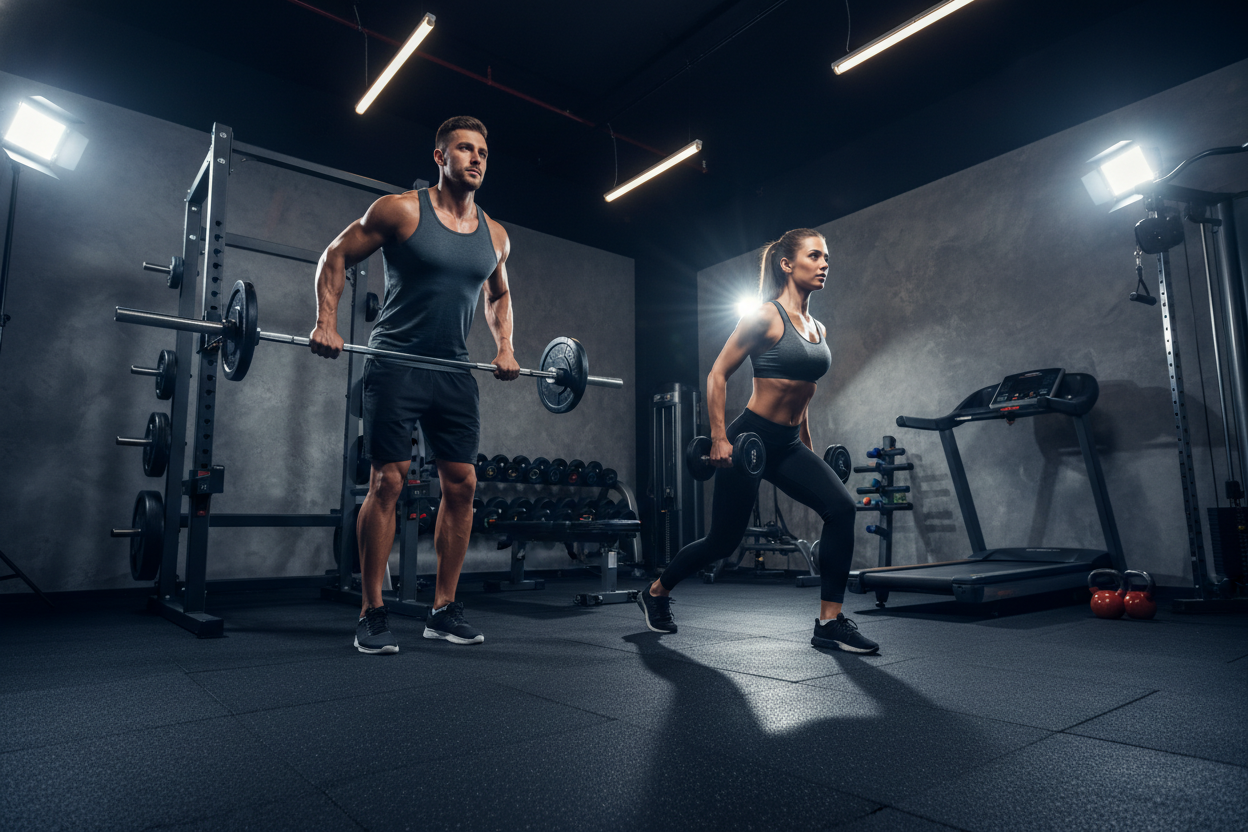
Equipment Exercises: Maximizing Your Home Gym Setup
Hitting a wall in your home training space is frustrating. You've invested in the gear, cleared out the garage, and set your schedule, yet your progress has stalled. Often, the culprit isn't a lack of effort, but a lack of intention behind your equipment exercises.
Whether you are dealing with limited floor space or trying to break through a stubborn muscle-building plateau, optimizing how you use your gear changes everything. In this guide, we will break down how to structure your routine, choose the right tools for your space, and get the most out of your home gym investment.
Key Takeaways
- Prioritize compound movements: Base your routine on multi-joint lifts before moving to isolation work.
- Maximize spatial efficiency: Choose versatile gear like adjustable dumbbells or functional trainers to save square footage.
- Focus on biomechanics: Ensure your racks and benches support your natural range of motion for safer lifting.
- Maintain your investment: Regular lubrication and hardware checks prevent mid-lift failures and extend equipment life.
Building Your Routine Around the Right Gear
Not all gear is created equal when it comes to maximizing your time under tension. Designing effective equipment workouts requires understanding the specific advantages of your hardware.
Free Weights vs. Cable Systems
Free weights like barbells and dumbbells are the gold standard for building raw strength and core stability. However, integrating a functional trainer or pulley system allows for constant tension throughout the entire range of motion. If you want a well-rounded workout with equipment, blending the raw power of free weights with the targeted isolation of cables is the ultimate strategy.
Optimizing Your Space for Versatility
In North American homes, space is the ultimate premium. A sprawling commercial gym allows for single-use machines, but a garage or basement setup demands versatility.
Clearance and Footprint Matters
Before planning your workouts with equipment, map your physical boundaries. A standard power rack requires at least a 10-foot by 10-foot area to comfortably load a 7-foot Olympic bar. Additionally, ceiling height is crucial; if you plan on doing standing overhead presses, you need a minimum of 90 to 96 inches of vertical clearance. Measure twice, buy once.
From Our Gym: Honest Take
Over the last year, I transitioned my personal garage setup from a basic squat stand to a functional trainer-power rack combo. The difference in my training was immediate. Being able to transition from heavy barbell squats directly into cable pull-throughs saved me 20 minutes a session.
However, I'll be completely honest about a common oversight: the pulley ratio. The system I use has a 2:1 ratio, meaning a 100-pound weight stack only delivers 50 pounds of actual resistance. For heavy lat pulldowns, I maxed out the stack much faster than anticipated. If you are an advanced lifter, always double-check the pulley ratio before investing in cable-based gear.
Frequently Asked Questions
Are equipment exercises better than bodyweight routines?
While bodyweight training is excellent for foundational strength and mobility, adding external resistance allows for precise progressive overload. This makes it significantly easier to trigger muscle hypertrophy and push past strength plateaus over time.
How much space do I really need for a complete home gym?
You can execute a highly effective full-body routine in a space as small as 8x8 feet using adjustable dumbbells and a foldable incline bench. For a full power rack setup, aim for a minimum of 10x10 feet to ensure safe loading and unloading.
What is the best way to maintain my home gym gear?
Wipe down upholstery with a non-abrasive cleaner after every session to prevent cracking. Once a month, check all bolts on your racks and apply a silicone-based lubricant to the guide rods of any cable machines to ensure smooth operation.


