Effective Full Body Workouts Explained: Stop Wasting Time
If you are juggling a demanding career, family time, and trying to squeeze a training session into a cramped garage gym, you already know that efficiency is everything. The days of spending two hours isolating a single muscle group are over. Embracing effective full body workouts is the secret to breaking through frustrating plateaus without practically living in your home gym.
In this guide, we will break down exactly how to structure your training, what equipment actually matters, and how to maximize your space for complete, functional strength development.
Key Takeaways
- Compound movements are the foundation of any time-efficient, high-yield routine.
- You only need 3 to 4 training days per week for optimal muscle recovery and growth.
- A power rack, barbell, and adjustable bench offer the absolute highest ROI for home gym setups.
- Proper programming prevents overtraining while hitting every major muscle group efficiently.
Building the Perfect Space for Compound Lifts
When you transition away from isolation-heavy bodybuilding splits, your equipment needs change drastically. You no longer need a dozen specialized machines taking up valuable square footage. Instead, your focus shifts to versatile, heavy-duty basics.
Essential Gear for the Ultimate Full Body Workout
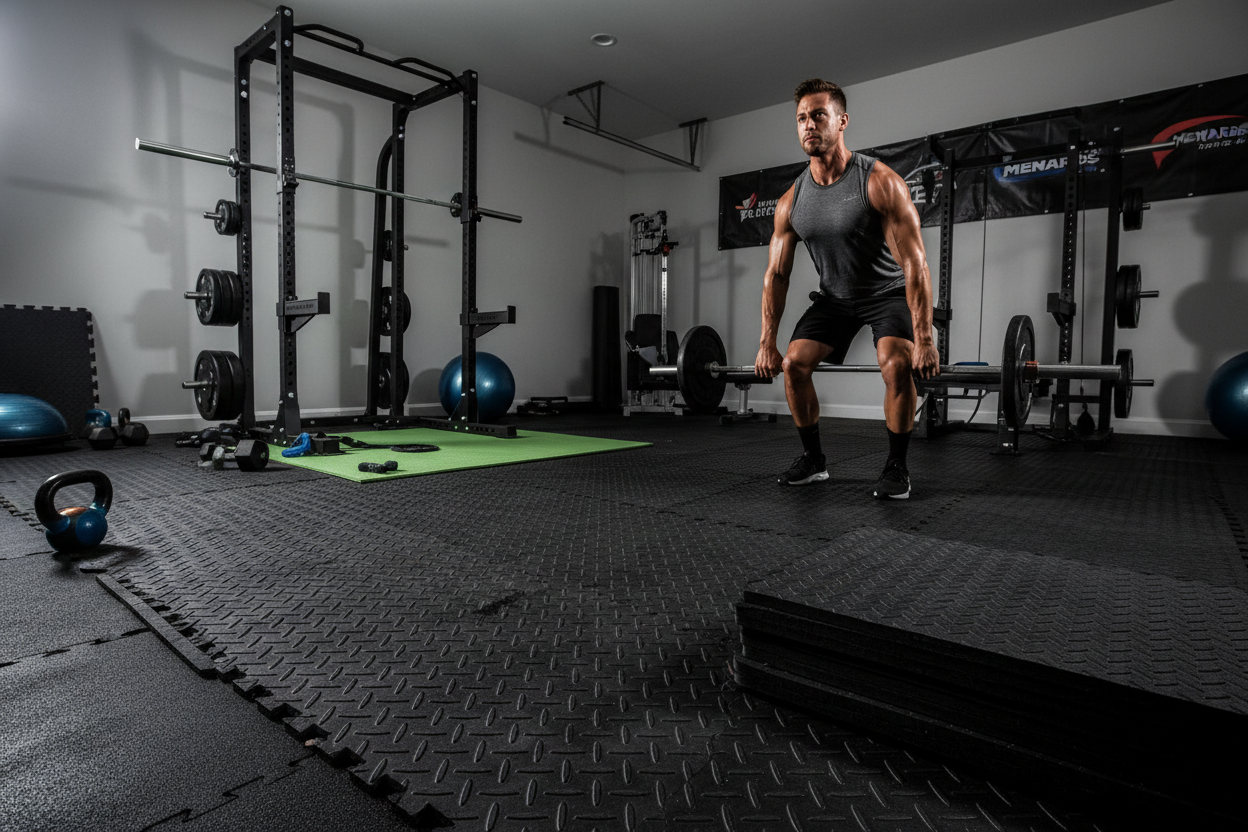
To execute the ultimate full body workout, you need equipment that allows you to squat, press, and pull safely. A quality power rack or half rack is non-negotiable. If you are working with a standard North American garage stall (roughly 10x20 feet), a rack with a 48-inch depth provides plenty of interior working space for heavy squats without eating up your entire floor plan. Pair this with a 700lb-capacity flat bench and a durable barbell, and you have a complete commercial-grade setup in a fraction of the space.
Structuring Your Routine for Maximum Gains
Many home gym owners struggle with programming. They buy the premium gear but lack the blueprint to use it effectively.
What is the best full body workout routine?
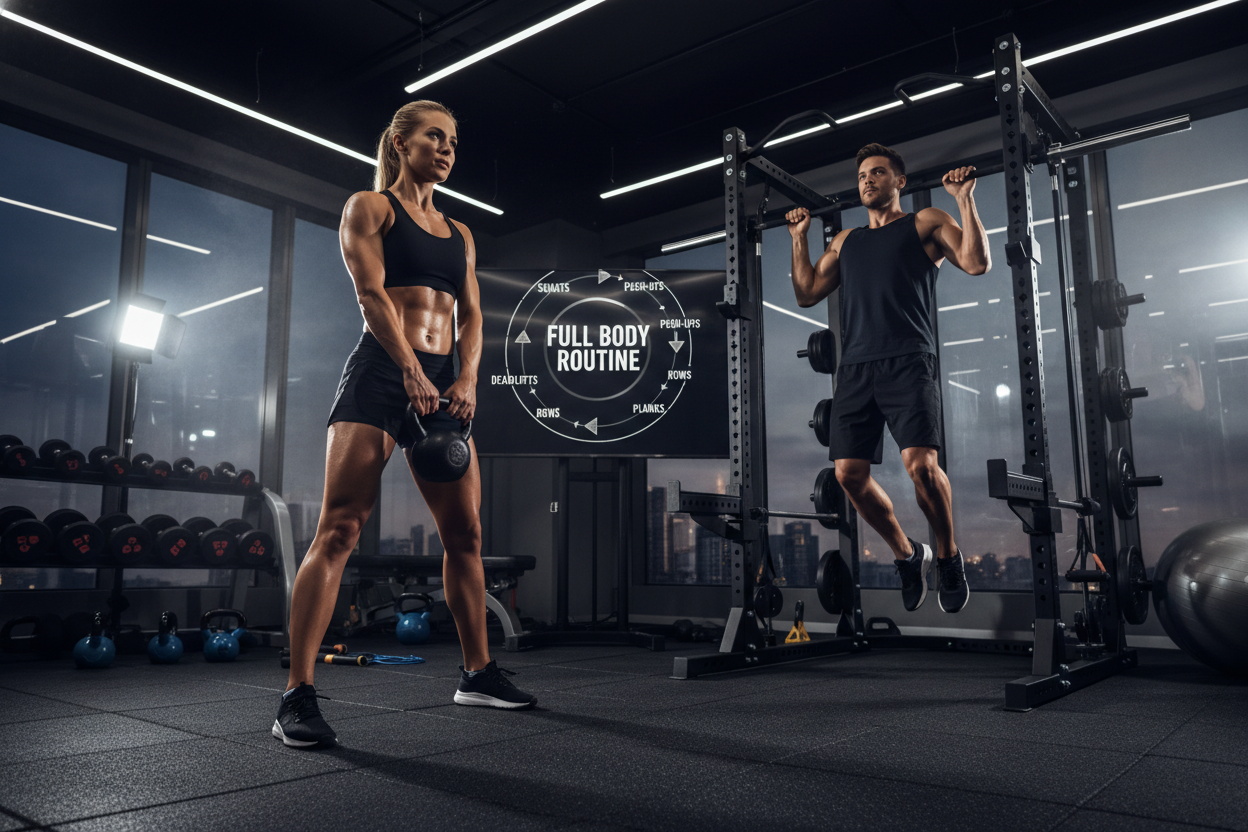
A question we hear constantly is: what is the best full body workout routine? The truth is, the best routine is one built on fundamental movement patterns, not fitness industry gimmicks. A highly effective session should include a squat variation, a hip hinge (like a deadlift or kettlebell swing), a horizontal or vertical push, and a heavy pulling movement. By focusing on these four pillars, you stimulate maximum muscle fibers and trigger a much greater hormonal response for growth.
Why Full Body Training is the Ultimate ROI
From a budget perspective, full body training is incredibly forgiving. Because you are relying on free weights rather than single-station selectorized machines, your initial investment goes much further. You can build a world-class physique with just a few hundred pounds of cast iron plates and a solid rack, saving thousands of dollars compared to outfitting a commercial-style circuit in your basement.
From Our Gym: Honest Take
I spent years running a traditional 5-day 'bro split' before transitioning to full body training in my own basement gym. The switch was humbling. When I started doing heavy front squats followed immediately by overhead presses, I quickly realized the limitations of my entry-level gear. At 6 foot 2, I needed at least 85 inches of ceiling clearance for standing barbell presses—something most product pages fail to mention. I also noticed that the aggressive knurling on my upgraded barbell made a massive difference when my grip was fatigued at the end of a grueling full body session. One honest caveat: full body workouts demand a lot from your central nervous system. I had to dial back my accessory work just to recover properly, but the functional strength gains were undeniable.
Frequently Asked Questions
How many times a week should I do a full body workout?
For most lifters, 3 days a week is the sweet spot. This schedule allows for 48 hours of rest between sessions, which is critical for muscle repair and central nervous system recovery.
Is a home gym sufficient for full body routines?
Absolutely. In fact, it is the ideal environment. With just a barbell, a set of bumper or iron plates, and a sturdy rack, you can perform every essential compound movement needed to build strength and size.
Can advanced lifters benefit from full body training?
Yes. Advanced lifters often use full body routines to increase their training frequency for specific lifts, utilizing undulating periodization to manage fatigue while continuously pushing heavy weights.