Effective Chest Home Workout with Dumbbells You Can Do Today
Building a strong and defined chest doesn't always require a gym membership or expensive equipment. With a pair of dumbbells and a simple plan, you can achieve impressive results without leaving your living room. This guide will walk you through an efficient chest workout at home using dumbbells to build strength, improve muscle definition, and enhance functional fitness.
Why Choose a Chest Home Workout with Dumbbells
Dumbbells are versatile, compact, and allow for greater range of motion compared to many machines. They enable you to work each side of your body independently, correcting muscle imbalances and activating stabilizing muscles in your chest, shoulders, and arms. For those training at home, dumbbells take up minimal space and can be used for a variety of exercises. Additionally, working out with dumbbells encourages better form and can reduce injury risk.
Warm-Up and Preparation
Before starting any chest workout at home with dumbbells, a proper warm-up is essential. Spend 5-10 minutes on light cardio such as jumping jacks or arm circles, followed by dynamic stretches targeting your chest and shoulders. This increases blood flow to the muscles and prepares your joints for movement. You should also check that your workout area is clear of obstacles to maintain safety.
Core Dumbbell Exercises for Chest Development
Dumbbell Bench Press
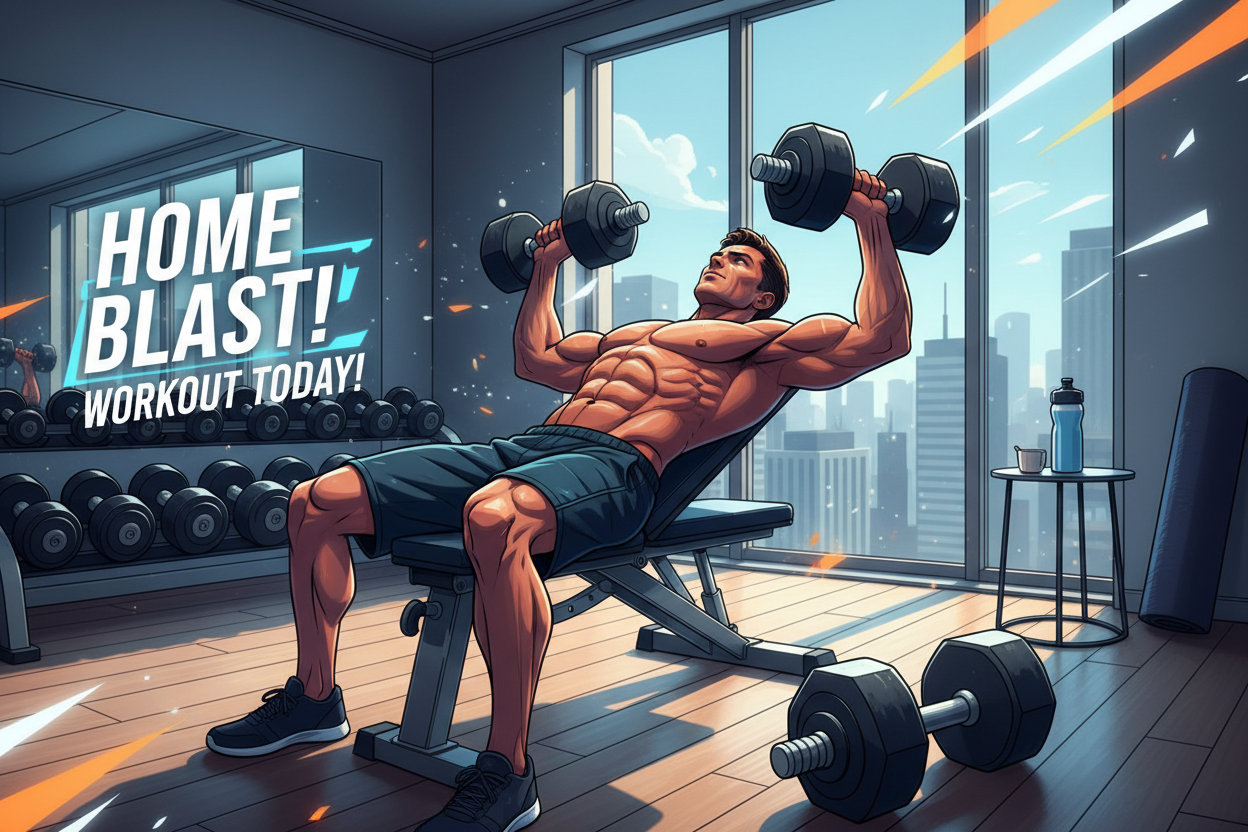
If you have an adjustable bench, this exercise closely replicates the classic barbell bench press, but with added benefits. Lie back on the bench with a dumbbell in each hand, palms facing forward. Press the weights upward until arms are fully extended, then lower back with control. If no bench is available, you can perform a floor press, which limits range but still offers significant chest activation.
Dumbbell Fly
This move isolates your chest and stretches the muscle fibers. Lie on a bench or the floor, holding dumbbells above your chest with elbows slightly bent. Slowly lower the weights in an arc motion until you feel a stretch, then bring them back together. Avoid locking out your arms completely to keep tension on the chest.
Incline Dumbbell Press
Targeting the upper chest, the incline press can be performed on a bench set at 30-45 degrees. Press the dumbbells up and together, focusing on the upper pectoral engagement. If you don’t have a bench, place a sturdy object under your back to create a slight incline safely.
Dumbbell Pullover
This often-overlooked exercise works the chest as well as the lats. Lie on your back, holding one dumbbell above your chest with both hands. Lower the weight behind your head in a controlled manner, then bring it back over your chest. Keep elbows slightly bent to avoid shoulder strain.
Structuring Your Chest Workout at Home
For optimal results, select 3-4 exercises and perform them for 3 sets of 8-12 repetitions each, resting 60-90 seconds between sets. Beginners should start with lighter weights and focus on proper form, gradually increasing resistance over time. Consistency is key — aim to train the chest 1-2 times per week and combine with a balanced workout plan for other muscle groups.
Personal Experience with Dumbbell Chest Training at Home
When I first tried chest workouts at home with dumbbells, I was surprised at how effective they were compared to gym sessions. Starting with the floor press and fly variations, I noticed increased stability and muscle engagement within weeks. Not only did my chest become stronger, but my shoulder health improved thanks to the free movement that dumbbells allow. Being able to train anytime without commuting was a huge motivator to stay consistent.
Safety and Form Tips
Maintain control of the weights throughout each movement and avoid jerking motions. Keep your wrists straight, shoulders retracted, and engage your core for better stability. Breathing also plays an important role — exhale during the pressing phase and inhale when lowering the weights. If you feel discomfort in your joints, reduce the weight or adjust your range of motion.
Progression and Variations
To continue improving, gradually increase dumbbell weight, adjust angles, or slow down the tempo for time under tension. You might also explore unilateral presses or flys to focus even more on eliminating muscle imbalances. Incorporating these variations can help you avoid plateaus and keep your chest workout at home with dumbbells engaging and challenging.
Final Thoughts
Training your chest at home with dumbbells is both practical and effective when approached with proper technique and consistency. Whether you have access to a bench or just a flat floor space, the right exercises can help you achieve a strong, sculpted chest without a gym. Dedicate time to warm up, use correct form, and progressively challenge yourself to keep seeing results over the long term.