Effective Chest Exercises to Target Every Muscle Head
Building a well-developed chest requires more than just doing endless bench presses. The chest is composed of different muscle heads and areas, including the upper, middle, and lower portions of the pectoralis major, with each responding best to specific angles and movements. A balanced workout routine ensures that all parts of the chest are engaged, creating symmetry, strength, and a proportional upper body.
Understanding the Anatomy of the Chest
The chest muscles are primarily the pectoralis major and pectoralis minor. The pectoralis major has clavicular (upper), sternal (middle), and abdominal (lower) fibers, each activated differently. Knowing which exercises target certain fibers will help you optimize your training and prevent muscle imbalances.
Upper Chest Exercises
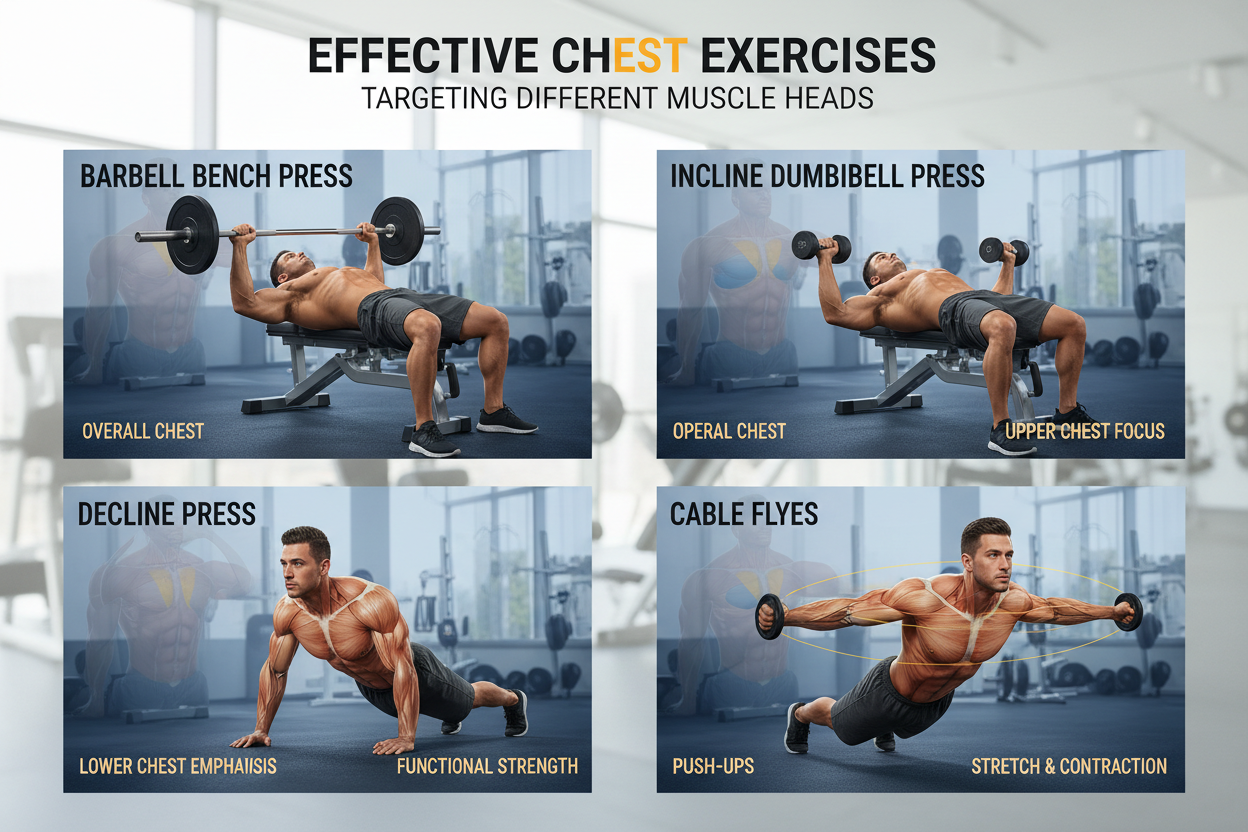
To work the clavicular head of the pectoralis major, incline movements are the most effective. Incline bench presses using a barbell or dumbbells should be set at an angle around 30-45 degrees. Incline dumbbell flyes also isolate the upper chest, improving definition and strength. Cable incline presses can provide constant tension throughout the movement, which helps in maximizing muscle activation.
Middle Chest Focus
The sternal head is best targeted with flat bench variations. Flat barbell bench presses remain a staple for overall mass and strength. Flat dumbbell presses allow for a greater range of motion, helping with muscle fiber recruitment. If you have access to a cable machine, standing cable presses at chest level are a great choice for a controlled contraction.
Lower Chest Activation
The abdominal fibers respond most to decline movements. Decline barbell presses are good for heavy lifting, while decline dumbbell presses offer more control. Dips leaning forward can also effectively engage the lower part of the chest while involving secondary muscles such as the triceps and shoulders.
Secondary Chest Exercises
Beyond main lifts, secondary exercises play a vital role in enhancing chest development. Dumbbell pullovers, for instance, provide a stretch that can improve chest expansion. Push-ups with different hand placements can shift emphasis to specific areas, such as diamond push-ups engaging inner chest or wide push-ups emphasizing the outer chest. Cable crossovers at varying heights also help to target the upper, middle, and lower regions distinctly.
Balancing All Heads in a Single Workout
For a chest routine that works all parts, you can organize your exercises in order of priority: start with the area you aim to improve most, then move to others. A sample session could be:
- Incline barbell bench press – 3 sets of 8-10 reps
- Flat dumbbell press – 3 sets of 8-10 reps
- Decline barbell press – 3 sets of 10-12 reps
- Cable crossovers (high, mid, low) – 3 sets of 12-15 reps each
- Dips leaning forward – 3 sets until near failure
Proper Form and Recovery
Maintaining proper form eliminates unnecessary strain on the shoulders and elbows. Avoid bouncing the weight or locking out your elbows completely, as this shifts emphasis away from the chest. Incorporating rest periods between workouts allows the muscles to recover and grow; typically, 48 hours between intense chest workouts is ideal.
Personal Experience and Insights
When I first started training, I focused almost exclusively on flat bench presses. The result was a strong but flat-looking chest, with little upper chest definition. Once I learned to mix in incline presses and dips, my chest took on a more rounded and full appearance. The change wasn't immediate, but over months of consistent training with targeted exercises, I noticed significant improvement in strength, aesthetics, and balance.
Additional Tips
Warm up properly to reduce injury risk, and consider using slow, controlled movements rather than rushing through reps. Tracking your workouts helps identify weaknesses and ensure progressive overload. Nutrition also plays a critical role—adequate protein, calories, and hydration will support your training efforts.
Conclusion
A well-developed chest comes from understanding anatomy, choosing exercises that target each part, and maintaining consistent form. By combining upper, middle, lower, and secondary exercises into your routine, you can achieve balance and symmetry while maximizing strength gains. Tailor your workout to your specific needs, and adjust as you improve to maintain continual progress.