Dynamic Full Body Exercises: The Complete Training Guide
Are you spending hours isolating individual muscle groups but still feeling sluggish? If you are managing a home gym with limited space and a tight schedule, the traditional bodybuilding split might be holding you back. Integrating dynamic full body exercises into your routine bridges the gap between raw strength and athletic mobility.
These multi-joint movements recruit your upper and lower body simultaneously, forcing your core to stabilize while you move through space. This guide will walk you through how to properly equip your home gym, plan your floor space, and program these highly efficient movements for maximum results.
Key Takeaways
- Dynamic movements recruit multiple muscle groups at once, slashing your total workout time while maximizing calorie burn.
- You do not need a massive commercial gym setup; a single pair of kettlebells or adjustable dumbbells is often enough.
- A standard 6x8 foot clear floor space provides ample room for most dynamic routines.
- Incorporating a dynamic full body workout two to three times a week accelerates fat loss and improves functional joint mobility.
Equipping Your Space for a Dynamic Full Body Workout
When programming a dynamic full body workout, your equipment needs to facilitate fluid, multi-planar movement. Bulky single-station machines simply will not cut it.
Free Weights: Dumbbells & Kettlebells
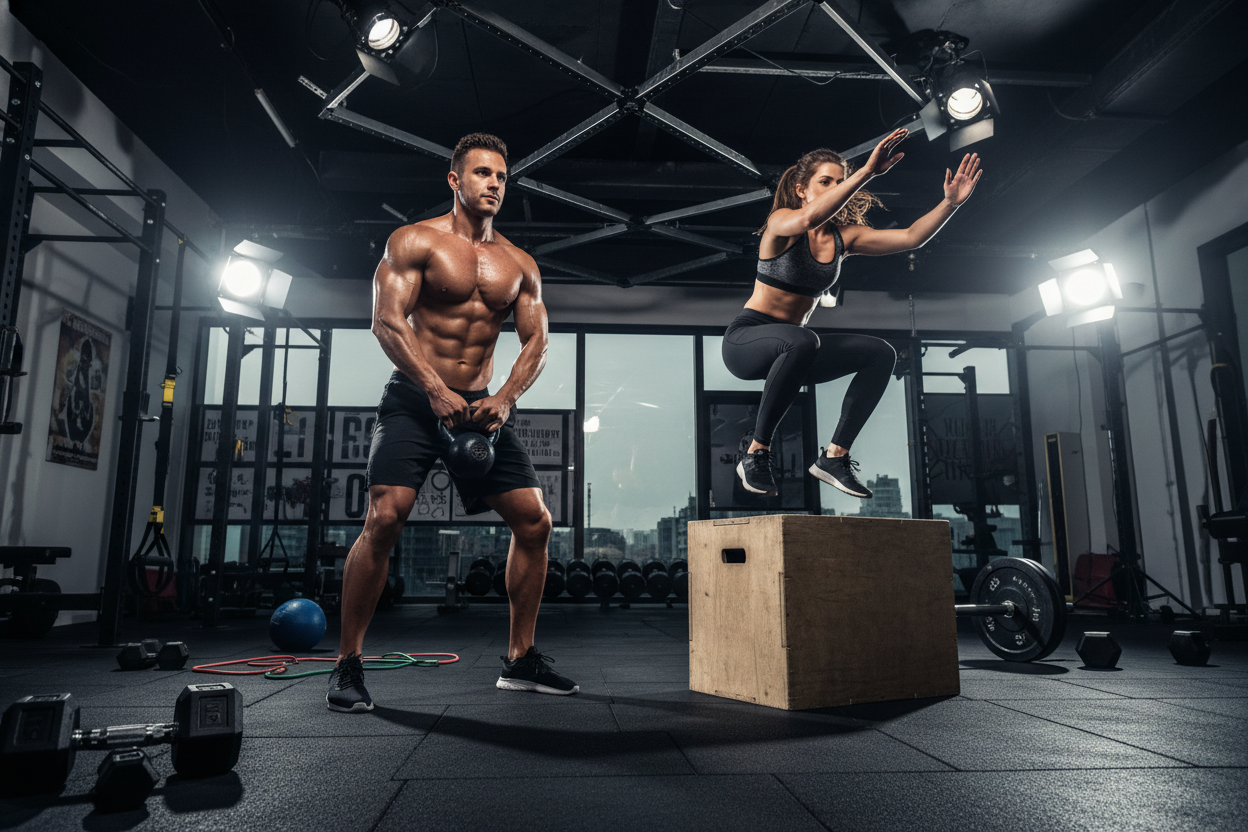
These are the undisputed kings of dynamic training. Movements like thrusters, snatches, and renegade rows require gear that moves naturally with your body's mechanics. Adjustable dumbbells save a tremendous amount of space, but ensure the locking mechanism is secure enough for explosive overhead movements before purchasing.
Suspension Trainers and Resistance Bands
For those in apartments or tight basements, suspension trainers are invaluable. They leverage body weight for dynamic rows, suspended lunges, and core rotations, then easily pack away into a drawer when not in use.
Optimizing Your Home Gym Layout
Executing dynamic exercises safely requires a different spatial approach than a traditional powerlifting setup.
Defining Your 'Dynamic Zone'
Unlike a static bench press, dynamic exercises require lateral, forward, and vertical clearance. You need at least a 6x8 foot footprint of completely clear space. Pay close attention to your ceiling height. If you are doing overhead kettlebell swings or wall balls, standard 8-foot basement ceilings might feel restrictive.
Why Flooring Matters
Explosive movements demand absolute stability. High-density rubber stall mats (at least 3/4-inch thick) are ideal. They prevent dropped equipment from bouncing dangerously and provide enough traction for lateral bounds and quick directional changes.
From Our Gym: Honest Take
When I first transitioned my personal garage gym to focus heavily on dynamic movements, I learned a hard lesson about ceiling height and flooring. At 6'2', doing dumbbell snatches in a basement with an 84-inch clearance meant I was constantly grazing the rafters, throwing off my form. I eventually had to move my entire setup to the garage. Furthermore, I initially tried doing these routines on cheap, interlocking foam puzzle mats—which was a huge mistake. The mats separated entirely during lateral lunges, nearly causing a rolled ankle. Upgrading to seamless, heavy-duty rubber flooring was an absolute game-changer for my grip and joint health during explosive sets.
Frequently Asked Questions
Are dynamic full body workouts effective for building muscle?
Yes. While they are famous for burning calories and building cardiovascular endurance, using progressive overload with heavy kettlebells or dumbbells during dynamic movements will absolutely stimulate muscle hypertrophy.
How much space do I actually need?
A clear 6x8 foot area is the minimum recommendation. You need enough room to lunge forward, step side-to-side, and fully extend your arms overhead without hitting walls, racks, or low-hanging lights.
Can beginners safely do dynamic full body exercises?
Absolutely. The key is starting with bodyweight or very light resistance to master the fundamental movement patterns—like the hip hinge, squat, and press—before adding speed or heavy weights to the equation.