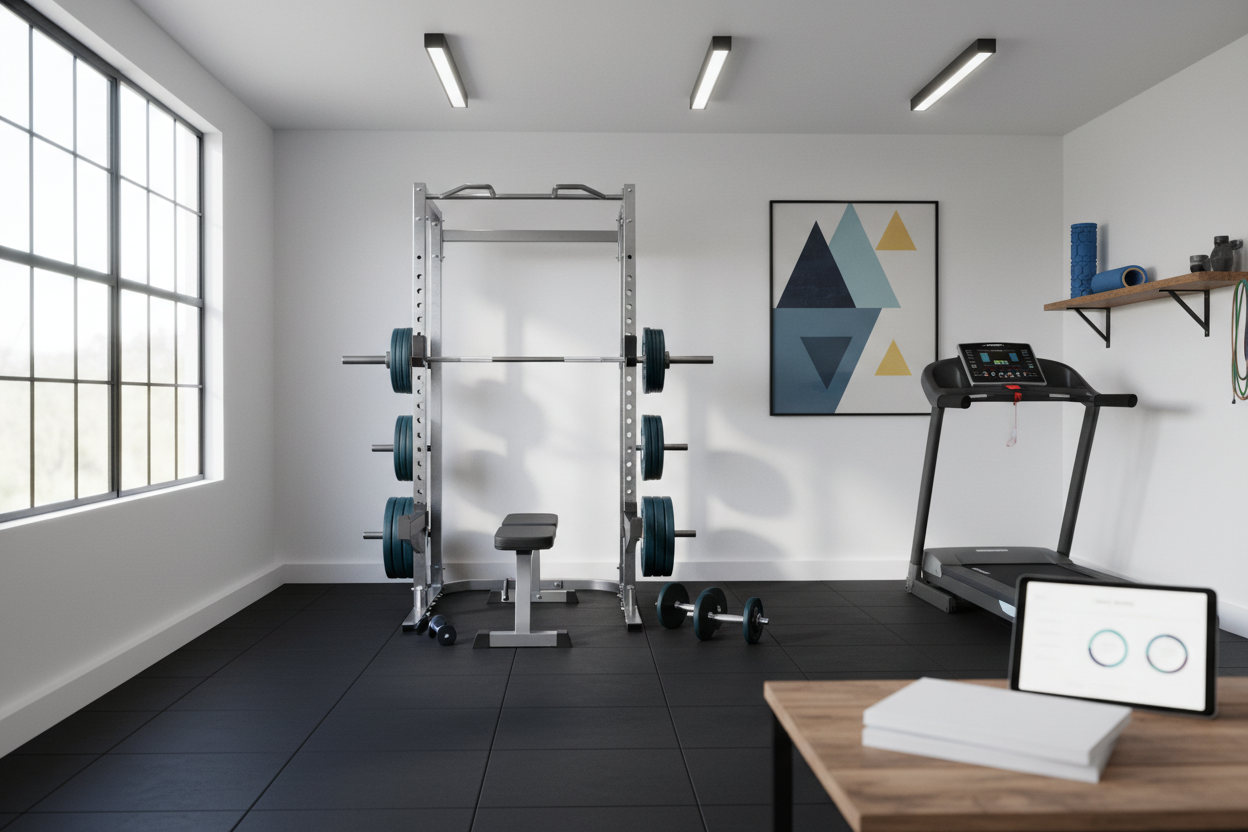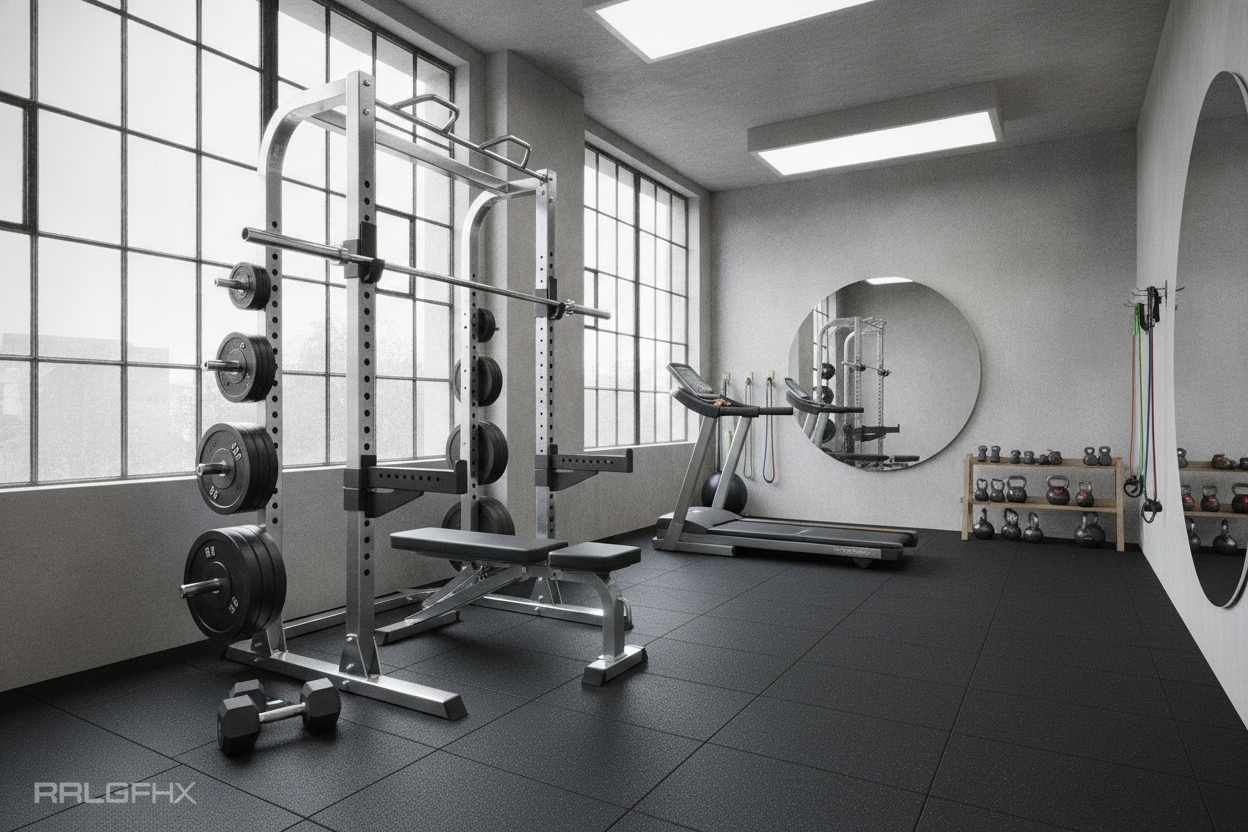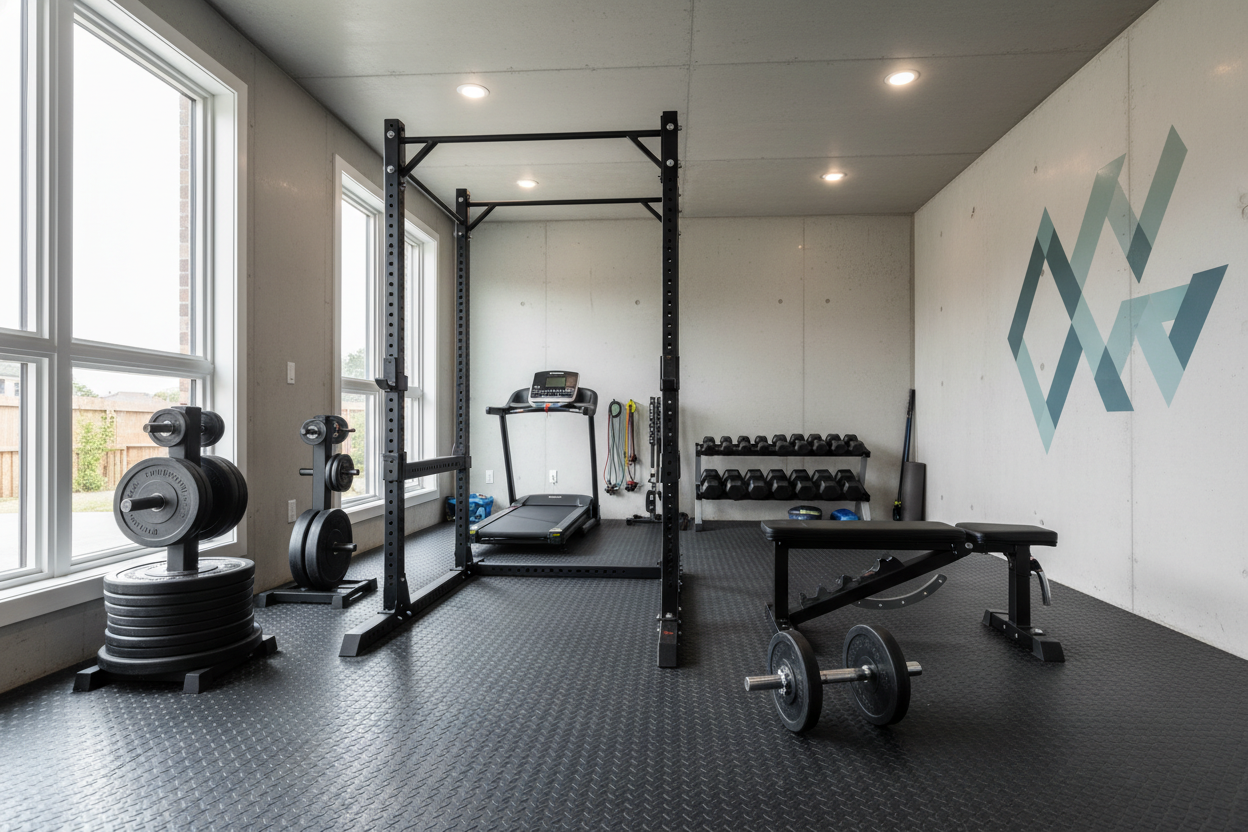
Do You Need a Rack for a Beginner Weight Training Routine?
I spent three hours last night scrolling through power rack reviews, comparing 11-gauge steel versus 14-gauge and debating if I really needed laser-cut holes. Then I looked at my garage floor and realized I hadn't actually lifted a weight in four days. The gear-obsession trap is real. You think you need a $2,000 setup to start a beginner weight training routine, but that is just a high-end excuse for procrastination.
Your muscles do not have sensors that detect whether you are standing inside a powder-coated cage or on a piece of plywood in your basement. They only respond to tension. If you have a set of weights and a plan, you can get stronger today without waiting for a freight delivery.
Quick Takeaways
- A power rack is a luxury, not a day-one requirement for a basic weight training plan.
- Prioritize a high-quality adjustable bench and a versatile set of dumbbells first.
- Focus on movement patterns (hinge, squat, push, pull) rather than specialized equipment.
- Upgrade to a rack only when your safety or your progress (specifically heavy squats and bench) demands it.
Why You Don't Need a $2,000 Setup to Start
The fitness industry wants you to believe that if you aren't squatting in a $1,500 rack, you aren't really training. It is a lie designed to sell steel. An intro weight lifting routine should be about building a foundation, not building a showroom. Most people who buy a full rack immediately end up using it as a very expensive laundry hanger because they never developed the habit of lifting first.
Starting with minimal gear forces you to master the basics. You learn how to stabilize your body without the safety nets of a machine or a cage. When you eventually move to a barbell, that stability translates into massive strength gains. Plus, it gives you time to figure out if you actually enjoy lifting before you sacrifice half of your garage footprint to a 4-post monster.
I have seen guys build more impressive physiques with a pair of 50-pound dumbbells and a flat bench than some dudes with a full Rogue catalog in their climate-controlled basement. It is about the work, not the weld quality of your J-cups. If you have 20 square feet of space, you have enough room for a basic weightlifting routine that will keep you busy for the next six months.
The Bare Minimum Gear You Actually Need
If you aren't buying a rack yet, where should the money go? The first piece of real furniture in any home gym should be a Gxmmat adjustable weight bench. You need something that doesn't wobble when you are holding 60-pound dumbbells over your face. Look for a bench with a high weight capacity—at least 600 lbs total—and a solid tripod or wide-base design.
Next, get a pair of adjustable dumbbells. If you buy individual pairs, you'll run out of room and money fast. A set that goes from 5 to 50 lbs covers about 90% of a good beginner weight lifting routine. It allows you to do everything from heavy goblet squats to light lateral raises without needing a 10-foot rack of iron.
Finally, grab a set of resistance bands. They are cheap, take up zero space, and are perfect for the 'pull' movements that are sometimes tricky with just dumbbells. That is it. Bench, dumbbells, bands. This setup fits in a 6x8 ft corner and costs less than a single year of most commercial gym memberships.
What Makes a Good Beginner Weight Lifting Routine?
A basic beginner weight lifting routine doesn't need 20 different exercises. In fact, if your plan has 20 exercises, it's a bad plan. You want to focus on the 'Big Six' movements: Squat, Hinge, Lunge, Push, Pull, and Carry. If your routine hits those, you are winning.
Keep your volume manageable. Three days a week is the sweet spot for most people starting out. It gives your central nervous system time to recover and keeps you from burning out by week three. You don't need to spend two hours in the gym; a quick weight lifting routine that lasts 45 minutes is more than enough to trigger muscle growth if the intensity is there.
Focus on progressive overload. This just means doing a little more than you did last time. One more rep, five more pounds, or a shorter rest period. This is the engine that drives results. You don't need fancy periodization or RPE-based calculations yet. Just show up and try to beat your past self by a small margin every week.
The 3-Day Dumbbell and Bench Starter Plan
This plan is designed to be done with just dumbbells and your bench. It is a simple 'Full Body' split that hits every major muscle group. If you aren't sure what some of these are, you can find weight lifting moves names explained to help you visualize the form.
Monday: Strength & Stability
1. Goblet Squats: 3 sets of 8-10 reps
2. Dumbbell Floor Press or Bench Press: 3 sets of 8-10 reps
3. One-Arm Dumbbell Rows: 3 sets of 10-12 reps per side
4. Dumbbell Romanian Deadlifts: 3 sets of 12 reps
Wednesday: Hypertrophy & Control
1. Dumbbell Lunges: 3 sets of 10 reps per leg
2. Overhead Dumbbell Press (Seated or Standing): 3 sets of 8-10 reps
3. Lat Pulldowns (with bands) or Pull-ups: 3 sets to failure
4. Dumbbell Side Laterals: 3 sets of 15 reps
Friday: Work Capacity
1. Sumo Squats: 3 sets of 12-15 reps
2. Incline Dumbbell Press: 3 sets of 10 reps
3. Renegade Rows: 3 sets of 8 reps per side
4. Farmer’s Carries: 3 sets of 40 yards
This basic weightlifting routine covers all the bases. You are squatting, you are pulling from the floor, and you are pressing in different planes. It is simple, effective, and requires zero specialized equipment.
When Is It Finally Time to Buy a Power Rack?
Eventually, you will hit a wall. For most, that wall appears when you are goblet squatting the heaviest dumbbell you own and it feels like a warm-up. Or, you want to start benching 225 lbs but realize that cleaning two 110-lb dumbbells to your shoulders is actually harder than the press itself. That is when you graduate from the intro weight lifting routine.
The milestone is usually safety. If you are training alone and starting to move heavy weight, you need spotter arms. If you find yourself wanting to do back squats, rack pulls, or heavy barbell bench, then it is time to look at a power rack weight bench package. This is the logical next step that turns your corner of the garage into a legitimate strength sanctuary.
Don't rush it. Enjoy the simplicity of the dumbbell phase. It is easier on the joints and builds great core stability. When you finally step into that rack, you will have the foundation to actually use it properly instead of just staring at it.
My Personal Experience
I once bought a 'budget' bench from a big-box store for $60. It was rated for 300 lbs. Between my body weight and two 60-lb dumbbells, I was already pushing the limit. During a heavy set of chest presses, the frame literally groaned, and the back support felt like it was made of cardboard. I finished the set, walked it out to the curb, and ordered a real 11-gauge steel bench the same day. My mistake was trying to save $100 on the one thing that was supposed to keep me off the floor. Don't go cheap on the bench—it's the foundation of everything.
FAQ
Can I build muscle without a barbell?
Yes. Your muscles respond to mechanical tension. Whether that tension comes from a barbell, a dumbbell, or a heavy sandbag doesn't matter to the muscle fiber. You can build a massive amount of strength and size with dumbbells alone.
Is 3 days a week enough for a beginner?
Absolutely. For a beginner, consistency is more important than frequency. Three days a week allows for maximum recovery and makes it much harder to find excuses to skip a workout.
What if I don't have room for a bench?
You can do floor presses instead of bench presses, and use a sturdy chair for rows. However, a bench opens up about 50% more exercise variations, so it should be your first priority when space allows.