Do Hip Thrusts Work Glutes? Why Your Setup Is Stealing the Gains
I remember the first time I dragged a barbell over to my bench in my crowded garage. I spent ten minutes faffing with a foam pad, another five trying to keep the bench from sliding, and by the end of it, my quads were on fire but my backside felt nothing. I sat there sweating, wondering, do hip thrusts work glutes or am I just bruising my pelvis for nothing?
If you have been scrolling through social media, you have seen everyone from powerlifters to influencers pushing these. But if you are not seeing results, it is not the movement's fault. It is your setup. Most people treat the hip thrust like a mindless accessory when it actually requires more precision than a squat.
- Shin Angle: Keep them vertical to keep the load on the glutes.
- Eye Contact: Look forward, not at the ceiling, to protect your spine.
- Pivot Point: Your shoulder blades should be the hinge, not your mid-back.
- Surface Grip: Your feet cannot slide if you want a maximum squeeze.
Why Are Lifters Still Doubting the King of Glute Exercises?
It is a common frustration. You see the massive numbers some people move—405 lbs or more—and you wonder why your own glutes aren't growing despite the effort. When people ask are hip thrusts good for glutes, they are usually asking because they feel the burn in their lower back or their thighs instead. If you are not getting a massive pump in the gluteus maximus, you are likely just moving weight from point A to point B without actually engaging the target muscle.
I have seen guys in my gym load up four plates on each side, only to perform a two-inch range of motion while their lower back does all the heavy lifting. That is not a hip thrust; that is a recipe for a herniated disc. To get hip thrust for bigger glutes, you have to prioritize the contraction at the top, which most people skip because they are ego-lifting.
The Biomechanics: Exactly How Does Hip Thrust Work Glutes?
Unlike a squat or a lunge, which are vertically loaded, the hip thrust is a horizontal loading pattern. This is crucial because the tension on your glutes is at its highest when the muscle is at its shortest point—the very top of the movement. In a squat, the hardest part is the bottom where the glutes are stretched. In a thrust, the 'peak' is where the magic happens.
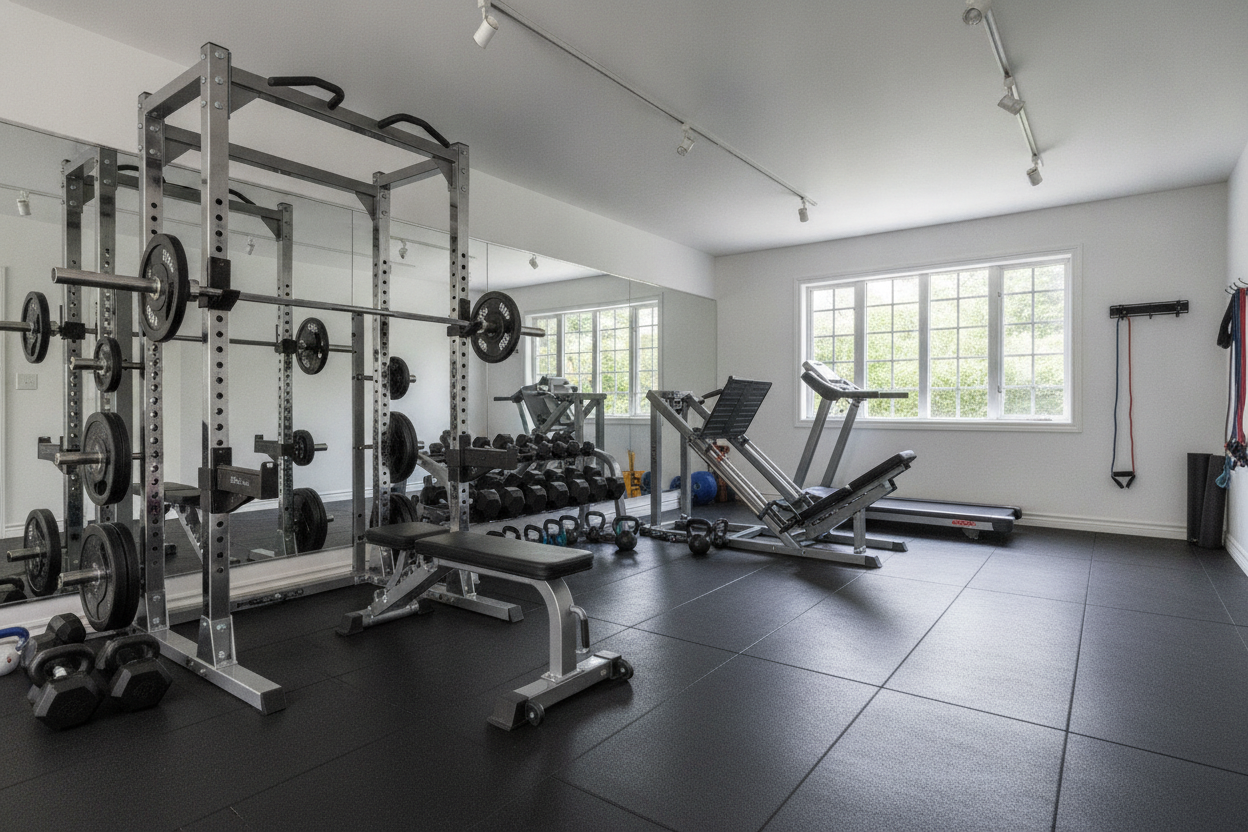
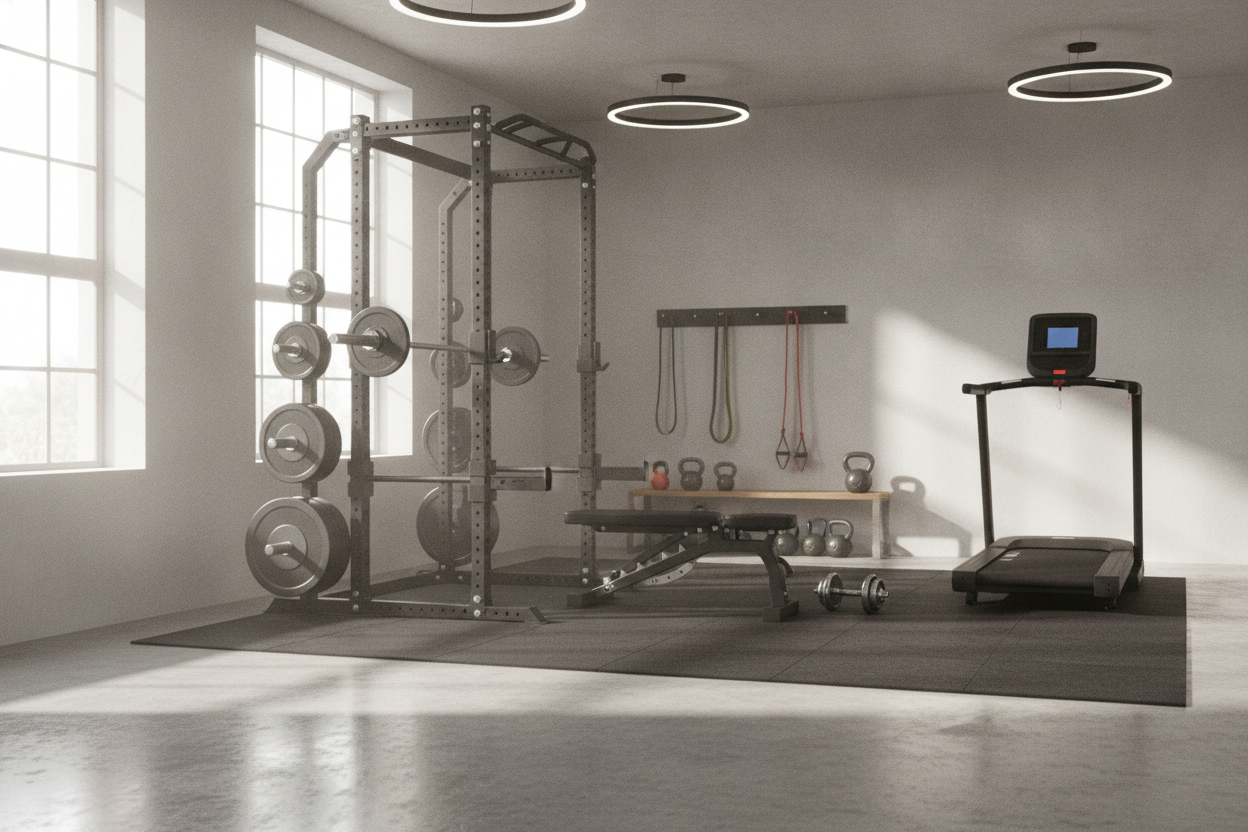
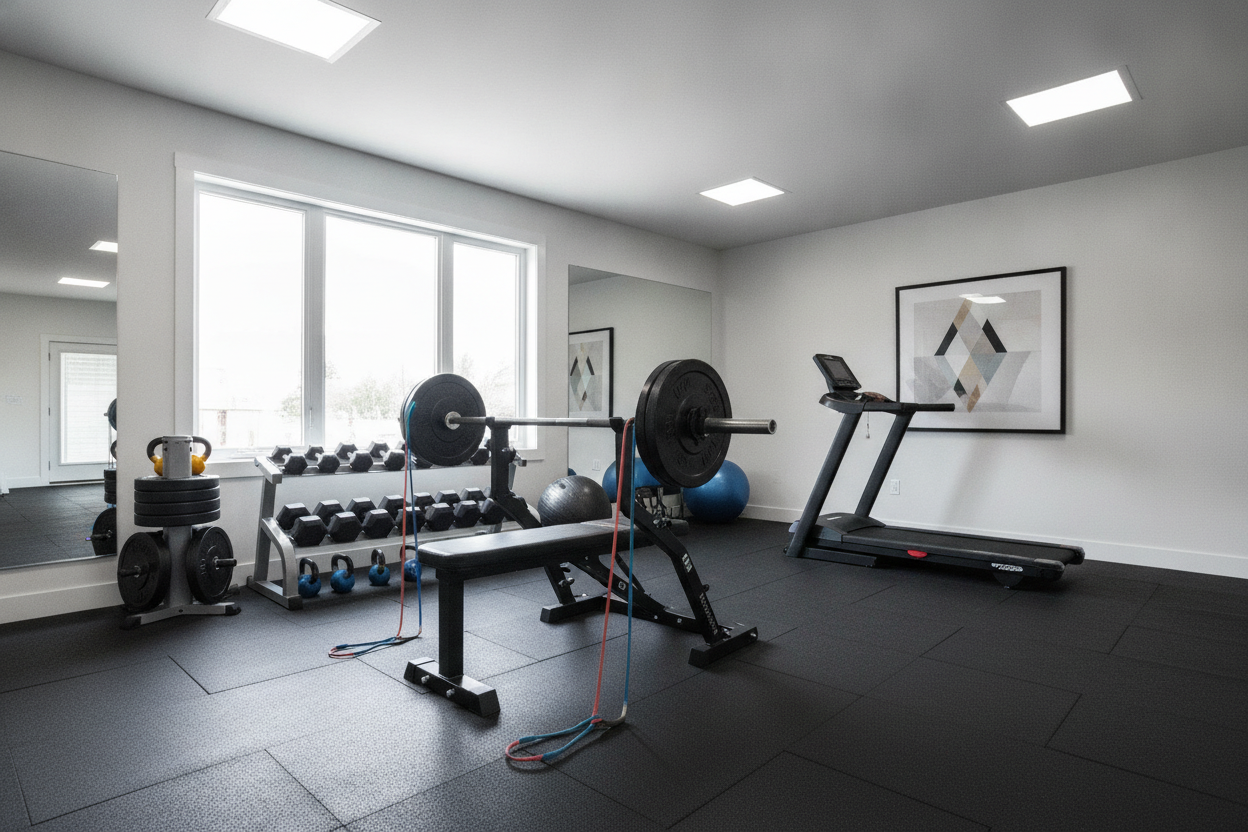
To make this work, your feet need a solid foundation. If your sneakers are sliding across a dusty garage floor, you will never be able to produce enough force. I always recommend using a large home gym mat because the high-grip surface allows you to drive through your heels without the bench or your feet shifting an inch. That stability is what allows the gluteus maximus to take over the movement entirely.
3 Setup Mistakes That Are Stealing Your Glute Gains
Fixing your glute activation usually comes down to three specific mechanical tweaks. If you ignore these, you are just doing a weird-looking leg extension.
Your Feet Are in the Wrong Zip Code
Foot placement is the biggest variable. If you tuck your feet too close to your butt, your knees will track too far forward and your quads will take over. This is exactly why your barbell hip thrust feels like a quad workout instead of a glute builder. Conversely, if your feet are too far out, your hamstrings will start screaming. You want your shins to be perfectly vertical at the top of the rep. Take a video of yourself from the side; if that shin isn't a 90-degree angle to the floor at the top, move your feet.
You're Scooping Your Lower Back
Most people make the mistake of looking at the ceiling. When your head goes back, your ribs flare and your lower back arches. This puts your pelvis into an anterior tilt, making it physically impossible to fully contract your glutes. You need to keep your chin tucked to your chest and your gaze fixed straight ahead. Think of your torso as a rigid plank from your head to your hips. You aren't 'bending' at the waist; you are pivoting at the bench.
Your Bench Height Is Sabotaging You
Standard gym benches are usually 17 or 18 inches high. For most people, that is too tall. If the bench is too high, you can't get your shoulder blades into the right pivot position, and you end up 'climbing' the bench during the set. I struggled with this for years until I switched to a dedicated Gxmmat Hip Thrust Bench. It sits at a lower, more optimal height that allows you to get a full range of motion without the awkward sliding or neck strain that comes with a standard flat bench.
Programming the Hip Thrust for Bigger Glutes
You don't need to thrust every day. Because this movement allows for heavy loading, it can be taxing on the central nervous system if you overdo it. I find that hitting them twice a week is the sweet spot for most lifters. One day can be heavy (5-8 reps) to build strength, and the other can be higher volume (12-15 reps) to drive hypertrophy.
If you are unsure about volume, check out this guide on how many hip thrusts you should do based on your goals. The key is progressive overload. Don't just add weight; focus on the quality of the squeeze. If you can't hold the weight at the top for a full second, it is too heavy.
The Final Verdict: Do Hip Thrust Work Glutes?
Yes, they absolutely work. In fact, they are arguably the most effective exercise for isolating the glutes under heavy load. But they are also the easiest exercise to mess up. If you ditch the ego, fix your shin angles, and use a bench that actually fits your anatomy, you will stop asking does hip thrust work glutes because the soreness the next day will give you the answer. It is a staple in my program for a reason.
My Personal Experience
I spent an entire year doing 'glute bridges' on the floor because I was too lazy to set up the bench in my garage. My progress stalled hard. When I finally committed to the full hip thrust with a proper setup, I realized I had been leaving 40% of my gains on the table. The biggest mistake I made was using a bench that was too high—it caused a nagging pain in my mid-back. Once I lowered the pivot point and focused on the chin-tuck, the back pain vanished and my glute strength exploded. I now use a 16-inch platform and it makes all the difference.
FAQ
Can I do hip thrusts with dumbbells?
You can, but it gets awkward fast once you get strong. A dumbbell is hard to balance on the hips and limits your loading. Use a barbell or a dedicated machine for the best results once you pass the beginner stage.
Why do I only feel hip thrusts in my quads?
Your feet are likely too close to your body. Move them out a few inches until your shins are vertical at the top. Also, make sure you are driving through your heels, not your toes.
Are hip thrusts better than squats for glutes?
For pure glute isolation, yes. Squats are a legendary compound movement, but they are limited by your back strength and quad capacity. Hip thrusts let you hammer the glutes without your legs or back giving out first.