Do Exercise Machines That Move Your Body For You Actually Work?
We have all seen the late-night infomercials. The promise is seductive: sit back, relax, and let technology do the heavy lifting. The concept of exercise machines that move your body for you sounds like the ultimate bio-hack for the busy or the injured. But does passive fitness actually translate to real-world health markers?
The short answer is yes, but likely not in the way you think. These machines aren't magic wands for fat loss, but they play a crucial, scientifically valid role in rehabilitation and circulation. Let’s strip away the marketing hype and look at the mechanics of passive motion.
Key Takeaways: Passive Fitness Facts
- Rehab Over Ripped: These machines are primarily designed for rehabilitation, improving joint mobility, and boosting circulation, not for bodybuilding.
- Caloric Burn is Low: While better than sitting completely still, the calorie expenditure is significantly lower than voluntary active movement.
- Neuromuscular Activation: Devices like vibration plates force muscles to contract reflexively, which can improve stability and core strength.
- Best Use Cases: Ideal for seniors, individuals recovering from surgery, or those with severe mobility restrictions.
The Science Behind Passive Motion
To understand exercise machines that do the work for you, we have to look at the difference between active and passive exercise. Active exercise requires your nervous system to send a signal to your muscles to contract. Passive exercise uses an external force to create movement.
However, there is a middle ground called "assisted active" or "reflexive" training. This is where most commercial machines land. They force your body to react to instability or movement, engaging stabilizer muscles even if you feel like you are just standing there.
Types of Machines That Move You
1. Whole Body Vibration (WBV) Plates
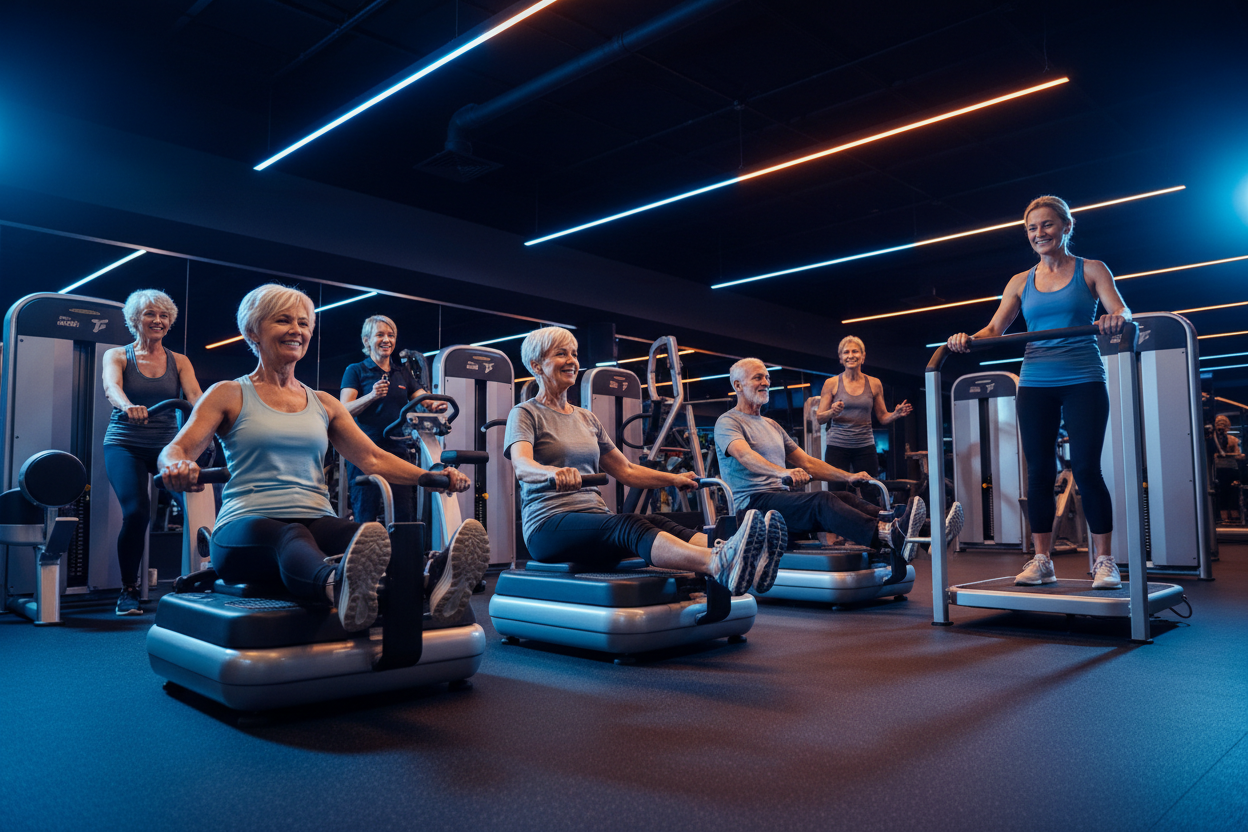
These are the most popular consumer option. You stand on a platform that vibrates at high frequencies. The science here is legit; the vibrations throw you off balance, forcing your muscles to contract and relax dozens of times per second to maintain stability.
It’s not strictly "passive" because your muscles are working, but the machine is initiating the chaos. Studies suggest this can improve bone density and circulation, making it a viable option for exercise machines that move your body without high impact.
2. Motorized Pedal Exercisers
Often found under desks or in physical therapy clinics, these devices pedal your feet for you. For patients with paralysis or severe arthritis, these are game-changers. They keep synovial fluid moving in the joints, preventing stiffness.
For the average office worker? They act as a circulation booster. They won't replace a squat rack, but they will prevent blood from pooling in your legs during an eight-hour shift.
3. Continuous Passive Motion (CPM) Machines
You generally won't find these in a home gym unless prescribed. CPM machines are used post-surgery (like a knee replacement) to slowly bend and extend a joint to prevent scar tissue formation. They do 100% of the work. There is zero muscle effort involved.
The Muscle Activation Reality Check
A common question I get is: "What exercise machine works the most muscles?"
If we are talking about active machines, the rower or the assault bike wins because they require full-body voluntary effort. If we are talking about passive machines, the Vibration Plate takes the crown. It engages nearly 100% of your muscle fibers (including fast-twitch fibers) through involuntary reflex.
However, don't confuse "activation" with "progressive overload." You can activate a muscle without putting enough strain on it to cause growth. Passive machines are great for maintenance and tone, but poor for hypertrophy (growth).
My Training Log: Real Talk
I believe in testing everything before I recommend it. A few years ago, while nursing a lower back strain, I decided to swap my heavy squats for a high-end Whole Body Vibration plate regimen for three weeks.
Here is the unpolished truth about the experience:
The first thing nobody tells you is the "brain rattle." When you crank a vibration plate up to 50Hz, your teeth literally chatter. If you don't keep your knees slightly bent to absorb the shock, you feel the vibration right up into your skull. It’s a bizarre, almost itchy sensation inside your nasal cavity.
Did I lose weight? No. Did I keep my muscle tone? Surprisingly, yes. The most distinct feeling was the "heavy legs" sensation after a 15-minute session. It felt similar to walking in soft sand. My stabilizers were fried, even though my heart rate never went above 110. It taught me that while these machines won't give you a marathoner's lungs, they absolutely wake up dormant muscles.
Conclusion
Exercise machines that move your body for you are not a scam, but they are often marketed incorrectly. If you are looking to run a marathon or look like a bodybuilder, these won't get you there. However, if your goal is pain management, improved circulation, injury recovery, or simply moving more than you currently do, they are valuable tools.
Think of them as a supplement to your day, not a replacement for active movement.
Frequently Asked Questions
Do passive exercise machines burn calories?
Yes, but the burn is minimal compared to active cardio. A motorized pedal exerciser might burn 50–100 calories an hour, mostly due to the slight resistance and metabolic increase from circulation, whereas active cycling could burn 500+.
Are vibration plates safe for seniors?
Generally, yes. They are excellent for bone density and balance, which helps prevent falls. However, seniors with pacemakers, history of blood clots, or recent joint replacements should consult a doctor first, as the vibration can be intense.
Can you build muscle with machines that do the work for you?
You can improve muscle tone and activation, but significant muscle building requires resistance that creates micro-tears in the muscle fibers. Passive machines rarely provide enough load to stimulate this growth process.