
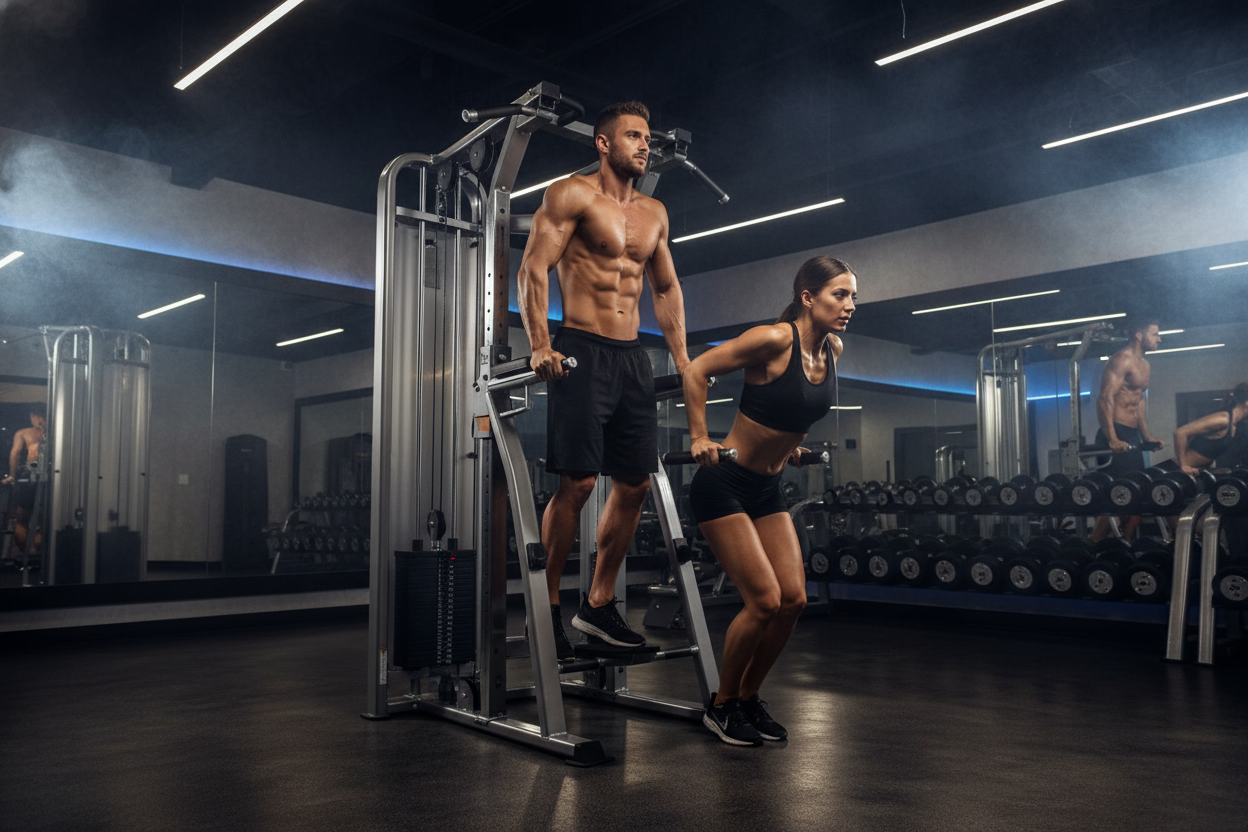
Dip and Pull Up Machine: Is It Actually Worth the Space?
If you have ever hit a frustrating plateau trying to string together strict bodyweight reps, you are not alone. Mastering these foundational movements requires serious upper body strength, and relying solely on resistance bands can feel clunky and inconsistent. A dip and pull up machine bridges the gap, allowing you to isolate your lats, triceps, and chest with perfectly scaled resistance. Whether you are outfitting a garage gym or upgrading a basement setup, this piece of equipment might be the missing link in your strength programming.
But with varying footprints, weight stacks, and leverage systems on the market, choosing the right model requires careful consideration. In this guide, we will break down exactly what to look for so you can invest with confidence.
Key Takeaways
- Progressive Overload: Counter-weight systems allow you to track your strength gains mathematically, unlike unpredictable resistance bands.
- Footprint Matters: Most units require at least 48 inches of floor depth and 84 inches of vertical clearance.
- Versatility: A quality machine doubles as a triceps press-down and kneeling lat pulldown station.
- Safety First: Controlled negatives on an assisted machine drastically reduce the risk of shoulder impingement.
Choosing the Right Setup for Your Home Gym
Weight Stack vs. Leverage Systems
When shopping for an assisted pull up and dip machine, you will generally choose between a traditional selectorized weight stack and a plate-loaded leverage system. Plate-loaded models are incredibly budget-friendly and save on shipping weight, but they require you to manually load Olympic plates. If you prefer seamless drop-sets and quick transitions between users, a selectorized chin up machine with assist is well worth the premium.
Footprint and Ceiling Clearance
Space is the ultimate currency in a North American home gym. A standard pull up dip station assisted tower will demand significant vertical space. You need to account not only for the height of the machine itself (often 82 to 90 inches) but also for the clearance required for your head at the top of the movement. For basements with low 8-foot ceilings, measure carefully before hitting checkout.
Maximizing Your Upper Body Workouts
Perfecting the Negative
One of the biggest advantages of a dips and pull ups machine is the ability to train the eccentric (lowering) phase of the movement safely. By setting the counter-weight to a heavy load, you can perform super-slow, 5-second negatives. This time under tension is a proven trigger for muscle hypertrophy and builds the exact connective tissue strength needed for unassisted reps.
From Our Gym: Honest Take
When we tested a commercial-grade pull up dip assist machine in our own garage facility, the difference in workout quality was immediate. At 6'2', I've always found that standard free-standing towers wobble excessively during explosive movements. However, a dedicated assisted chin up and dip machine with a 200lb weight stack provided rock-solid stability. The dual guide rods ensured the knee pad glided smoothly without the jerky sticking points you often find on cheaper models. My only caveat? The footprint is massive. I had to rearrange my power rack and dumbbell rack just to give it the 4x5 foot dedicated floor space it needed. If you have the room, it is phenomenal; if you are in a tight one-car garage, it might be a tight squeeze.
Frequently Asked Questions
Is a dip pull up machine worth the investment?
Absolutely, especially if you or your family members are at different strength levels. It provides a safe, scalable way to train two of the most effective upper body exercises without needing a spotter.
Can beginners use a chin assist machine effectively?
Yes. In fact, an assisted chin up and dip exercise machine is arguably the best tool for beginners. It allows novice lifters to learn proper scapular retraction and core engagement without the overwhelming strain of their full body weight.
How much ceiling height do I need for a pull-up dip station with assistance?
You should aim for at least 12 to 18 inches of clearance above the highest point of the machine. If you are buying a standard 84-inch chin up dip assist machine, a 9-foot ceiling is ideal to ensure you don't hit your head on the rafters during a full extension.


