
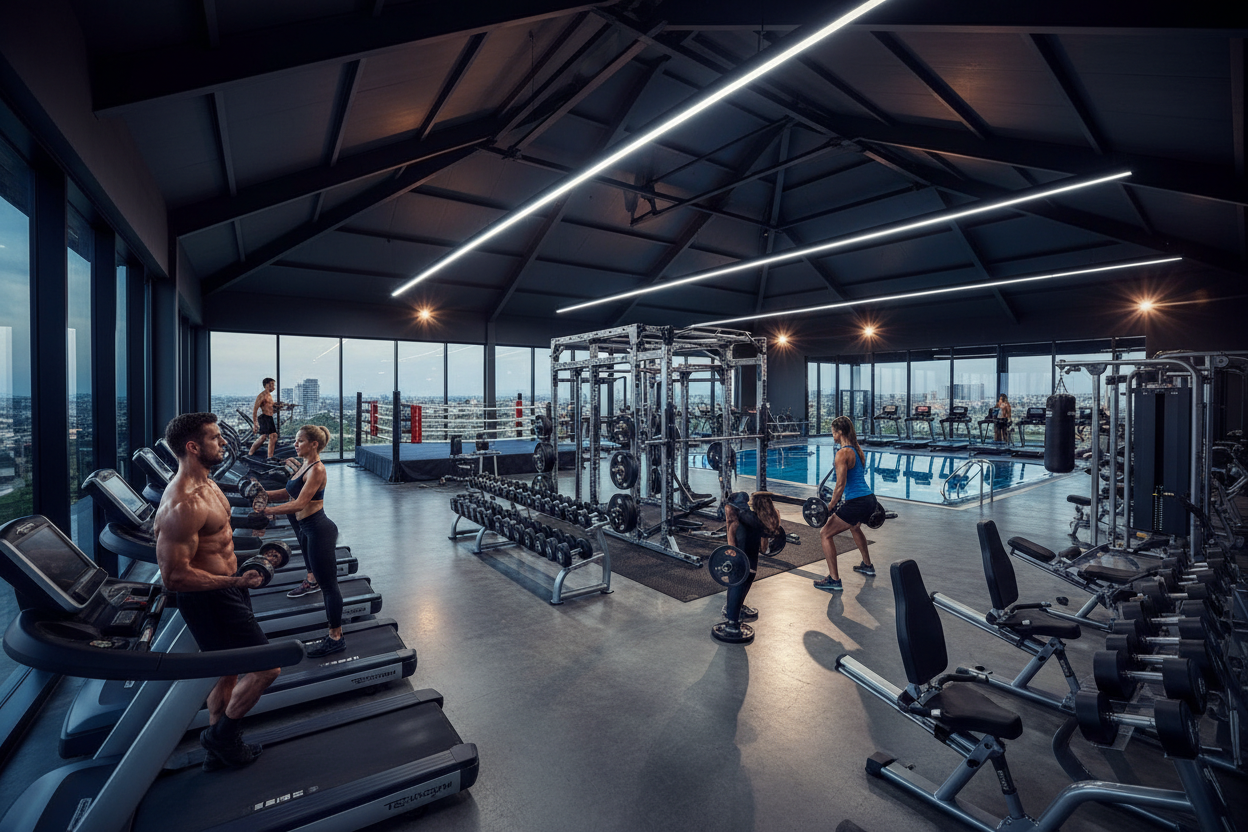
Designing the Biggest Home Gym: The Ultimate Luxury Setup Guide
There comes a point in every lifter's journey where the garage corner just doesn't cut it anymore. You aren't looking to squeeze a foldable bench between the lawnmower and the holiday decorations. You are looking to build the biggest home gym your property can handle.
Scaling up from a functional setup to a massive private facility changes the rules entirely. It shifts the conversation from "space-saving hacks" to architectural flow, acoustic engineering, and commercial-grade durability. It is about creating an environment where you never have to wait for a machine, and the atmosphere rivals the best athletic centers in the world.
Key Takeaways: Building a Massive Setup
- Zoning is Non-Negotiable: Large spaces must be divided into Cardio, Free Weights, and Functional/Turf zones to prevent the room from feeling empty or chaotic.
- Commercial Power Requirements: The most expensive home gym setups often require dedicated electrical circuits for treadmills and saunas.
- Acoustics Matter: In a large room, sound dampening is critical to stop the "warehouse echo" effect.
- Climate Control: A mini-split system is usually insufficient for gyms exceeding 1,000 square feet; industrial HVAC is often necessary.
The Anatomy of the Super Gym
When we analyze the most expensive home gyms—think Mark Wahlberg's "Iron Paradise" or Joe Rogan's studio setup—the common denominator isn't just the brand of weights. It is the layout.
In a standard home gym, you position equipment against the walls to save floor space. In a massive build, you must center the equipment. This allows for 360-degree access and creates a traffic flow that feels professional.
The Dumbbell Run
Nothing screams "big gym energy" like a full run of dumbbells. We aren't talking about a pair of adjustable selectors here. A true luxury setup features a fixed dumbbell rack ranging from 5lbs to 150lbs in 5lb increments.
This requires roughly 20 to 30 feet of wall space. The benefit? Zero setup time between drop sets and the psychological boost of seeing that wall of iron waiting for you.
The Functional Turf Strip
Space is the ultimate luxury. Dedicating a 10x40 foot strip to high-density turf allows for sled pushes, lunges, and plyometrics. This is the defining feature that separates a room full of machines from an athletic performance center.
Equipment Selection: Beyond the Basics
When budget is secondary to performance, you stop buying "home gym" gear and start buying "commercial" gear. The difference is in the footprint and the stability.
Selectorized Machines
In a small gym, you use a rack for everything. In the biggest home gym setups, you have dedicated stations. You want a standalone lat pulldown with a 300lb stack, a dedicated leg press, and a functional trainer.
Why? Because setting up a barbell for rows takes time. Jumping onto a fixed machine keeps the heart rate up and the workout intensity high. The most expensive home gyms prioritize workflow efficiency over multifunctionality.
Cardio Cinema
Don't just put a bike in the corner. High-end builds often feature a "cardio wall" facing a large display or projector. This usually includes a slat-belt treadmill (like a Woodway), an assault bike, and a rower. These machines are heavy and loud, requiring specific rubber flooring distinct from your lifting platform.
The Infrastructure of Luxury
The gear is the fun part, but the room itself is where the money goes. If you are building the most expensive home gym in your neighborhood, you cannot ignore the foundation.
Flooring Transitions
You need varying densities. A lifting platform needs to be rock hard (wood/bamboo) for stability during squats. The general floor needs 8mm to 10mm rubber. The plyometric area needs turf. Using a single flooring type across 2,000 square feet looks cheap and performs poorly.
Lighting Design
Fluorescent tube lights are a mood killer. The best large-scale gyms use track lighting to spotlight the equipment and dimmable LED strips for ambiance. You want the room to feel inviting, not like a hospital operating theater.
My Training Log: Real Talk
I remember the first time I trained in a client's "warehouse" style home gym. It was roughly 1,500 square feet. On paper, it was a dream. In reality, there was a learning curve.
The first thing that hit me was the cold. It takes a long time to heat up a room that big. I spent the first 20 minutes of the session wearing a hoodie and a beanie, gripping a barbell that felt like an icicle. The knurling on his Eleiko competition bar was aggressive, and because my hands were cold, it tore my calluses faster than usual.
Then there was the sound. I dropped a deadlift—maybe 405lbs—and the acoustic echo was startling. In a garage, the sound dies quickly. In a big, open hall with high ceilings, that metal clank lingered for three seconds. It actually messed with my focus until we threw down some heavy sound-absorbing curtains. It’s a detail nobody puts on the blueprint, but you notice it immediately when you're under the bar.
Conclusion
Building the biggest home gym isn't just about hoarding equipment. It is about curating a space that demands effort. It requires planning for power, sound, and flow just as much as you plan for bench presses and squats. If you have the space and the budget, build it right. Make it a sanctuary that you never want to leave.
Frequently Asked Questions
How much space do I need for a "dream" home gym?
To create a truly comprehensive facility with dedicated zones for cardio, strength, and turf, you generally need between 600 and 1,000 square feet. Anything larger moves into professional warehouse territory.
What is the most expensive home gym equipment brand?
Brands like Eleiko, Watson, and Panatta are often found in the most expensive home gyms. A fully outfitted setup from these manufacturers can easily exceed $100,000 due to custom upholstery and precision engineering.
Do I need to reinforce my floor for a massive gym?
Yes. If you are on a ground floor concrete slab, you are usually safe. However, if you are building upstairs or have a crawl space, the static load of heavy dumbbell racks and the dynamic load of dropped weights require structural engineer approval.


