Designing the Best Home Gym Set Ups: The Definitive Guide
Walking into a commercial gym at 5 PM is often a test of patience rather than strength. You wait for the squat rack, dodge tripods, and deal with equipment that has seen better days. The solution isn't changing your schedule; it's changing your environment. Creating one of the best home gym set ups is the ultimate investment in your physical and mental health.
Building a personal gym at home isn't just about buying gear; it is about architectural curation. It requires understanding biomechanics, spatial efficiency, and the psychology of training alone. This guide skips the fluff and focuses on the engineering of a perfect training space.
Key Takeaways for Home Gym Success
- Prioritize the Platform: Your floor is the foundation. Invest in high-density rubber before buying weights to protect your joints and your property.
- Buy Nice, Not Twice: Cheap racks wobble. Quality steel holds its value and keeps you safe during heavy lifts.
- Airflow is Essential: Temperature control and ventilation are often overlooked but are critical for high-intensity sessions.
- Lighting Matters: Clinical, bright lighting improves focus and safety compared to dim, dungeon-like basements.
- Footprint Efficiency: Wall-mounted racks and adjustable dumbbells are superior home gym solutions for tight spaces.
Analyzing the Space: Logistics First
Before you purchase a single plate, you must audit your available square footage. The effectiveness of at home gym setups is dictated by ceiling height and floor durability, not just square footage.
The Garage vs. The Spare Room
Garage gyms offer the benefit of concrete floors, which can handle heavy deadlifts. However, they suffer from temperature fluctuations. If you are training here, insulation is not a luxury; it is a necessity.
Spare rooms offer climate control but usually have weaker subfloors. If you are upstairs, dropping a loaded barbell is out of the question. For these in home gym equipment scenarios, you must focus on controlled movements and perhaps prioritize machines or lighter free weights over powerlifting gear.
The Core Equipment Hierarchy
A common mistake is buying a treadmill first. Unless you are exclusively a runner, cardio machines are coat racks in waiting. A good home gym setup prioritizes versatility and strength.
The Power Rack: Your Centerpiece
This is your safety net. Look for a rack with 3x3 inch 11-gauge steel uprights. This specification ensures the rack won't sway when you re-rack a heavy squat. It also allows for modular attachments later.
The Barbell and Plates
Your connection to the weight matters. Avoid thick, chrome-plated bars that peel. Look for a 28.5mm shaft with medium knurling. For plates, bumper plates are quieter and safer for home floors than cast iron, reducing the noise that might annoy your family or neighbors.
Atmosphere: Creating the Perfect Home Gym
The difference between a cold room with weights and a perfect home gym is the atmosphere. You need an environment that triggers a "work mode" response the moment you step inside.
Flooring Solutions
Don't use puzzle mats designed for children's playrooms. They compress too much under load, destabilizing your lifts. Use 3/4 inch horse stall mats. They are dense, indestructible, and provide the stable footing required for heavy compound movements.
Mirrors and Lighting
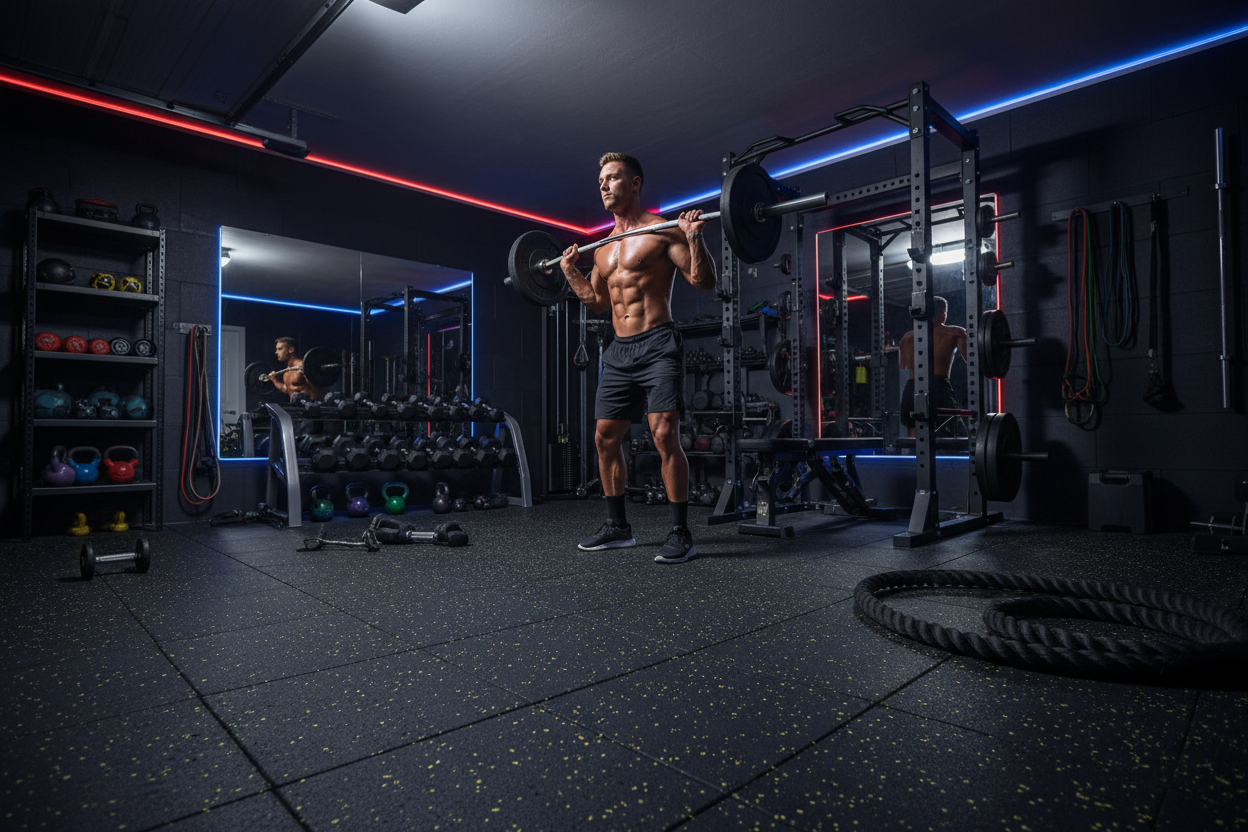
Mirrors aren't just for vanity; they provide instant feedback on your form when a coach isn't present. Combine this with 4000K-5000K LED lighting. Warm lighting creates a relaxing mood, which is the opposite of what you want when attempting a PR.
My Personal Experience with best home gym set ups
I have spent years refining my own garage setup, and I learned the hard way that specs on a website don't tell the whole story. The biggest reality check for me wasn't the cost—it was the temperature and the smell.
When I installed my first set of horse stall mats, the off-gassing smell of rubber was overwhelming. It lingered for three weeks, sticking to my clothes even after I left the gym. I had to leave the garage door open with an industrial fan running 24/7 just to make it breathable.
Furthermore, nobody warns you about the "winter barbell." In January, grabbing a barbell that has been sitting in a 30-degree garage feels like holding dry ice. It actually hurts the skin and makes your grip fail prematurely. I eventually had to buy a cheap hair dryer specifically to warm up the center knurling of my bar before my first set of deadlifts. These are the unpolished, gritty details that turn a pristine photo into a functional training ground.
Conclusion
Building the ultimate training space is a journey, not a one-time purchase. By focusing on quality essentials, proper flooring, and a motivating atmosphere, you can create one of the best home gym set ups that rivals any commercial facility. Start with the rack, protect the floor, and expand as you get stronger.
Frequently Asked Questions
What is the minimum space needed for a functional home gym?
For a full rack and barbell setup, you need a minimum of 10x10 feet. A standard Olympic bar is 7 feet long, and you need at least 1.5 feet of clearance on each side to load plates safely without hitting walls.
Is a home gym actually cheaper than a membership?
Upfront, no. However, over 3 to 5 years, most home gym solutions pay for themselves. When you factor in the cost of gas, wear and tear on your car, and time saved commuting, the ROI becomes positive relatively quickly.
Do I need to bolt my rack to the floor?
Ideally, yes. If you are performing kipping movements or using heavy bands, bolting is mandatory for safety. However, many companies now offer "flat foot" racks that are stable enough for static lifts without drilling into your concrete.