Design a Strength Training Program for Home Gyms
When you decide to design a strength training program for your home setup, success depends on a structured plan rather than random workouts. Many lifters assemble equipment in a garage or spare room but struggle to organize their weekly sessions effectively. Understanding solid strength training program design gives you the power to build muscle, develop physical resilience, and make steady progress using the equipment you already own. Whether you have an adjustable bench and dumbbells or a dedicated power rack, learning how to design a strength training program from the ground up transforms your training space into a dependable center for personal progress.
A well-planned strength training program balances training intensity, adequate rest, and proper exercise selection. Instead of copying complex elite routines, practical strength program design focuses on fundamental movements tailored to your lifestyle. When you design a strength training program around realistic weekly habits, you avoid burnout, reduce the chance of joint irritation, and sustain your motivation month after month.
Core Principles to Design a Strength Training Program
To successfully design a strength training program, you must build upon timeless training fundamentals. Thoughtful weight training program design relies on balanced movement patterns, intelligent rep ranges, structured rest intervals, and the principle of progressive overload. Rather than isolating individual small muscles, a reliable strength training program emphasizes multi-joint work that trains your body as a coordinated unit.
Foundational human movements form the bedrock of weight training program design. Every effective weekly plan includes variations of the squat pattern, a reliable hip hinge, horizontal and vertical push and pull movements, and core stabilization. When you design a strength training program around these primary motions, you ensure balanced development across your entire body. Practicing these movement patterns regularly also reinforces technical efficiency, making every rep safer and more productive.
Another pillar of effective strength training program design is how you adjust training volume over time. Incorporating progressive overload simply means challenging your muscles gradually as they adapt, whether by adding modest resistance, completing an extra rep, or controlling movement tempo. Balancing these efforts with planned rest intervals allows your nervous system and muscle fibers to recover fully between demanding working sets.
How do I design a strength training program for beginners?
You can design a strength training program for beginners by selecting three non-consecutive days each week, focusing on primary movement patterns, and keeping technical complexity manageable. Beginners make substantial strides by mastering basic compound exercises before adding specialized isolation work. If you are learning how to design a strength training program as a novice lifter, simplicity is your greatest advantage.
Start each workout with a primary compound movement such as a goblet squat, dumbbell bench press, or supported row. Keep your rep ranges moderate, generally aiming for sets of eight to twelve repetitions where you can maintain clean posture on every single repetition. When learning how to structure a strength training program, allow at least forty-eight hours of recovery between sessions targeting the same muscle groups. In my own lifting journey, focusing on three consistent lifts per workout produced far better long-term momentum than attempting an exhaustive list of movements each afternoon.
Choose Your Training Split and Weekly Schedule
Deciding how to structure a strength training program depends largely on your weekly availability. Your chosen training split dictates how you distribute physical stress across the week. For lifters training two or three times weekly, a full body workout format is often ideal because it stimulates major muscle groups multiple times per week without requiring back-to-back lifting sessions.
If you prefer training four days each week, an upper lower split offers an exceptional balance between training volume and local muscular recovery. In an upper lower split, you alternate between upper body pushing and pulling exercises on one day and lower body squatting and hinging movements on the next. lifters who want to examine structured templates can review this free weight strength training guide to compare different weekly schedule formats.
Whichever training split you choose, consistency matters more than perfection. When you design a strength training program, schedule sessions on days when you can reliably dedicate forty-five to sixty uninterrupted minutes. Building your routine around consistent rest days ensures that your central nervous system recovers properly before your next heavy session.
Select Essential Movement Patterns and Exercises
Selecting your exercises is the next phase when you design a strength training program. The core of your routine should feature dependable compound exercises that recruit significant muscle mass. Exercises that utilize free weights, such as dumbbells and barbells, demand natural stabilization and adapt easily to home environments.
Organize your exercise selection around these fundamental categories:
- Squat Movements: Front squats, goblet squats, and back squats reinforce the lower body squat pattern while building leg strength.
- Hinge Movements: Romanian deadlifts and conventional deadlifts target the posterior chain through a pure hip hinge.
- Upper Pushes: Overhead presses and flat or incline bench presses develop pressing strength across the chest, shoulders, and triceps.
- Upper Pulls: Pull-ups, chin-ups, and dumbbell rows create balanced push and pull symmetry while strengthening the back.
- Carries and Core Work: Suitcase carries and planks stabilize the torso and build resilient grip strength.
Lifters utilizing both barbell lifts and dumbbell training can easily swap variations depending on available equipment. If lower back fatigue accumulates, replacing barbell lifts with dumbbell training allows you to continue loading the muscles without excessive spinal compression. You can also explore specialized gear in our strength training accessories collection to complement your core movements with bands, collars, and grip aids.
How do I set up my home workout area to protect my floors while lifting?
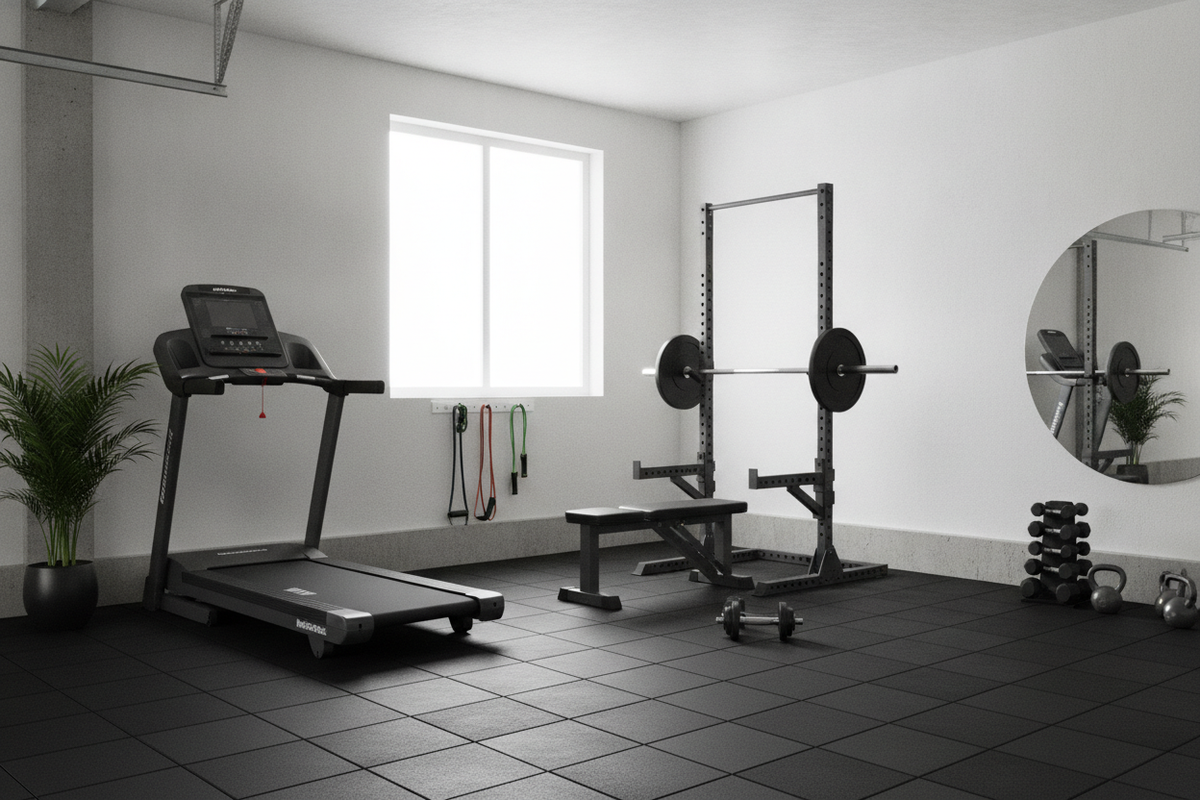
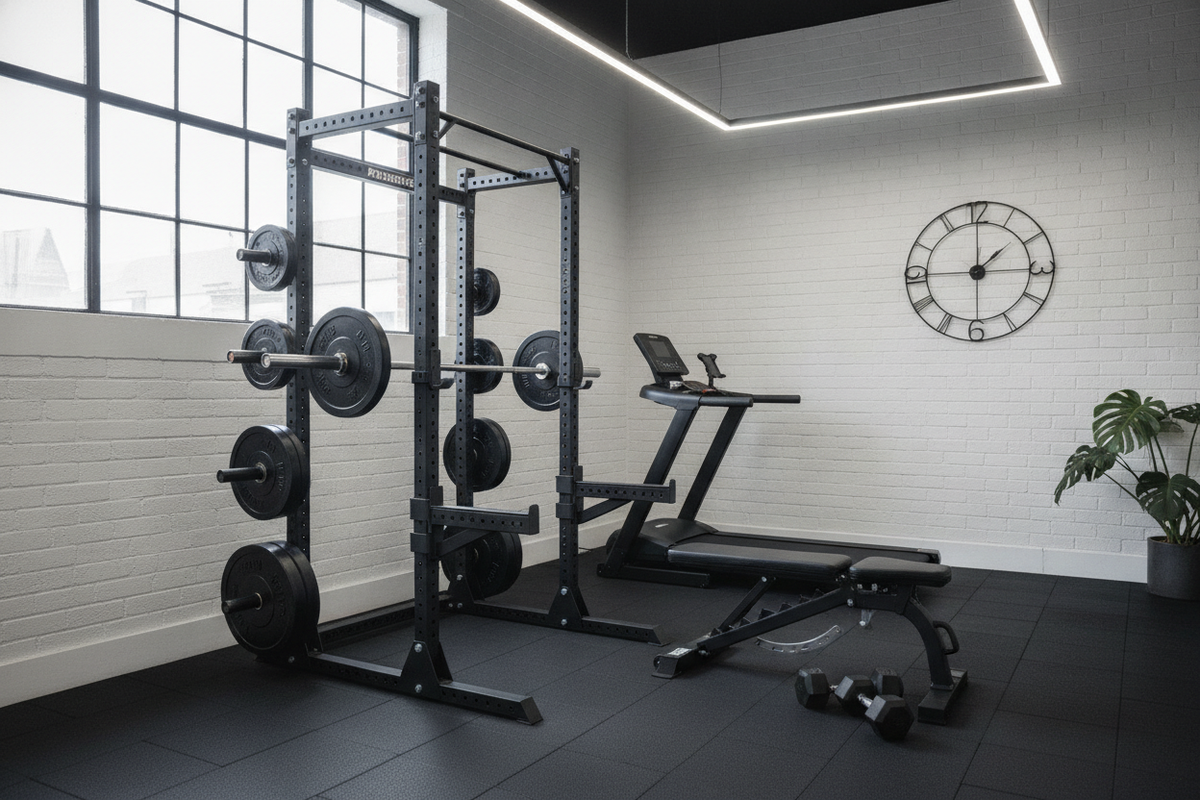
You can set up your home workout area to protect floors by installing high-density rubber gym flooring beneath your equipment to absorb impact and prevent subfloor fractures. Heavy compound exercises inevitably transfer force downward into your subfloor, especially when setting down heavy free weights or racking a loaded bar. Without adequate subfloor protection, concrete can crack and wooden floorboards can flex or splinter over time.
A dedicated heavy duty rubber mat provides a dense, firm base that stays flat under load, ensuring you maintain balanced footing during heavy squats or deadlifts. In contrast, a thin, soft exercise mat is suitable for bodyweight stretching or floor core work, but it lacks the density required to shield your floor from heavy iron. Lifters who combine free weight stations with heavier selectorized apparatus from our weight lifting machines selection should plan their equipment placement carefully to distribute weight across supported joists.
Proper gym flooring also dampens acoustic vibration and sound transmission throughout your home. Investing in a durable heavy duty rubber mat across your primary lifting zone ensures that dropped plates, resting kettlebells, and heavy benches do not mar your underlying floors. Keeping a clean, dedicated home gym space with thoughtful equipment placement makes transitioning between compound exercises seamless and keeps tripping hazards off your lifting surface.
Plan Progressive Overload and Manage Recovery
Once your layout is prepared and your exercises are mapped out, you must decide how to progress your training over coming months. Systematic strength program design relies on measurable, deliberate progression rather than random changes in intensity. Tracking your working loads in a notebook or phone app helps ensure that your strength training program continues moving forward.
Apply progressive overload gradually. When you can complete the top end of your prescribed rep ranges with crisp form across all sets, increase the resistance by a modest increment in your next session. If increasing the weight causes your technique to break down, hold the weight steady and focus on adding an extra rep or slowing down the eccentric phase of the lift. For lifters balancing busy work and family routines, this fitting strength training program guide provides practical ideas for sustaining weekly consistency alongside active recovery habits.
To maintain long-term momentum when you design a strength training program, plan a deload week every six to eight weeks. During a deload, reduce your working sets or lighten resistance to give your connective tissues an opportunity to adapt. When you respect recovery, maintain quality gym flooring, and follow clear weight training program design principles, your home gym space becomes a reliable foundation for lifelong strength.