Daily Full Body Workout at Home: Training Without Burnout
I get the same text from new clients almost every week. They decide to finally get in shape, clear out a small corner in their cramped living room, and commit to crushing a daily full body workout at home. By Wednesday, their hamstrings are screaming, their grip is shot, and just looking at their dumbbells makes them feel nauseous.
The intention is great, but the execution is flawed. Training every single day is entirely possible, but treating every session like a maximal effort test will quickly run you into the ground. Your muscles might recover in 48 hours, but your central nervous system takes much longer to bounce back from heavy, high-tension lifting.
If you want to train daily, you have to learn how to manage fatigue. This means treating your home gym routine less like a daily sprint and more like a rolling wave.
Quick Takeaways
- Training every 24 hours requires undulating intensity, not max effort.
- Alternate heavy lifting days with mobility and blood-flow focused sessions.
- Keep your workout space permanently set up to eliminate the friction of starting.
- Track your grip strength and sleep quality as primary indicators of overtraining.
The Reality of Training Every Single Day
When you perform heavy squats, push-ups, and rows, you create micro-tears in the muscle tissue and deplete local glycogen stores. More importantly, you tax your central nervous system. The brain has to send massive electrical impulses to recruit high-threshold motor units to move that weight.
If you try to execute a high-intensity total body workout routine at home seven days a week, your nervous system will rebel. You will notice your resting heart rate climbing, your sleep quality dropping, and your joints feeling chronically achy. This is classic overtraining.
To avoid this, we have to look at a broader total body workout strategy. Daily training is not about doing the hardest workout possible every time you step onto the mat. It is about consistent movement that stimulates adaptation without exceeding your capacity to recover. You have to earn your heavy days by taking your recovery days seriously.
The Variable Intensity Wave Concept
To safely execute a whole body workout routine at home every 24 hours, I use a method called the Variable Intensity Wave. Instead of a flat line of hard effort, your training should look like a sine wave. You wave the intensity up for a high-tension day, then wave it down for an active recovery day.
This undulating periodization allows you to practice the habit of daily movement while giving specific biological systems the time they need to repair. You are still working the entire body, but the stimulus changes entirely from day to day.
High-Tension vs. Active Recovery Days
A high-tension day is about mechanical overload. You are using heavier weights, working in the 5 to 8 rep range, and taking longer rest periods. Think heavy goblet squats, loaded push-ups, and dumbbell rows. The goal here is to recruit maximum muscle fibers and build absolute strength.
An active recovery day is about tissue health. You drop the weight entirely and focus on bodyweight movements in the 15 to 20 rep range. The goal is to flush the muscles with blood, deliver nutrients, and clear metabolic waste. You should finish these sessions feeling energized, not exhausted.
Structuring Your Full-Body Workout At Home Plan
Putting the wave into practice requires a strict schedule. If you leave it up to how you feel, you will naturally gravitate toward pushing too hard on days you should be recovering. I build a rolling 4-day microcycle for my clients.
This specific full-body workout at home plan ensures you hit every movement pattern heavily once every four days, while using the days in between to improve joint health and muscular endurance. It also integrates a 3D movement strategy during your lighter days, forcing you to move laterally and rotationally rather than just up and down.
The 4-Day Microcycle Blueprint
Day 1: Heavy Strength. Focus on 4 to 5 compound movements. Use a weight that challenges you by the 6th rep. Example: Dumbbell front squats, floor presses, heavy bent-over rows, and loaded glute bridges. Rest 2 minutes between sets.
Day 2: Mobility and Flow. Zero external load. Spend 30 minutes moving through deep ranges of motion. Example: Bodyweight lunges, thoracic spine rotations, downward dog to cobra transitions, and deep Asian squats. Keep your heart rate in zone 2.
Day 3: Hypertrophy and Volume. Moderate weight, higher reps (10 to 15). Focus on the muscle pump and strict control. Example: Bulgarian split squats, push-ups with a 3-second negative, resistance band pull-aparts, and dumbbell lateral raises.
Day 4: Core and Stability. Focus on the trunk and unilateral balance. Example: Single-leg Romanian deadlifts, slow bear crawls, hollow body holds, and side planks. This taxes the stabilizing muscles without crushing your central nervous system.
After Day 4, you roll right back to Day 1.
Setting Up Your Space for Daily Use
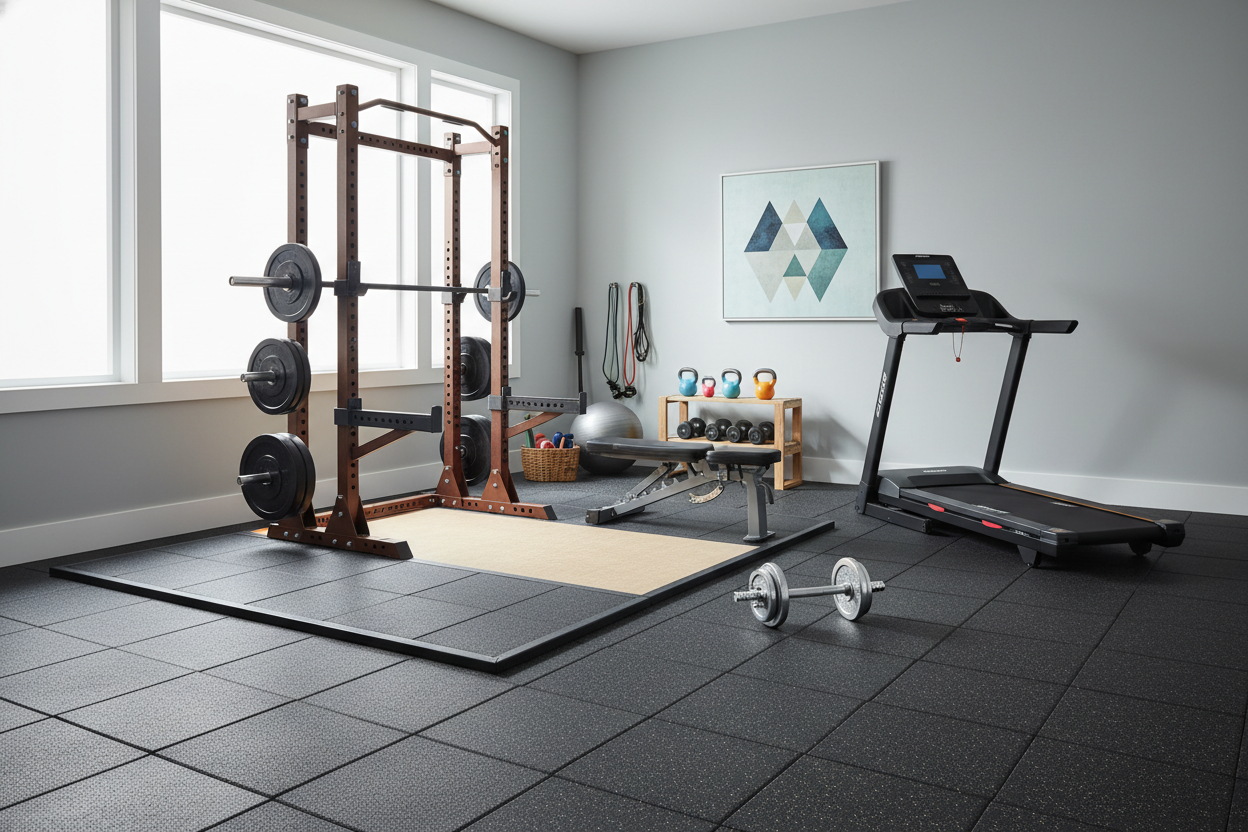
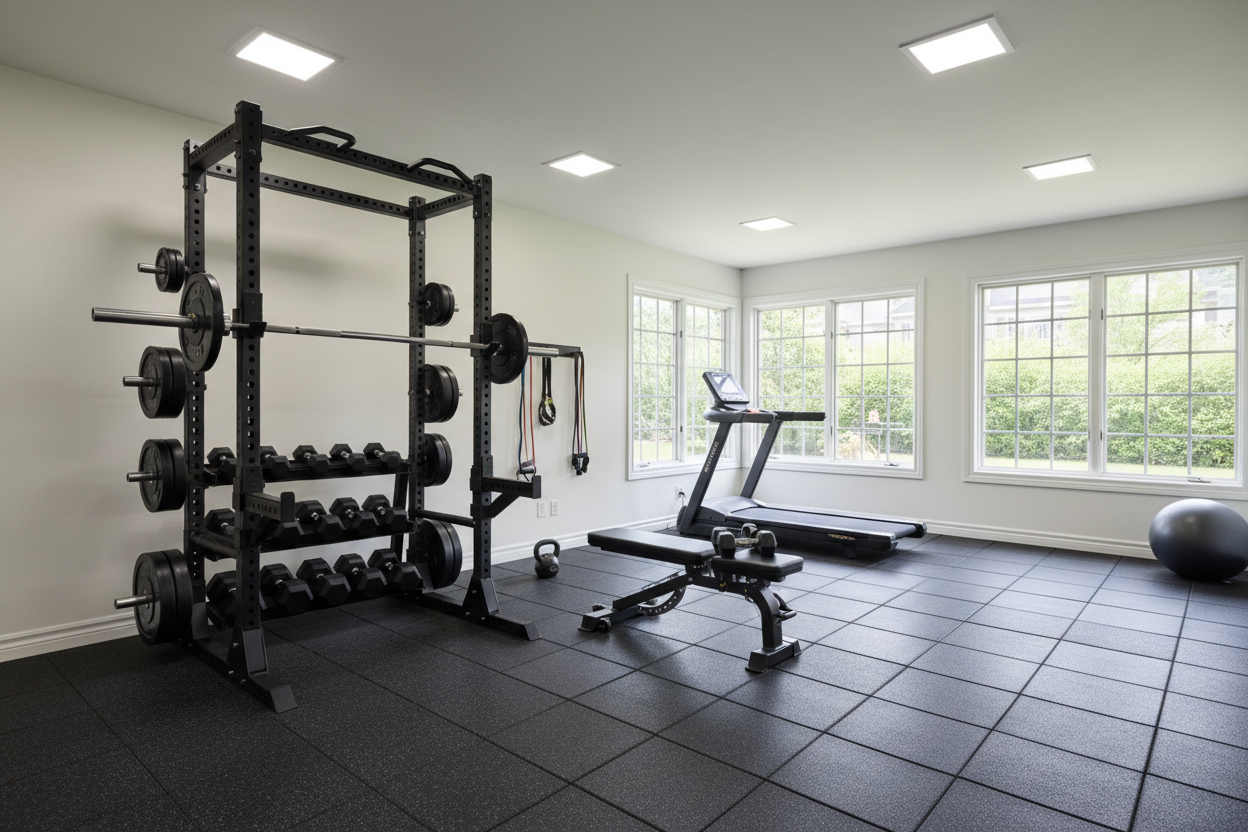
Over the last six years, I have built and tested dozens of home gym setups for clients. I personally use a pair of 5-52.5 lb adjustable dumbbells and a dedicated floor space. After logging well over 1,000 reps of Turkish get-ups and heavy kettlebell swings on various surfaces, I learned a crucial lesson: friction kills daily habits.
If you have to move a coffee table and unroll a cheap, curling yoga mat every single morning to start your total body workout plan at home, you will eventually skip days. I always recommend laying down a permanent large exercise mat for home gym use.
In my own garage gym, I use a 6x8ft exercise mat. It gives me exactly 48 square feet of high-density grip, meaning I can transition from lateral lunges to wide-grip push-ups without my equipment sliding around. The shock absorption also keeps the noise down for my neighbors. The only honest downside to these larger mats is their weight; they are heavy and incredibly awkward to move if you ever decide to relocate your gym space, so pick your spot carefully and leave it there.
Long-Term Progression and Fatigue Management
When executing this plan over several months, tracking your progress is mandatory. Keep a logbook of your Day 1 and Day 3 weights. You should see a slow, steady increase in either the weight you can handle or the reps you can perform.
However, auto-regulation is your ultimate safety net. If you wake up for a Day 1 Heavy Strength session and your resting heart rate is elevated by 10 beats per minute, or your grip feels unusually weak holding your morning coffee, your nervous system is waving a red flag. Downgrade that session to a Day 2 Mobility day. The beauty of a daily routine is that there is always tomorrow. You do not lose your gains by taking an easy day; you lose them by forcing an injury.
Frequently Asked Questions
Can I build muscle training every day?
Yes, provided you undulate your intensity. Muscle grows during recovery, so if you hammer the exact same muscle fibers to failure every 24 hours, you will stunt your growth. The wave method ensures you get the stimulus and the recovery needed for hypertrophy.
How long should these daily workouts last?
If you are training daily, sessions should be dense and efficient. Heavy days might take 45 minutes due to longer rest periods, while mobility and volume days can often be completed in 25 to 30 minutes.
Do I need heavy weights for this to work?
You need some form of progressive overload for Day 1. Adjustable dumbbells ranging up to 50 lbs are usually sufficient for the first year of a home trainee's routine. Once you max those out, you can increase the difficulty by manipulating tempo, such as adding 3-second pauses at the bottom of your squats.