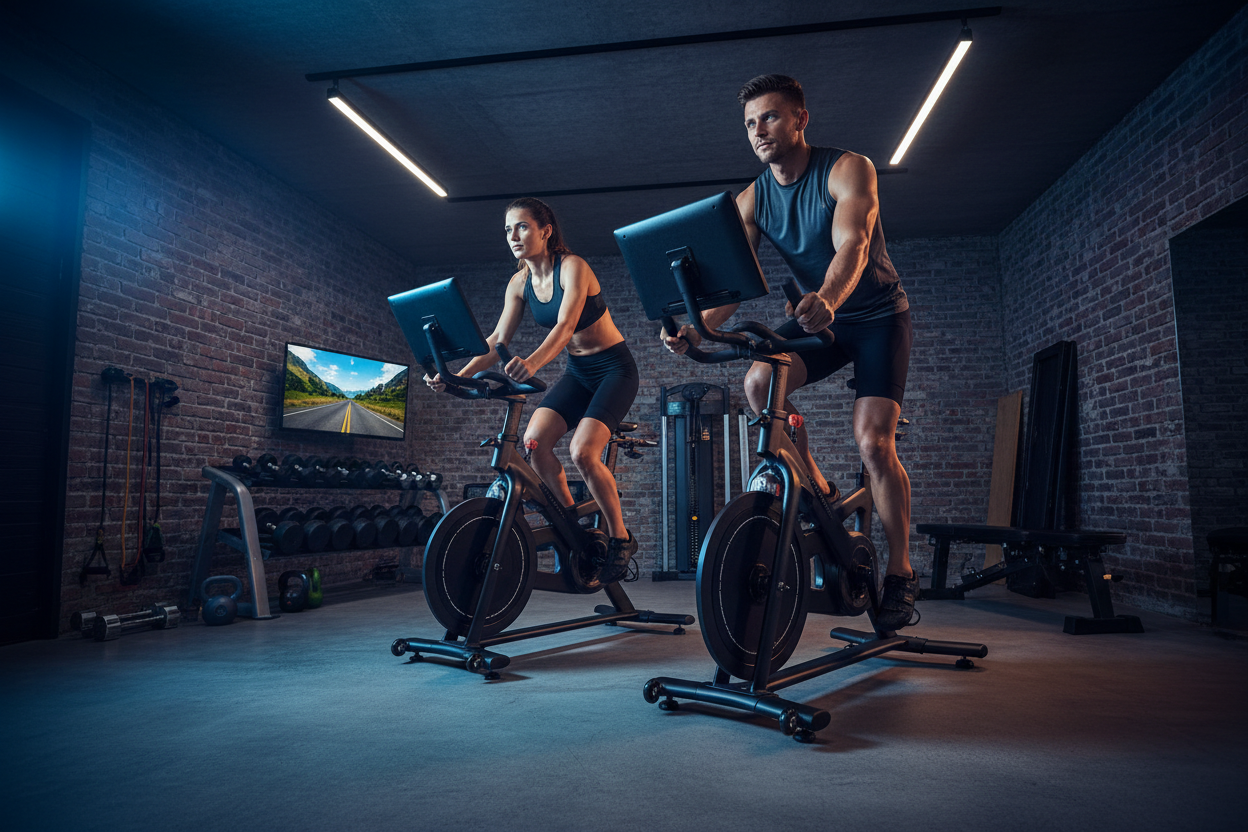
Cycle Gym Essentials: What to Know Before You Buy
Tired of unpredictable weather ruining your cardio routine? Or maybe you are just exhausted by the daily commute to fight over broken equipment. Building a dedicated home cycle gym is one of the most efficient ways to guarantee high-quality, low-impact cardio without ever leaving your house.
Whether you are trying to squeeze in a quick sweat session before work or looking for rigorous endurance training, creating the right environment is just as important as the bike itself. In this guide, we will break down exactly what you need to build a setup that rivals any commercial studio.
Key Takeaways
- Space Requirements: Plan for at least a 2-foot by 4-foot footprint per bike, plus clearance.
- Resistance Types: Magnetic resistance is the gold standard for quiet, maintenance-free home use.
- Drive Systems: Belt drives offer a smoother, quieter ride compared to traditional chain drives.
- Environment: High-velocity fans and heavy-duty floor mats are non-negotiable for protecting your floors and staying cool.
Choosing the Heart of Your Setup
The foundation of your space is, obviously, the bike. But not all indoor bikes are created equal, especially when transitioning from commercial spaces to a home environment.
Magnetic vs. Friction Resistance
If you have ever used a premium cycle in gym class settings, you have likely experienced magnetic resistance. Unlike friction pads that physically rub against the flywheel (creating noise and requiring eventual replacement), magnetic systems use powerful magnets that move closer to or further from the metal wheel. This results in a whisper-quiet, incredibly smooth ride that will not wake up your family during a 5 AM sprint.
Planning Your Floor Space
One of the biggest advantages of an indoor cycling setup is its relatively small footprint compared to power racks or functional trainers.
Basements, Garages, and Apartments
A standard studio bike requires about 8 square feet of floor space. However, you need to account for the sweat zone and dismount clearance. We recommend a heavy-duty PVC equipment mat (typically 3x6 feet) to protect your flooring from corrosive sweat and to dampen vibrations. If you are setting up in a garage, ensure your bike frame is powder-coated to resist humidity-induced rust.
Maximizing Your Rides
Having the equipment is only half the battle; knowing how to integrate it into your routine is where the real progress happens.
Complementing Your Lifts
Many athletes make the mistake of viewing cardio and strength as opposing forces. In reality, incorporating cycling for gym warm-ups can drastically improve blood flow to your lower body, priming your quads and glutes for heavy squats. For active recovery days, a low-resistance, 30-minute spin flushes lactic acid without adding joint stress.
From Our Gym: Honest Take
When I first built out my personal garage studio, I made a rookie mistake: I bought a cheap, chain-drive bike with a friction pad, thinking it would not matter. It sounded like a lawnmower, and the resistance slipped whenever I stood up for heavy climbs. It completely ruined the immersion.
Upgrading to a commercial-grade, belt-driven magnetic bike changed everything. At 6 foot 2, I also realized the importance of micro-adjustability in the seat and handlebars—something budget bikes often lack. My honest advice? Do not skimp on the mat or the fan. I use a high-velocity industrial floor fan positioned right at my chest, and it is just as vital to my workout as the bike itself.
Frequently Asked Questions
Is a dedicated cycling space worth the investment?
Absolutely. If you consistently pay for boutique spin classes or struggle to get cardio in during winter months, a home setup pays for itself in both time and class fees within the first year.
What maintenance does an indoor bike require?
For magnetic, belt-drive bikes, maintenance is minimal. Wipe down the frame with a non-abrasive cleaner after every ride to prevent sweat corrosion, and check the pedal threads and seat sliders for tightness once a month.
Can I build muscle with just an indoor bike?
While cycling is primarily a cardiovascular workout, high-resistance interval training will absolutely build muscular endurance and tone in your quads, hamstrings, calves, and glutes. However, for sheer muscle mass, you should still incorporate traditional resistance training.