Custom Exercise Mat: The Definitive Buyer’s Guide (2025)
You know the feeling. You drop down for a set of burpees or a heavy stretch, and the generic foam beneath you starts to slide. Or worse, it smells like a chemical factory. Most athletes treat their ground support as an afterthought, but a high-quality custom exercise mat is one of the few pieces of equipment that directly connects you to your foundation.
Whether you are outfitting a boutique studio or building a home gym that actually fits your tall frame, going custom isn't just about vanity. It is about performance, safety, and longevity. Let’s look at how to choose the right build for your specific training style.
Key Takeaways
- Material Dictates Grip: Natural rubber and PU offer superior traction compared to cheap PVC or NBR foam.
- Print Method Matters: For custom logo gym mats, laser etching lasts longer than ink printing, which can peel under friction.
- Thickness vs. Stability: Thicker isn't always better. 4-5mm is the sweet spot for balance; anything over 10mm compromises standing stability.
- Size Customization: Standard mats are 68 inches long. A custom size exercise mat allows you to extend this to 84 inches or wider for unrestricted movement.
Why Go Custom? (It’s Not Just the Logo)
When people search for a custom workout mat, they usually fall into two camps: branding or biomechanics. Understanding your primary goal will save you money.
The Branding Play
For gym owners, custom logo gym mats are a subtle but powerful marketing tool. It turns every floor exercise into a brand impression. However, the mistake many make is prioritizing the visual over the tactile. A beautiful logo on a slippery mat is a liability, not an asset.
The Biomechanical Fit
Standard mats are designed for the average height (approx. 5'9"). If you are taller, or if you practice dynamic movements like lateral lunges, a standard rectangle feels like a cage. A custom size exercise mat allows you to expand your footprint, ensuring your hands and feet stay on the protected surface during flow movements.
Choosing the Right Material Core
The core material is the engine of your mat. No amount of customization can fix a bad substrate.
Polyurethane (PU) + Rubber
This is the gold standard for a personalized gym mat intended for high-intensity work or hot yoga. PU absorbs moisture and actually becomes grippier as you sweat. The rubber base provides weight so the corners don't curl up.
TPE (Thermoplastic Elastomer)
If you need a lightweight custom fitness mat to carry between classes, TPE is a solid middle ground. It is closed-cell (doesn't absorb sweat/bacteria) and lighter than rubber, but it lacks the heavy-duty density required for weight dropping.
Avoid: Standard PVC
Unless you are buying in bulk for a very low-budget event, avoid standard PVC. It flakes, offers poor wet grip, and degrades quickly under UV light.
The Truth About Printing Technologies
How you apply your design to a personalized workout mat determines if it looks good in six months or six days.
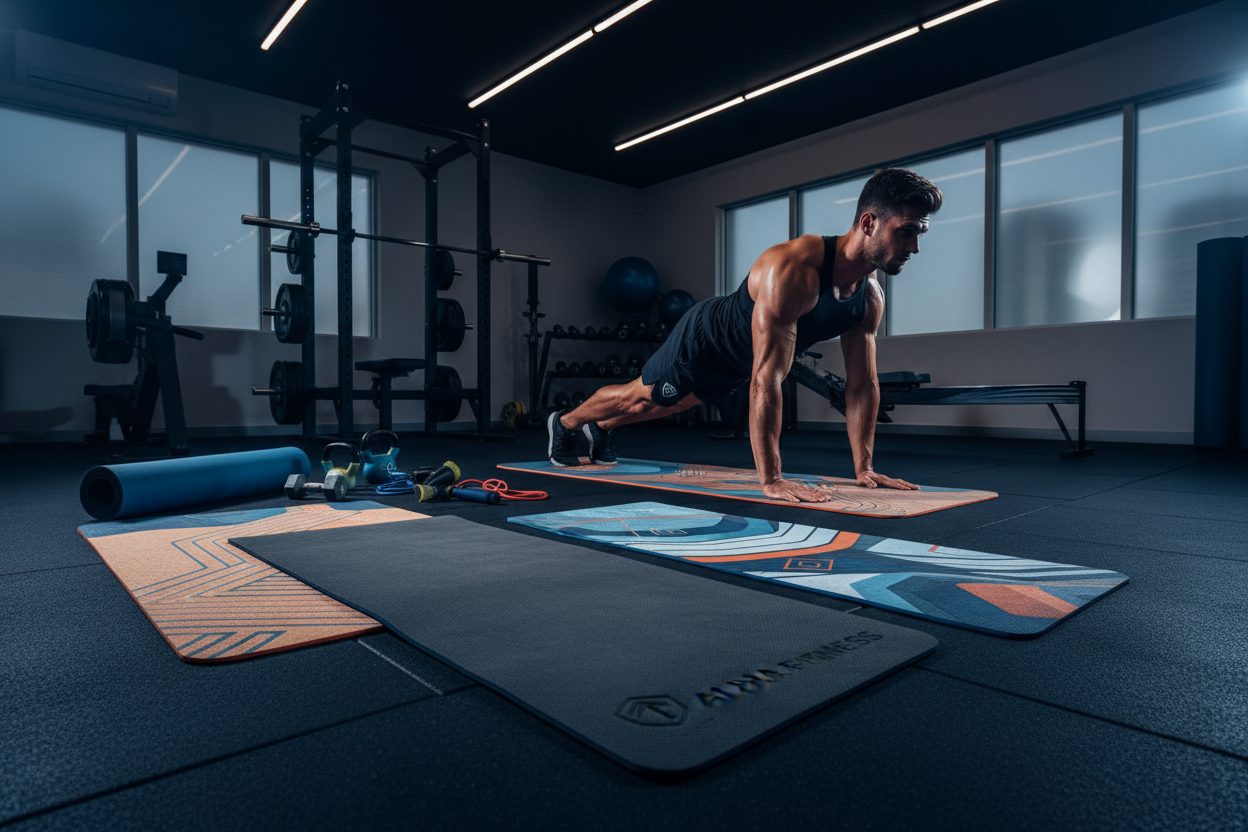
Laser Etching: The best option for durability. The design is burned into the top layer of the mat. It won't peel, fade, or impact the grip texture.
UV Cured Printing: Good for full-color images. However, on a custom exercise mat used for HIIT, the ink creates a slick spot. If your hand lands on the logo during a push-up, you might slip.
My Training Log: Real Talk
I need to be honest about my first experience buying a custom exercise mats batch. I was consulting for a CrossFit box and we ordered 20 mats with a massive, screen-printed logo right in the center.
They looked incredible on unboxing day. But during the first "Murph" workout, disaster struck. The ink used for the logo had a different friction coefficient than the rubber. Every time someone did a sit-up, the friction rubbed the ink off onto the back of their shirts. Worse, when sweat hit the logo, it turned into an ice rink. We had athletes actively avoiding the center of the mat to maintain grip.
The lesson? I only recommend laser etching or embossing for performance gear now. If you must use ink, keep the design in the corners where hands and feet rarely plant.
Conclusion
Investing in a custom exercise mat elevates your training environment from temporary to professional. Focus on the material first—preferably natural rubber or PU—and treat the visual customization as the finishing touch. Your joints (and your brand) will thank you.
Frequently Asked Questions
What is the best thickness for a custom workout mat?
For most training styles, 4mm to 5mm is ideal. It provides enough cushion for kneeling movements without creating instability during standing lifts. If you require a custom size exercise mat for heavy Pilates, you might go up to 6mm, but avoid thick foam for weightlifting.
Can I get a custom size exercise mat for a home gym room?
Yes. Many manufacturers offer "cut-to-size" rolls for home gyms. This allows you to create a wall-to-wall custom fitness mat solution that protects your flooring and prevents the equipment from sliding.
How do I clean a personalized gym mat without ruining the logo?
Avoid harsh bleach or alcohol-based cleaners, as these can degrade the adhesive in custom logo gym mats. Use a mixture of water and a tiny drop of mild dish soap, or a dedicated enzymatic mat cleaner. Wipe down and let it air dry out of direct sunlight.