Creating Your Sanctuary: The Best Home Gym Fitness Equipment Guide
Building a personal workout space is one of the highest ROI investments you can make for your health. However, the market is flooded with cheap gadgets and flimsy contraptions that promise the world but deliver nothing but frustration. If you are looking for the best home gym fitness equipment, you need to look past the marketing hype and focus on biomechanics, durability, and spatial efficiency.
This isn't about buying the most expensive gear; it's about curating a setup that eliminates excuses. Whether you have a sprawling garage or a tight spare bedroom, the principles of selecting quality gear remain the same.
Quick Summary: The Essentials
If you want to skip the deep dive and know exactly what components make up a high-performance home gym, here is the core checklist used by strength coaches:
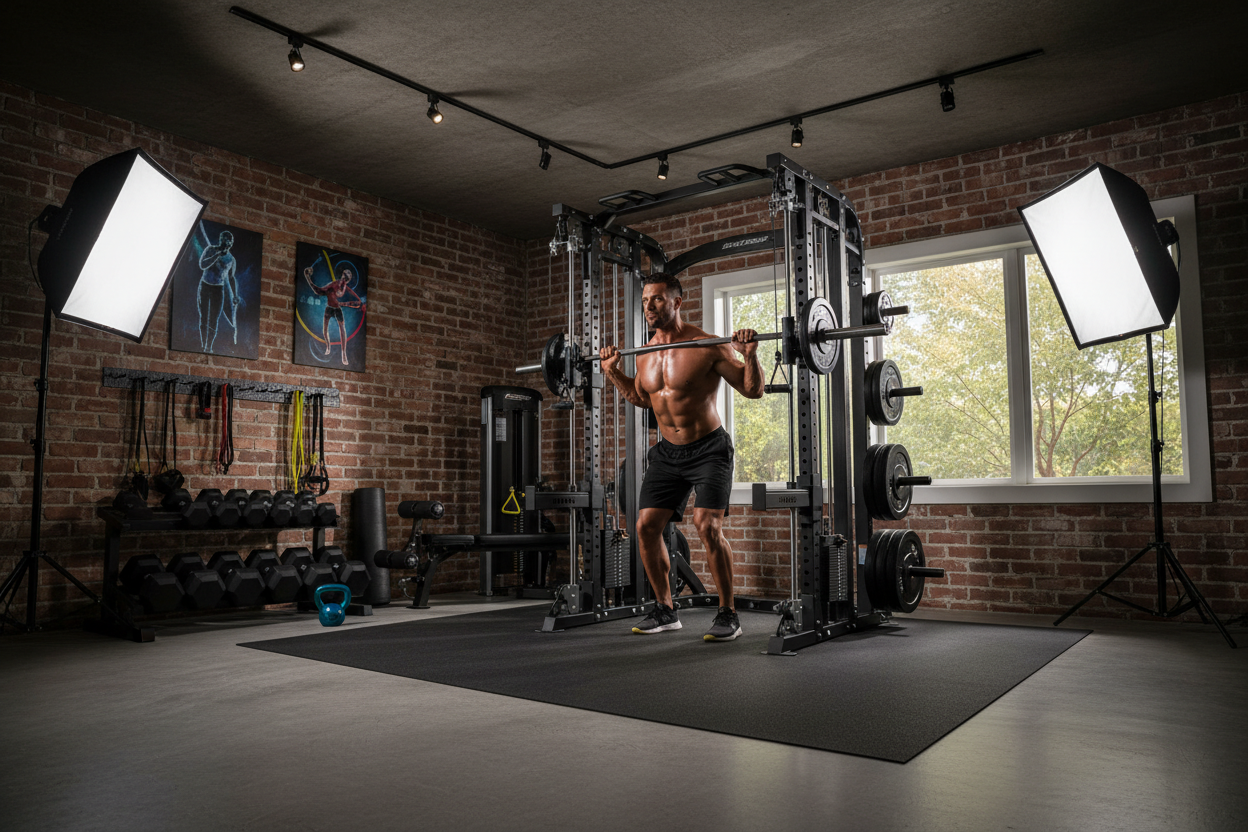
- The Power Rack: The centerpiece for safety and versatility, allowing for squats, presses, and pull-ups.
- Olympic Barbell & Plates: The gold standard for best home gym weight equipment due to infinite progressive overload potential.
- Adjustable Bench: Look for a heavy-duty option (FID: Flat, Incline, Decline) with minimal gap between pads.
- Cardio Piece: A rower or air bike usually offers the best machine for home gym conditioning without taking up the footprint of a treadmill.
- Flooring: often overlooked, but 3/4 inch horse stall mats are essential for protecting your foundation.
The Foundation: Why Your Rack Dictates Success
When looking for the best home gym sets, avoid the flimsy all-in-one functional trainers sold at big-box department stores. They often use proprietary cables and have low weight limits.
Instead, start with a power rack. This is non-negotiable for safety. A quality rack acts as your spotter. When selecting a rack, look for 3x3 inch steel uprights with 11-gauge steel. This specification ensures the unit won't wobble when you rack a heavy squat. The hole spacing matters, too. Look for "Westside spacing" (1-inch spacing) in the bench press zone, which allows you to set safety pins at the exact height needed to save your chest without ruining your range of motion.
Iron and Grip: The Weight Equipment
For the best home gym weight equipment, the barbell is your connection to the weight. Do not buy a cheap "standard" 1-inch bar. You need a 2-inch Olympic sleeve barbell.
Barbell Knurling and Spin
Pay attention to the knurling (the rough grip pattern). A passive knurl will slip out of your hands during deadlifts, while an overly aggressive knurl will tear your calluses before your workout is done. You also want a bar with decent bushings or bearings so the sleeves spin freely. If the sleeves don't spin, the rotation of the plates translates to torque on your wrists, leading to injury.
Plates: Bumper vs. Iron
If you train in a garage or basement, bumper plates (rubber-encased) are generally superior to cast iron. They dampen noise and protect your floor if you drop the bar. However, if you are a competitive powerlifter, calibrated iron plates are necessary for precision.
Conditioning: The Best Machine for Home Gyms
Space is the enemy of the home gym owner. This is why massive treadmills often become expensive clothes hangers. They take up huge square footage for a movement you can do outside.
The best machine for home gym cardio is often a Concept2 Rower or an Air Bike (like the Assault Bike or Echo Bike). These machines rely on wind resistance—the harder you push, the harder it gets. They are virtually indestructible, require minimal maintenance, and provide a full-body metabolic stimulus that a treadmill cannot match. Plus, many can be stored upright to save space.
My Training Log: Real Talk
Let me be honest about my own journey with the best home gym fitness equipment. When I started, I tried to save money by buying a budget adjustable bench from a random Amazon seller. It looked fine in the photos.
The first time I laid back with 50lb dumbbells, I felt the frame twist underneath me. It wasn't a catastrophic failure, but that subtle wobble completely broke my mental focus. Instead of thinking about my pec contraction, I was thinking about stabilizing my spine so I didn't tip over.
Furthermore, the gap between the seat and the back pad was nearly three inches wide. Every time I did a flat press, my tailbone would slide right into that crevice, pinching my skin. I replaced it three months later with a commercial-grade bench. The difference in stability was night and day. The lesson? Buy nice or buy twice. The "grit" of a home gym should come from your effort, not from fighting against poor-quality equipment.
Conclusion
Building a home gym is a process of curation. Start with the essentials: a solid rack, a reliable bar, and protective flooring. Ignore the flashy gadgets and focus on the best home gym fitness equipment that respects biomechanics and durability. Your home gym is your sanctuary; build it on a foundation of quality.
Frequently Asked Questions
What is the absolute minimum space needed for a home gym?
You can build a functional setup in a 10x10 foot space. This allows room for a 7-foot Olympic bar and enough clearance to load plates safely. If space is tighter, consider adjustable dumbbells and a standalone bench.
Is an all-in-one machine better than free weights?
Generally, no. While "all-in-one" sounds convenient, free weights (barbells and dumbbells) offer superior stabilization benefits and fit a wider range of body types. Machines lock you into a fixed path of motion that might not fit your specific biomechanics.
How much should I budget for a quality home gym?
For a high-quality baseline setup (Rack, Bar, Plates, Bench, Flooring), expect to spend between $1,500 and $2,500. While you can find cheaper options, this price point usually secures gear with a lifetime warranty that holds its resale value.