
Correcting Rounded Shoulders: The Science-Based Approach That Works
You catch a glimpse of yourself in a shop window and see it: the slump. Your head is forward, your upper back is curved, and your knuckles are facing forward instead of to the sides. It’s the classic sign of Upper Crossed Syndrome, or what most of us call the "hunchback" look. If you are looking for a round shoulders workout that actually fixes the root cause rather than just treating the symptoms, you are in the right place.
Most people try to fix this by constantly reminding themselves to "stand up straight." But relying on willpower doesn't change muscle length or tension. You need a structural change, and that requires a specific training protocol.
Key Takeaways for Fixing Posture
- Stretch the front, strengthen the back: The core issue is usually tight pecs (specifically the pec minor) pulling you forward, combined with weak upper back muscles.
- Focus on external rotation: Exercises must rotate the thumbs out and back to counteract the internal rotation caused by typing and driving.
- Frequency beats intensity: Doing posture correctives daily at low intensity is better than blasting your rear delts once a week.
- Thoracic extension is vital: Your spine needs to mobilize before your shoulders can sit correctly.
The Anatomy of the Slump
Before we grab any weights, you need to understand why your body is doing this. It isn't just laziness. It is a muscular imbalance. Your chest muscles and front deltoids have become short and tight, acting like a rubber band pulling your shoulders inward. Meanwhile, your rear deltoids, rhomboids, and lower traps—the muscles responsible for pulling you back—have become lengthened and weak.
To fix this, we have to stop training like a mirror-obsessed bodybuilder and start training like an athlete who values mechanics. The best workout for rounded shoulders prioritizes the posterior chain.
The Protocol: Release, Mobilize, Strengthen
Phase 1: Release the Tension
You cannot strengthen a muscle into the correct position if a tighter opposing muscle is fighting it. You must loosen the chest first.
The Doorway Stretch: Place your forearms against a doorframe at a 90-degree angle. Step through gently until you feel a stretch deep in the chest. Hold this for 45-60 seconds. Do not bounce. This targets the pec minor, the primary culprit in pulling the scapula forward.
Phase 2: Dumbbell Exercises for Rounded Shoulders
Now we activate the weak muscles. If you have access to free weights, these are non-negotiable.
Prone Y-Raises: Lie face down on an incline bench holding light dumbbells. Raise your arms at a 45-degree angle (forming a Y shape). The key here isn't the weight; it's the squeeze at the top. This targets the lower traps, which are essential for pulling the shoulder blades down and back.
Dumbbell Reverse Flys: This is a staple in exercises for rounded shoulders bodybuilding routines for a reason. Hinge at the hips until your torso is parallel to the floor. With a slight bend in the elbows, raise the weights out to the side. Crucial tip: Turn your pinkies up slightly at the top to enforce external rotation.
Phase 3: The "No Equipment" Daily Fix
You don't always need a gym. In fact, workouts for round shoulders are most effective when done frequently throughout the day.
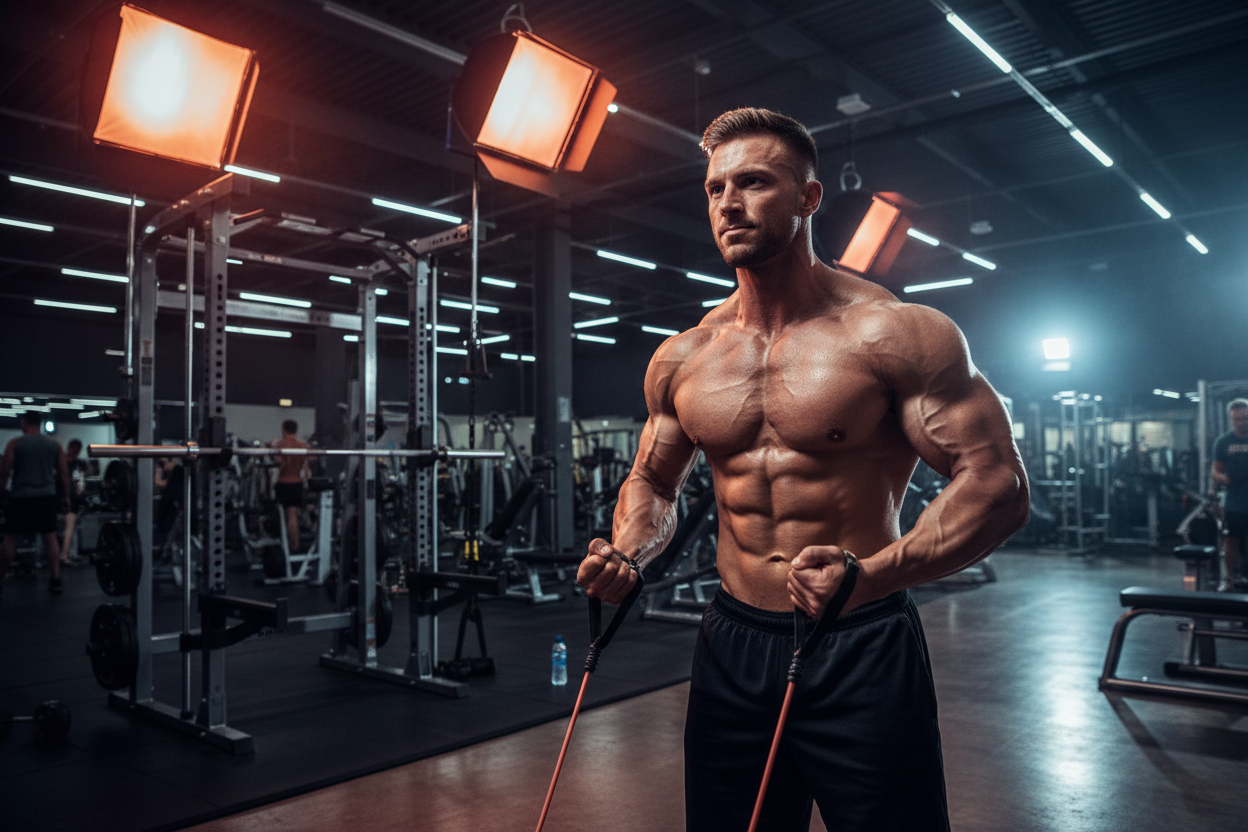
Band Pull-Aparts: If you work a desk job, keep a resistance band in your drawer. Grab the band with palms facing up (supinated grip). Pull the band apart until it touches your chest, squeezing your shoulder blades together. The supinated grip forces your shoulders into external rotation, directly counteracting the "keyboard posture."
Addressing the "Flat Shoulder" Myth
I often hear clients ask how to get flat shoulders. In fitness terms, this usually means they want their shoulders to lay flat against a wall rather than rolling forward. To achieve this, you must focus on thoracic mobility. Use a foam roller on your upper back to extend the spine. If your spine is curved, your shoulders have no choice but to round forward.
My Personal Experience with Round Shoulders Workout
I want to be transparent about my own battle with this. Early in my lifting career, I was obsessed with the bench press. I pressed three times a week and barely touched my back. The result? My shoulders rolled forward so badly that my hands went numb while sleeping.
The turning point wasn't a heavy lift; it was the humble "Wall Slide." I remember standing against the wall in my living room, trying to keep my lower back, head, and forearms touching the wall while sliding my arms up. It was humiliating. I physically couldn't do it without my ribs flaring out or my arms peeling off the wall.
The specific sensation that signaled I was finally fixing the issue wasn't a "pump." It was a deep, cramping heat in the middle of my back, right between the shoulder blades (the rhomboids). It felt like those muscles were waking up from a decade-long coma. If you don't feel that uncomfortable, cramp-like sensation in your mid-back during these exercises, you are probably using too much weight and compensating with your upper traps.
Conclusion
Fixing your posture isn't about a single magical round shoulder workout; it's about re-educating your body. You spend hours hunched over; you need to spend minutes intentionally reversing that. Start with the stretch, move to the strengthening exercises, and be consistent. Your future self (and your spine) will thank you.
Frequently Asked Questions
How long does it take to fix rounded shoulders?
If you are consistent with daily stretching and strengthening 3-4 times a week, you can see visual improvements in 4 to 6 weeks. However, pain relief often comes much sooner, sometimes within the first week of mobilizing the thoracic spine.
Can I still bench press if I have rounded shoulders?
Yes, but you should lower the volume. A good rule of thumb is a 2:1 pull-to-push ratio. For every set of pressing exercises you do, perform two sets of pulling exercises (like face pulls or rows) to balance the shoulder joint.
Is this the same as a hunchback (Kyphosis)?
Rounded shoulders often accompany thoracic kyphosis (the curvature of the spine), but they are distinct issues. Rounded shoulders refer specifically to the position of the scapula. However, the exercises listed here generally help alleviate both conditions by promoting better spinal extension.


