Complete Guide to Training All Parts of Your Chest
Many people focus only on the bench press when training their chest, but the reality is that the chest is made up of different parts that each require specific exercises. Understanding how to work the upper, middle, and lower portions of the pectoral muscles can help you build a balanced, strong, and aesthetically pleasing chest.
Understanding Chest Anatomy
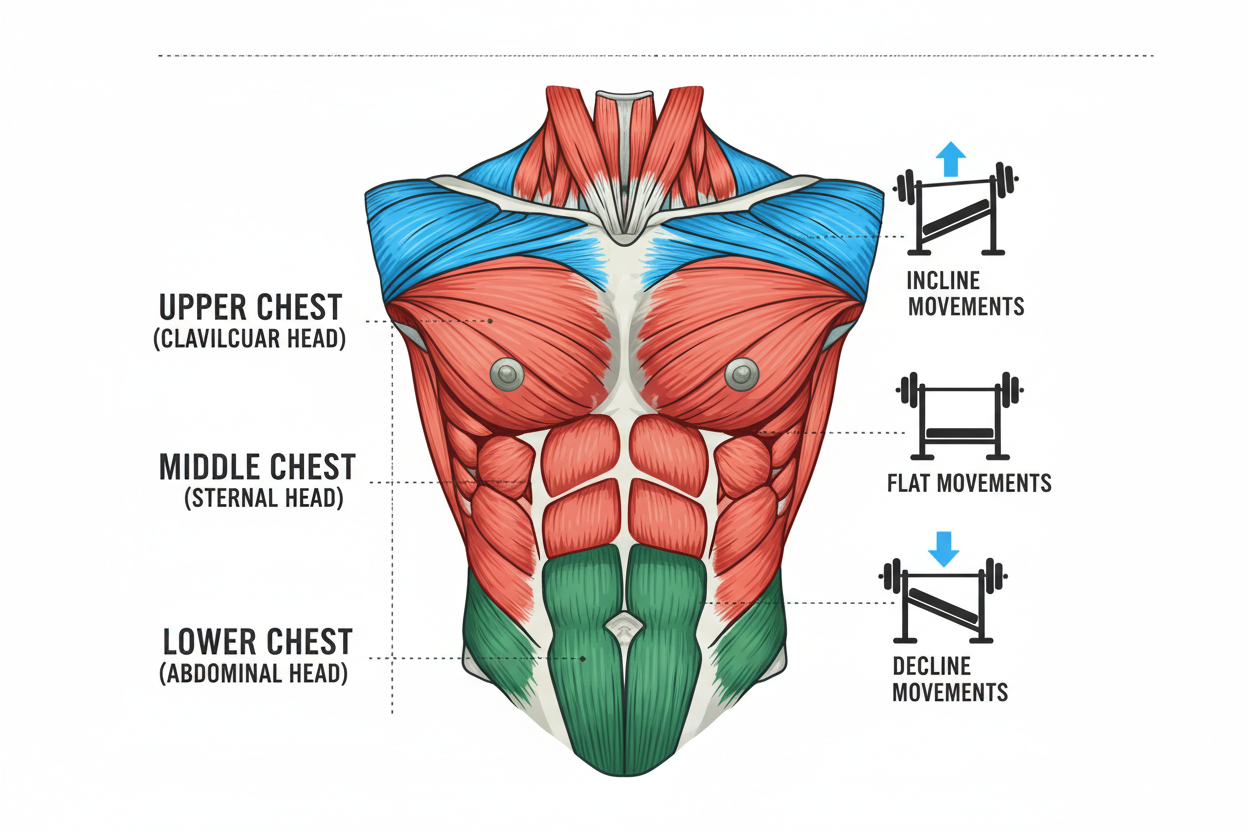
The chest muscles are primarily the pectoralis major and pectoralis minor. The pectoralis major is a large fan-shaped muscle that has upper (clavicular), middle, and lower (sternal) fibers. The pectoralis minor lies beneath and plays a role in stabilizing movements. By adjusting angles and grips, you can emphasize different parts of the chest during training.
Exercises for the Upper Chest
To target the upper chest, incline movements are key. Incline bench presses, incline dumbbell presses, and incline cable flys are highly effective. The incline position, usually set between 30 to 45 degrees, shifts emphasis onto the clavicular fibers. Keeping the movement controlled and the range full is important for optimal muscle activation.
Incline Dumbbell Press
This exercise allows a natural range of motion and greater stretch in the upper chest. Lie back on an incline bench, hold dumbbells over your chest, and press them upward while keeping your elbows slightly bent at the bottom for safety.
Exercises for the Middle Chest
Flat bench press variations—both barbell and dumbbell—are the bread and butter for the central portion of the chest. Cable flys with the handles at shoulder height also directly target this area. The middle chest contributes most to overall size and power.
Barbell Bench Press
A fundamental lift for overall chest development. Focus on a shoulder-width grip to ensure even activation. Lower the bar to mid-chest and press upward explosively while maintaining form.
Exercises for the Lower Chest
Decline presses and dips emphasize the lower section. Decline bench presses alter the angle of movement, prioritizing the sternal fibers of the pec major. For bodyweight enthusiasts, weighted dips can be a phenomenal finisher for adding density and definition.
Decline Dumbbell Press
Similar to the flat press, but on a decline bench. Make sure your core is tight and shoulders remain stable. This movement adds mass and shape to the lower chest.
How to Hit All Chest Muscles in One Workout
A well-rounded session should include pressing and fly movements at multiple angles. Start with heavy compound lifts in the incline or flat position, move into isolation work like cable flys, and finish with decline presses or dips. Rest between sets should be tailored to your goal—shorter for endurance and hypertrophy, longer for strength.
Sample Chest Routine
- Incline Dumbbell Press – 4 sets of 8-10 reps
- Flat Barbell Bench Press – 3 sets of 6-8 reps
- Cable Fly (mid-height) – 3 sets of 12-15 reps
- Decline Dumbbell Press – 3 sets of 8-10 reps
- Weighted Dips – 3 sets to failure
Form and Safety Considerations
Proper technique prevents injuries and maximizes gains. Always warm up with dynamic stretches and lighter sets. Maintain a neutral spine, avoid bouncing the weight, and control both the lifting and lowering phases. Breathing correctly—exhaling upon exertion—also aids performance.
Personal Experience with Chest Training
When I first started working out, my chest development was uneven because I only did the flat bench press. After learning about the importance of angles, I incorporated incline and decline movements, and within a few months, the difference was noticeable. My upper chest filled out, giving my overall physique a more balanced look. This experience taught me that targeting different chest parts isn't just theory—it produces tangible results.
Conclusion
Building a strong, well-shaped chest requires strategic selection of exercises that work each part of the pectoral muscles. By incorporating variations in bench angle, grip, and movement type, you can ensure comprehensive development. Consistency, correct form, and progressive overload are the pillars that will help you hit all chest muscles effectively.