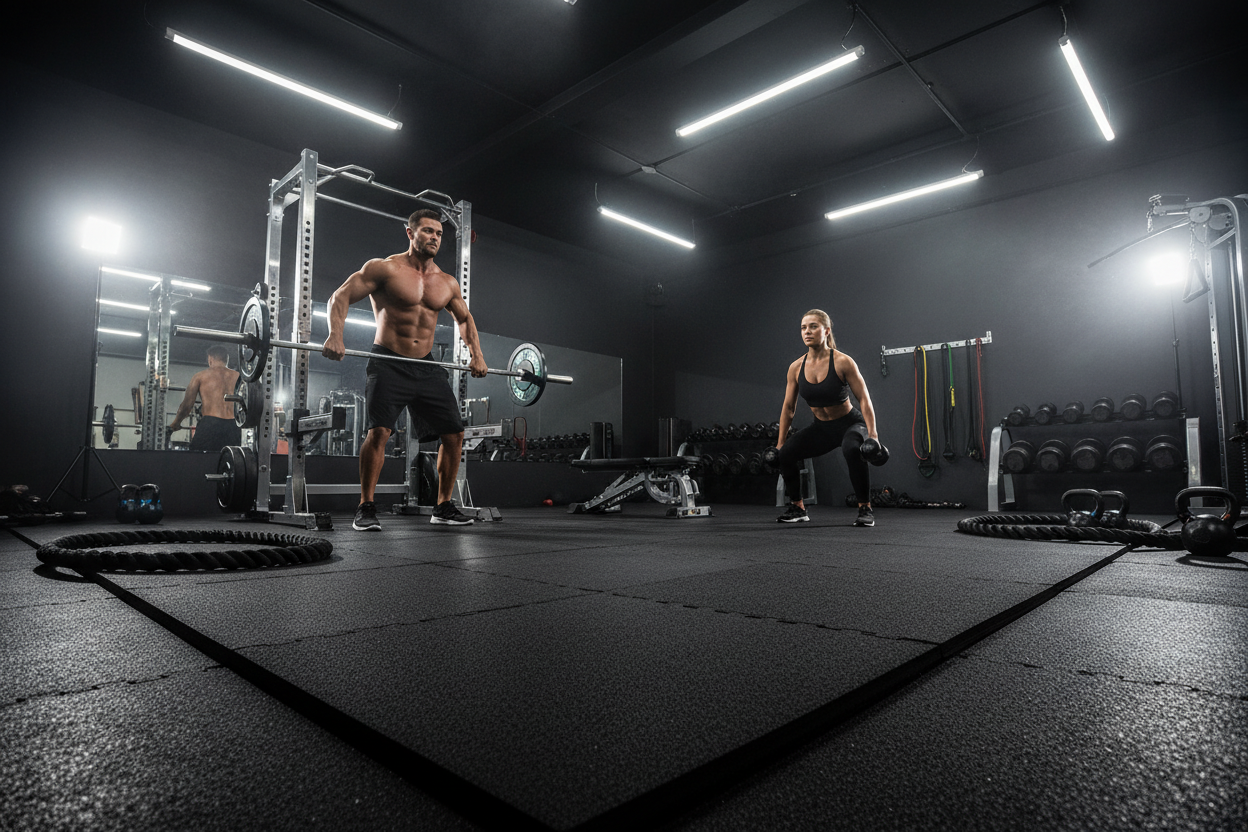
Commercial Gym Flooring Explained: Stop Wasting Your Budget
Nothing kills the vibe of a heavy lifting session faster than the fear of cracking your foundation. Whether you are building out a massive garage setup or outfitting a boutique studio, choosing the right commercial gym flooring is the most critical foundational step you can take. It absorbs impact, protects your expensive plates, dampens noise, and saves your joints during explosive movements.
Yet, many facility owners and home gym builders make the costly mistake of buying cheap, inadequate foam tiles that compress and tear within months. In this guide, we will break down exactly what you need to know before investing in professional-grade surfacing so you can build a safer, quieter, and more resilient training space.
Key Takeaways
- Thickness dictates function: A 3/8-inch thickness is standard for general use, while 1/2-inch to 3/4-inch is required for heavy drop zones.
- Material is non-negotiable: Vulcanized or recycled commercial rubber flooring for gyms dramatically outlasts EVA foam.
- Rolls vs. Mats: Rolled rubber offers a seamless look for large spaces, while standalone commercial gym mats are perfect for targeted lifting zones.
- Subfloor protection: The right flooring protects your concrete from cracking and your barbell from warping.
Material Matters: Finding the Best Commercial Gym Flooring
Not all rubber is created equal. When evaluating the best commercial gym flooring for your space, you need to look at density, material composition, and format.
Rolled Rubber vs. Interlocking Mats
If you are outfitting a large area, rolled commercial rubber gym flooring is the gold standard. It minimizes seams, which prevents dirt buildup and tripping hazards, making it ideal for high-traffic fitness center flooring. However, installation can be labor-intensive and often requires adhesive. On the other hand, heavy-duty interlocking tiles or standalone professional gym mats offer easier installation and can be swapped out individually if a section gets damaged from repeated heavy deadlifts.
The Thickness Rule of Thumb
For cardio equipment and light dumbbell work, 1/4-inch to 5/16-inch thick flooring is sufficient. But if you are dropping heavy barbells, you need industrial gym flooring. A minimum of 3/8-inch is standard for weight rooms, while dedicated Olympic lifting platforms or drop zones benefit from 1/2-inch to 3/4-inch thick industrial gym mats. Products comparable to bcg heavy duty gym flooring or standard horse stall mats often hit that sweet spot of density and thickness.
Sourcing: Maximizing Your Budget
Outfitting a large space gets expensive quickly, which is why strategic purchasing is essential.
Navigating Bulk and Wholesale Options
If you need to cover more than 400 square feet, looking into wholesale gym flooring is the smartest move. Buying direct or finding a reliable gym mat wholesale supplier can cut your costs by 20% to 30%. When searching for gym flooring wholesale deals, be sure to ask about shipping costs, as the sheer weight of professional gym flooring can make freight delivery incredibly expensive. Sometimes, sourcing local commercial gym floor mats from an agricultural or industrial supplier can save you hundreds in freight fees.
From Our Gym: Honest Take
When we first expanded our garage gym facility, we tried to cut corners with 1/4-inch interlocking tiles from a big-box store. It was a disaster. Within three months, the seams were splitting, and a dropped 45-pound bumper plate actually dented the concrete underneath.
We finally ripped it all out and invested in 3/4-inch thick vulcanized rubber mats. The difference was night and day. The aggressive grip of the professional gym mats kept our benches from sliding during heavy leg drives, and the noise reduction was immediate—our neighbors actually thanked us. One minor caveat: fresh industrial rubber has a strong 'tire shop' smell. We had to leave the garage doors open and run industrial fans for about two weeks before the off-gassing scent completely faded. But two years later, despite daily heavy deadlifts and drops, there isn't a single tear or compression divot in the floor.
Frequently Asked Questions
Is commercial gym flooring worth it for a home gym?
Absolutely. While the upfront cost is higher than foam tiles, commercial-grade rubber protects your concrete foundation from cracking, extends the life of your bumper plates, and provides a much safer, non-slip surface for heavy lifting.
How do I clean commercial gym floor mats?
Keep it simple. Vacuum or sweep up loose chalk and debris first. Then, mop using a pH-neutral cleaner mixed with warm water. Avoid harsh chemicals like bleach or ammonia, which can break down the rubber binders over time.
Can I put industrial gym mats over carpet?
It is highly discouraged. Placing heavy rubber mats over plush carpet creates an unstable, squishy surface that is dangerous for lifting heavy weights. If you must lay flooring in a carpeted room, you should put down a rigid plywood subfloor first to create a stable base.