Commercial Exercise Equipment: The Definitive Guide for Gym Owners
Opening a facility or upgrading your current floor plan is a massive financial commitment. You aren't just buying metal and rubber; you are investing in user retention and safety. The market is flooded with gear that claims to be commercial exercise equipment, but much of it is merely glorified residential hardware with a higher price tag.
If you choose the wrong machines, you face frequent breakdowns, voided warranties, and frustrated members. This guide cuts through the marketing noise to help you build a facility that stands the test of time.
Key Takeaways for Buyers
- Usage Ratings Matter: True commercial gear is rated for 6+ hours of daily use, unlike light-commercial (3-5 hours) or residential units.
- Frame Gauge: Look for 11-gauge steel or lower (thicker) for structural integrity in commercial weight equipment.
- Service Contracts: The value of commercial gym suppliers lies in their post-sale support and parts availability.
- Biomechanics: Commercial fitness machines must accommodate users ranging from 5'0" to 6'6" without compromising movement paths.
Defining "True" Commercial Grade
The term "commercial" is often abused in marketing. In the industry, we distinguish equipment based on usage tiers. Genuine industrial exercise equipment is engineered to run 24/7. It uses AC motors in treadmills (which run cooler than DC motors) and heavy-duty bearings in strength machines.
If you place business gym equipment in a high-traffic facility, it needs to withstand constant impact. A residential treadmill might look similar, but its deck will crack and the motor will burn out within three months of gym-level usage.
Core Categories of Commercial Workout Machines
Cardio Units
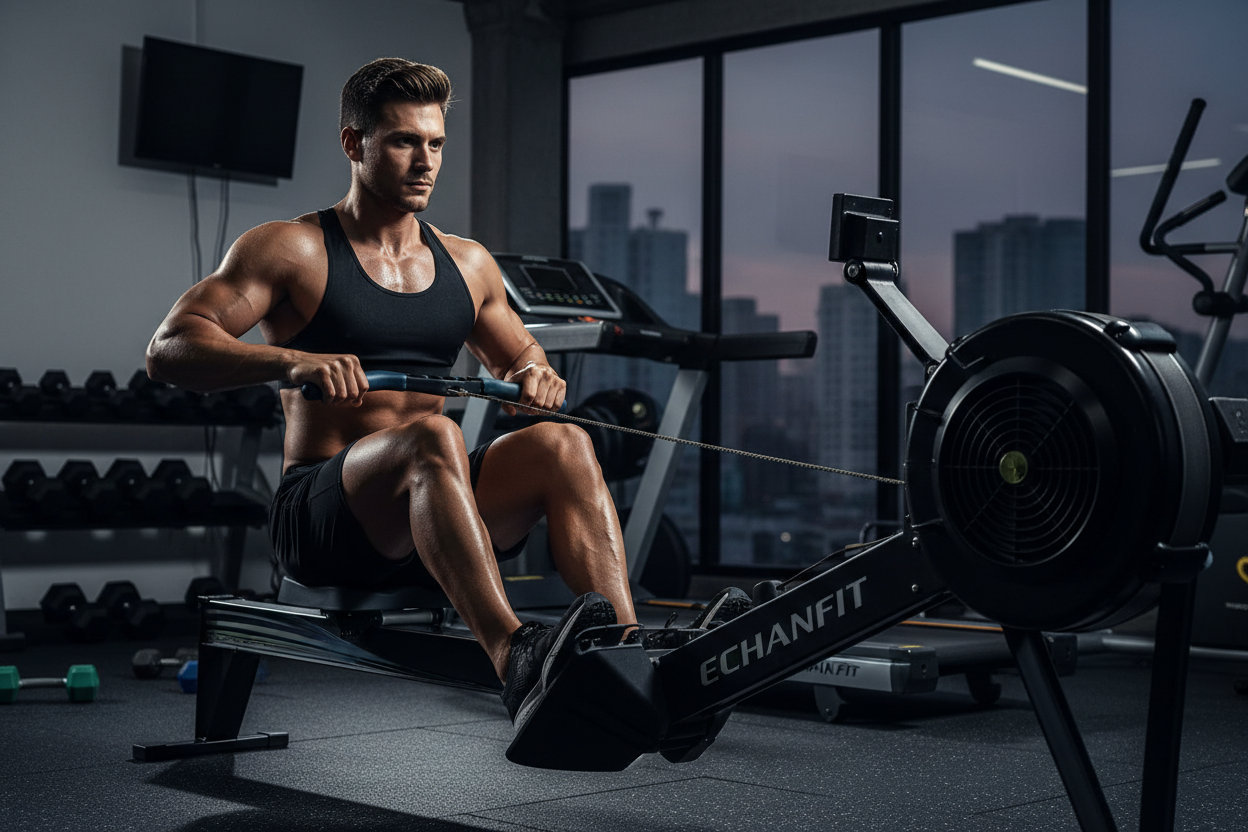
When sourcing commercial workout equipment for cardio, focus on the console and the motor. Touchscreens are popular, but they add complexity and potential failure points. Many seasoned owners prefer LED consoles for their durability.
For treadmills, look for a reversible deck. This effectively doubles the lifespan of the running surface. If you are buying commercial gym machines like ellipticals, check the step-up height and pedal motion to ensure it feels natural, not jerky.
Strength and Resistance
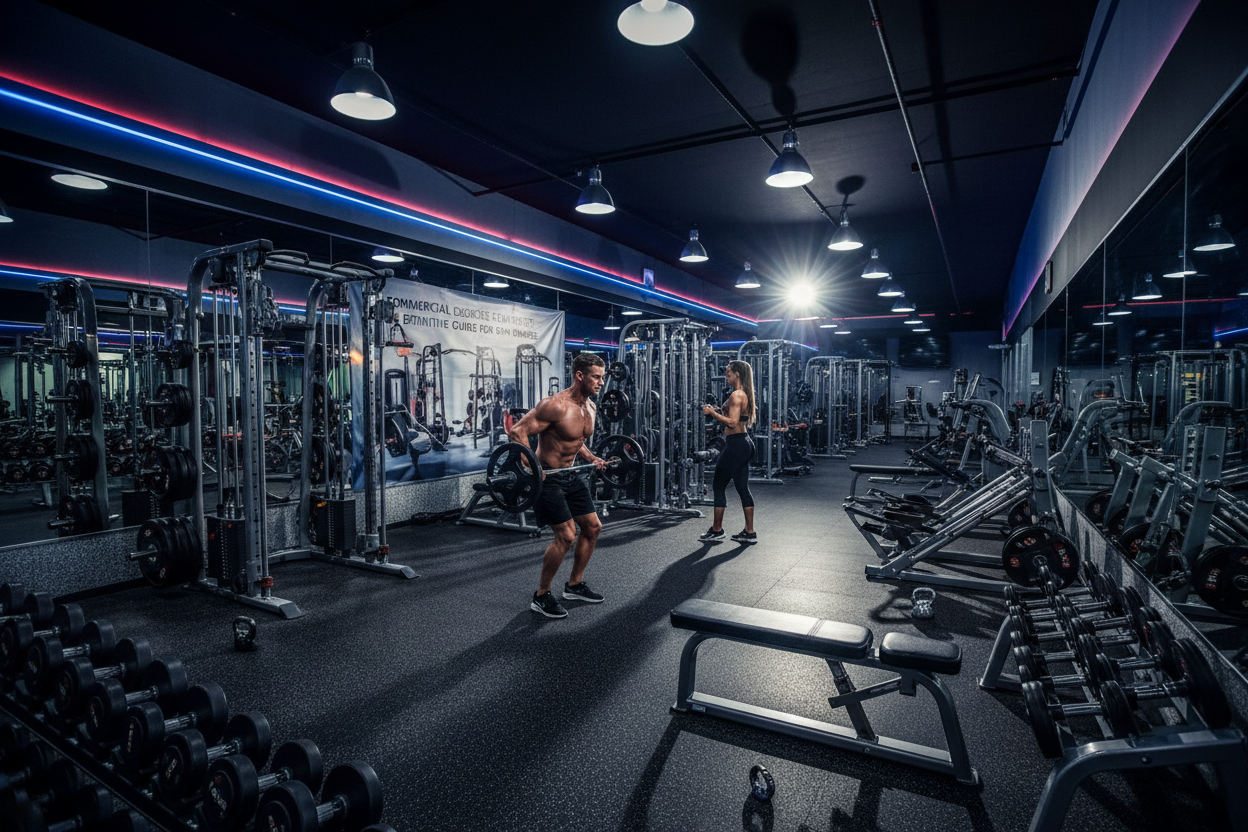
Your commercial strength equipment is the backbone of the weight room. There are two main buckets here: selectorized (pin-loaded) and plate-loaded.
For selectorized fitness commercial equipment, inspect the cables. You want aircraft-grade steel cables coated in nylon. If the coating strips easily, the pulley wheels will degrade rapidly. For plate-loaded gear, stability is king. Users should be able to load 400+ lbs without the frame flexing.
Choosing Commercial Gym Suppliers
Finding the right equipment for commercial gym setups is as much about the vendor as the machine. A great supplier offers floor planning services and, crucially, a robust maintenance contract.
Ask potential suppliers about their "parts lead time." If a cable snaps on your lat pulldown, can they ship a replacement in 24 hours? Or will your machine have an "Out of Order" sign for three weeks? That downtime costs you members.
Common Mistakes When Outfitting a Gym
Ignoring Biomechanics for Aesthetics
Some fitness equipment for commercial gyms looks sleek but feels terrible to use. Always test the "strength curve." Does the resistance drop off at the wrong point in the rep? Does the seat adjustment rattle?
Overlooking Refurbished Options
You don't always need brand-new gear. High-quality refurbished commercial exercise machines from top-tier brands (like Life Fitness or Hammer Strength) can save you 40-60%. Just ensure the refurbishment includes new bearings, decks, and belts, not just a fresh coat of paint.
My Personal Experience with Commercial Exercise Equipment
I’ve spent years training in everything from garage gyms to high-end athletic centers, and I’ve learned that specs on a paper don't tell the full story. You feel the quality of commercial machines in the unpolished details.
I remember testing a "budget" commercial cable crossover machine a few years ago. It looked robust—big frame, heavy stack. But the moment I started a fly motion, I felt it. There was this gritty, sticky friction at the top of the movement where the pulley lagged behind the cable. It wasn't smooth; it stuttered.
Contrast that with a high-end selectorized unit I used recently. The difference wasn't the weight; it was the silence. The stack moved up and down without that metal-on-metal clanking, and the knurling on the handles was aggressive enough to grip without chalk but didn't shred my palms. That specific "smoothness" is what members pay for. If a machine wobbles or the resistance creates drag, members won't trust it, and they won't come back.
Conclusion
Building a gym requires balancing budget with longevity. Investing in quality commercial exercise equipment ensures your facility remains operational and safe. prioritize structural integrity and vendor support over flashy touchscreens, and your equipment will pay for itself in member retention.
Frequently Asked Questions
What is the average lifespan of commercial gym equipment?
High-quality cardio machines typically last 5–7 years in a busy facility, while strength equipment can last 10–15 years or more if upholstery and cables are maintained regularly.
Can I use residential equipment in a commercial gym?
No. Using residential gear in a business setting usually voids the warranty immediately. Furthermore, it creates a significant liability risk if a machine fails and injures a member.
Is it better to lease or buy commercial gym machines?
Leasing allows you to preserve capital and upgrade equipment every few years, which is great for keeping a gym modern. Buying is better for long-term ROI, especially for strength equipment that depreciates slowly.