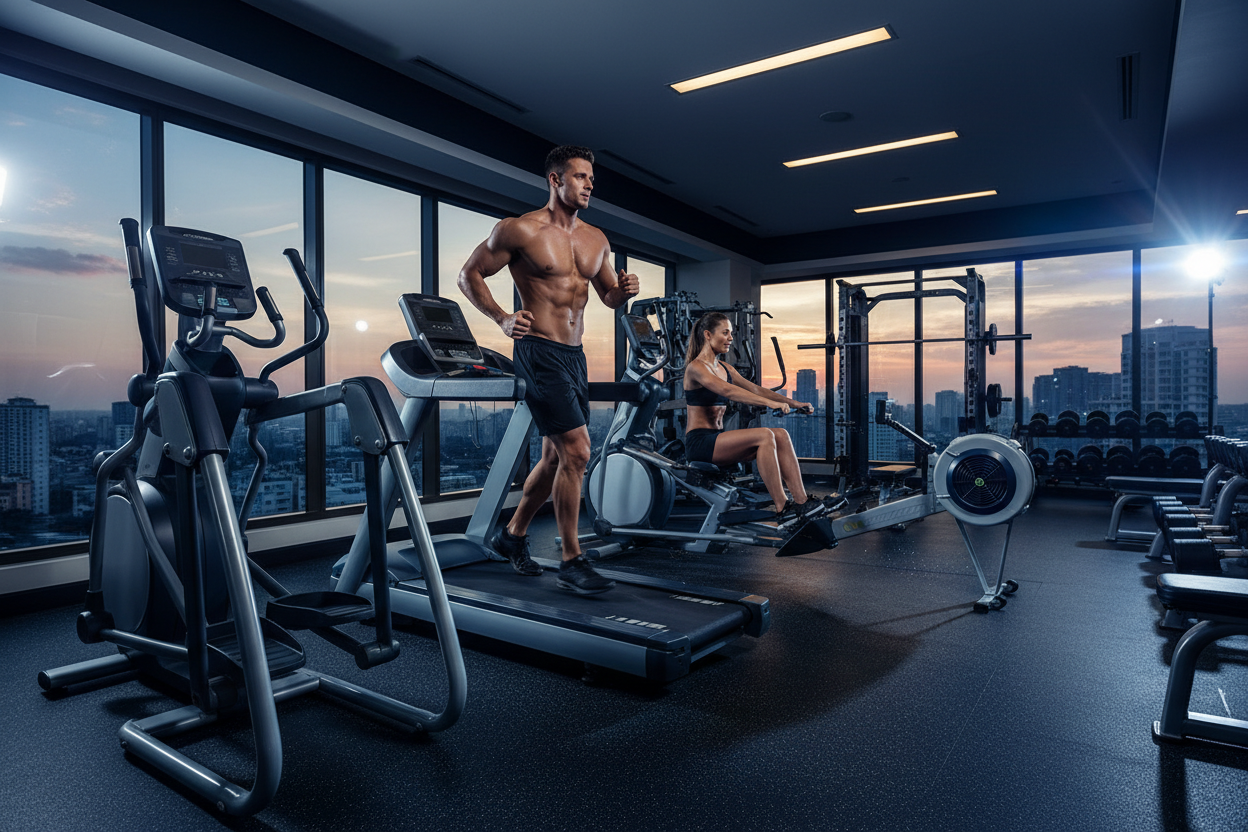
Commercial Cardio Equipment: Worth the Home Gym Investment?
Most home gym owners start with a big-box store treadmill or bike. Fast forward six months, and the belt is slipping, the frame squeaks, and your workout motivation tanks. If you are tired of flimsy gear, bringing commercial cardio equipment into your home setup changes the game entirely. But is the heavy price tag justified for a residential space?
In this guide, we will break down the exact differences between residential and club-grade machines, how to plan your space, and whether or not making the upgrade makes sense for your specific fitness goals.
Key Takeaways
- Commercial units utilize AC motors designed for continuous, hours-long use, unlike standard DC home motors that overheat quickly.
- Heavy-gauge steel frames drastically increase stability, eliminating the side-to-side wobble during intense intervals.
- Warranties on commercial gear often cover parts and labor for years, even under heavy, daily usage.
- You must plan for significant space requirements, ceiling clearance, and potentially dedicated electrical circuits before delivery.
Decoding the Build: What Makes It 'Commercial'?
When comparing standard gear to commercial cardio machines, the differences go far beyond a fancy touchscreen. It all comes down to internal engineering and material quality.
Motor Power and Drive Systems
Residential treadmills typically use DC (Direct Current) motors. They are fine for a 30-minute daily jog but tend to overheat during long, intense sessions. Commercial models rely on AC (Alternating Current) motors. They self-cool, provide incredibly smooth belt transitions, and can run non-stop for hours without lagging under heavy foot strikes.
Frame Integrity and Weight Capacity
Pick up the front of a cheap elliptical. It is light, right? Now try lifting a club-grade unit. Commercial frames utilize welded, heavy-gauge steel. This robust construction absorbs vibration, eliminates wobble during high-intensity interval training (HIIT), and pushes weight capacities well past the 350-pound mark.
Space Planning for Heavy-Duty Machines
Do not trust the sleek marketing photos—these machines have a massive footprint. Proper space planning is critical before you hit the checkout button.
Garage vs. Basement Setup
Garage gyms are ideal due to concrete flooring, which easily supports a 400-plus pound machine. If you are putting this in a basement, you must measure your ceiling height carefully. A commercial treadmill deck sits much higher off the ground than a residential one to house the larger motor and suspension system. If you are over 6 feet tall, a standard 8-foot basement ceiling might leave you scraping your head on the drywall during an incline run.
From Our Gym: Honest Take
We recently installed a refurbished club-grade treadmill in our main testing garage, and the difference in training quality is night and day. The heavy-duty slat belt gripped my shoes perfectly during heavy sled-push simulations, and the 4.0 HP AC motor did not lag once—even with a 220-pound runner doing max-effort sprint intervals.
However, here is our honest caveat: the logistics were a nightmare. The unit weighed 425 pounds and required three guys just to get it over the threshold. Furthermore, we had to hire an electrician to install a dedicated 20-amp outlet. That is a hidden cost most buyers do not anticipate when upgrading their home gym.
Frequently Asked Questions
Can I put commercial cardio machines in an upstairs apartment?
It is generally not recommended. The sheer weight of the machine, combined with the dynamic force of running or stepping, can damage standard residential subfloors and cause severe noise complaints from downstairs neighbors.
Do I need special electrical outlets?
Often, yes. Many heavy-duty treadmills and step mills require a dedicated 20-amp circuit and a NEMA 5-20 outlet. Always check the electrical requirements on the manufacturer spec sheet before purchasing to avoid constantly tripping your household breakers.
How long do these machines typically last at home?
In a residential setting where the equipment sees 1 to 2 hours of use per day (compared to 10-plus hours in a commercial gym facility), a well-maintained commercial unit can easily last 15 to 20 years.