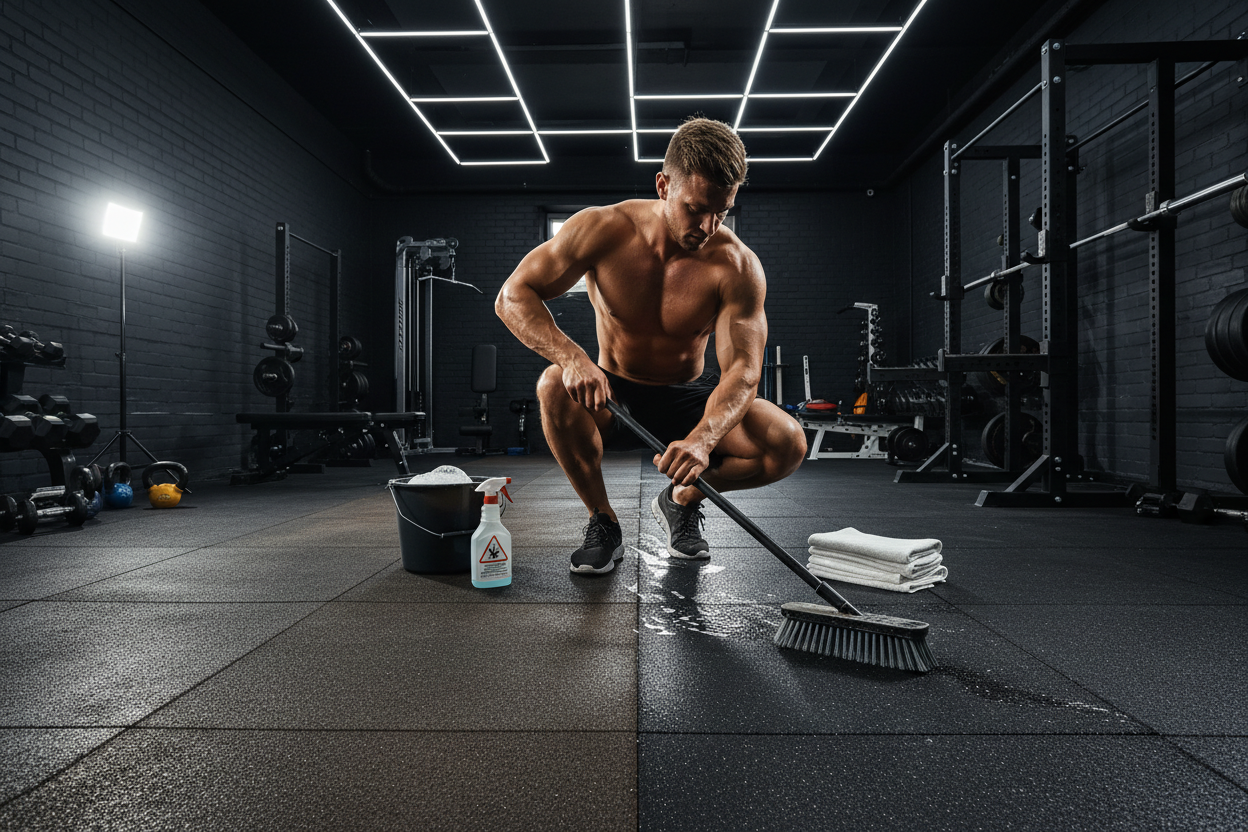
Clean Gym Floor Mastery: Stop Ruining Your Rubber Mats
There is nothing quite like the feeling of crushing a heavy deadlift or finishing a grueling metcon in your own space. But let's be honest: that same space quickly becomes a trap for sweat, dead skin, chalk dust, and dirt. If you want to protect your investment and keep your training sanctuary smelling fresh, maintaining a clean gym floor is absolutely non-negotiable.
Whether you are dealing with rolled rubber, vulcanized stall mats, or puzzle tiles, knowing exactly how to clean rubber flooring in gyms will extend its lifespan and keep your lifting environment safe. In this guide, we will break down the exact products, tools, and methods to keep your flooring pristine without degrading the material.
Key Takeaways
- Ditch the harsh chemicals: Bleach and acidic cleaners will break down rubber over time. Stick to a pH-neutral gym rubber mat cleaner.
- Clear the debris first: Always use a soft-bristled broom or a dedicated vacuum for rubber flooring before introducing any liquids.
- Water is the enemy of interlocking tiles: When figuring out how to clean interlocking gym mats, use a damp mop, never a soaking wet one, to prevent water from seeping underneath.
- Fix the slip: If you find your rubber gym floor slippery, it is likely due to soap residue. A clean water rinse is essential.
The Best Way to Clean Rubber Gym Floor Setups
Figuring out how to clean rubber gym flooring doesn't require a chemistry degree, but using the wrong tools can permanently damage your setup. Here is the foolproof weekly routine.
Step 1: Dry Debris Removal
Before you even think about mopping, you need to remove the abrasive dirt and chalk. If you drag a wet mop over chalk dust, you just create a messy, white paste. The ideal first step is sweeping with a soft-bristle broom or using a vacuum for rubber flooring. Ensure the vacuum's beater brush is turned off so it doesn't scratch the surface of your mats.
Step 2: Choosing the Best Cleaner for Gym Mats
When people ask what to use to clean gym mats, the answer is simpler than you think. You need a mild, pH-neutral rubber gym floor cleaning solution. You can buy commercial gym floor cleaning products, but a few drops of mild dish soap mixed with warm water in a bucket is often the best gym floor cleaner for home setups. Avoid anything with bleach, ammonia, or harsh solvents, as these will dry out the rubber and cause it to crumble.
Deep Cleaning and Tackling Stubborn Messes
Even with regular maintenance, cleaning a rubber gym floor occasionally requires a deeper dive, especially if you sweat heavily or use a lot of liquid chalk.
How to Mop Rubber Gym Floor Surfaces
The secret to mopping rubber gym floor tiles is moisture control. The best mop to clean rubber gym floor surfaces is a microfiber flat mop. Dip the mop pad into your solution and wring it out until it is barely damp. Mopping with too much water allows moisture to seep through the seams, which can cause mold growth underneath. Work in small sections, and always follow up with a second pass using plain, clean water to remove any soapy residue.
Steam Cleaning Rubber Flooring: Is It Safe?
Many home gym owners wonder about steam cleaning rubber flooring to sanitize it. Proceed with caution. While steam is excellent for killing bacteria, high heat can damage some types of bonded rubber and adhesives. If you must steam clean, use the lowest heat setting, keep the mop head moving continuously, and only do this a few times a year for deep sanitation.
Fixing Safety Hazards: The Slippery Floor Problem
How to Make Gym Floor Less Slippery
A common complaint we hear is: "My rubber gym floor slippery after I wash it!" This almost always happens because too much soap was used, leaving a slick film once it dries. To fix this, you need to strip that residue. Wash the floor with a highly diluted mixture of warm water and a splash of white vinegar, then immediately rinse with pure water and run a fan to dry it quickly. This is the best way to clean rubber floor mats gym owners swear by for restoring that grippy, factory texture.
From Our Gym: Honest Take
When I built out my first garage gym, I made a classic rookie mistake. I bought premium 3/4-inch vulcanized rubber mats and, after a particularly sweaty summer workout, decided to mop them down with a heavy dose of industrial floor degreaser. Within a month, the top layer started flaking, and the mats lost their grip, making heavy squats feel sketchy.
I learned the hard way that cleaning gym floor mats requires a gentle touch. Now, I strictly use a microfiber mop with a dedicated gym floor mat cleaner or just a drop of dish soap. At 6'2", I need absolute confidence that my feet are planted during dynamic lifts. Switching to a damp-mop, pH-neutral routine not only saved the mats but completely eliminated the weird, slick film I used to slip on during lunges. Keep it simple; your floor (and your joints) will thank you.
Frequently Asked Questions
How often should I be cleaning rubber gym mats?
For a standard home gym used 3-5 times a week, you should vacuum or sweep weekly and do a damp mop every two weeks. If you drop a lot of sweat or train multiple clients, you should be cleaning rubber exercise mats daily.
How to clean home gym mats that interlock?
When figuring out how to clean interlocking gym mats, the main rule is to avoid excess water. Because the puzzle seams aren't watertight, use a lightly damp microfiber mop. If water gets underneath, you'll have to pull the mats up to dry the subfloor to prevent mildew.
What is the best way to clean gym floor tiles if they smell like rubber?
New rubber gym floor tiles often have a strong "tire" odor. To speed up the process, wash them with a mild soap and water solution, ensure excellent ventilation, and leave them in the sun for a few hours if possible before installing. The smell naturally dissipates after a few weeks.