Choosing Home Flooring for Workouts: A Trainer's Guide
A few years ago, I helped a client set up a squat rack in his spare bedroom. He blew his entire budget on a beautiful power rack and barbell, leaving nothing for the floor. Two weeks later, a dropped 45-pound plate cracked his hardwood, and his knees were screaming from doing plyometrics on a rigid surface.
That was a hard lesson in why choosing the right foundation for workouts is the most critical step in building your home gym. Over the last decade of designing training spaces, I've learned that what's under your feet dictates how safely and effectively you can train.
Quick Takeaways
- Concrete destroys joints during high-impact movements; you need shock absorption.
- Carpet creates dangerous instability for heavy lifts like squats and deadlifts.
- 3/4-inch horse stall mats are the most durable, cost-effective option for heavy lifters.
- EVA foam is cheap but compresses under heavy weights, making it better for mobility work.
Why Your Foundation Matters More Than Your Gear
When you land a 24-inch box jump or drop into a dynamic lunge, your body absorbs massive amounts of shock. Ground reaction force is real. If you are training on bare concrete, that force travels straight back up your shins and into your patellar tendons.
Over a 12-week training cycle, this repetitive stress often leads to shin splints or aching knees. A proper rubber floor acts as a shock absorber. It dissipates the kinetic energy before it reaches your joints, keeping you healthy enough to train consistently.
Furthermore, a dense floor protects your expensive cast iron or bumper plates from chipping. Dropping a pair of 52.5-pound adjustable dumbbells on concrete will shatter the internal mechanisms instantly. I always tell my clients that spending $200 on flooring will save them thousands in physical therapy and equipment replacement down the road.
The Problem With Typical Household Floors
Carpet is a twisted ankle waiting to happen. The padding underneath creates an unstable surface. When you unrack a 225-pound barbell for squats, your feet need to root firmly into the ground.
On carpet, your weight shifts, causing your ankles to roll inward and placing massive shear force on your knees. Hardwood looks great but offers zero impact absorption. It is also incredibly slippery when you start sweating during a tough session.
One rogue drop of a 50-pound dumbbell will permanently gouge oak planks. Bare concrete is exactly the opposite. It is highly stable but aggressively unforgiving. If you are doing burpees or kneeling for ab wheel rollouts, concrete will bruise your joints instantly.
Types of Flooring for Workout Spaces
There are three main categories of flooring you will encounter when building a home gym. Each serves a specific purpose, budget, and training style. Understanding the differences between heavy-duty rubber, lightweight foam, and commercial-grade rolled materials will save you from buying the wrong surface.
Horse Stall Mats: The Gold Standard
Go to any local farm supply store and look for 3/4-inch thick vulcanized rubber horse stall mats. Usually sold in 4x6 foot dimensions, these weigh about 100 pounds each and cost around $50 to $70. They are the absolute gold standard for heavy lifting.
I use these in my own garage gym, and they have survived thousands of deadlift drops without a single tear. The dense rubber absorbs heavy force and deadens the sound of clanking iron, which keeps your neighbors happy.
However, I want to be honest about the downside. They smell intensely like tires for the first month. You will need to leave them outside in the sun and scrub them with a degreaser before bringing them indoors. Also, moving a 100-pound floppy sheet of rubber requires two people and a lot of patience.
Interlocking EVA Foam Tiles: Pros and Cons
If your primary routine involves yoga, mobility work, or light calisthenics, EVA foam tiles are incredibly affordable. They usually come in 24x24 inch squares with interlocking puzzle edges. A pack of six tiles might cost you less than $30.
For bodyweight exercises, they provide excellent cushioning for your knees and wrists. But they have a fatal flaw for serious lifters. Foam compresses easily under pressure.
If you set a heavy bench press or squat rack on 1/2-inch foam tiles, the metal feet will permanently puncture the material. Even worse, if you stand on foam while holding heavy dumbbells, the floor squishes beneath you. This ruins your balance and power transfer. Keep foam reserved for stretching areas or playrooms, not heavy iron.
Rolled Rubber Flooring: Clean and Seamless
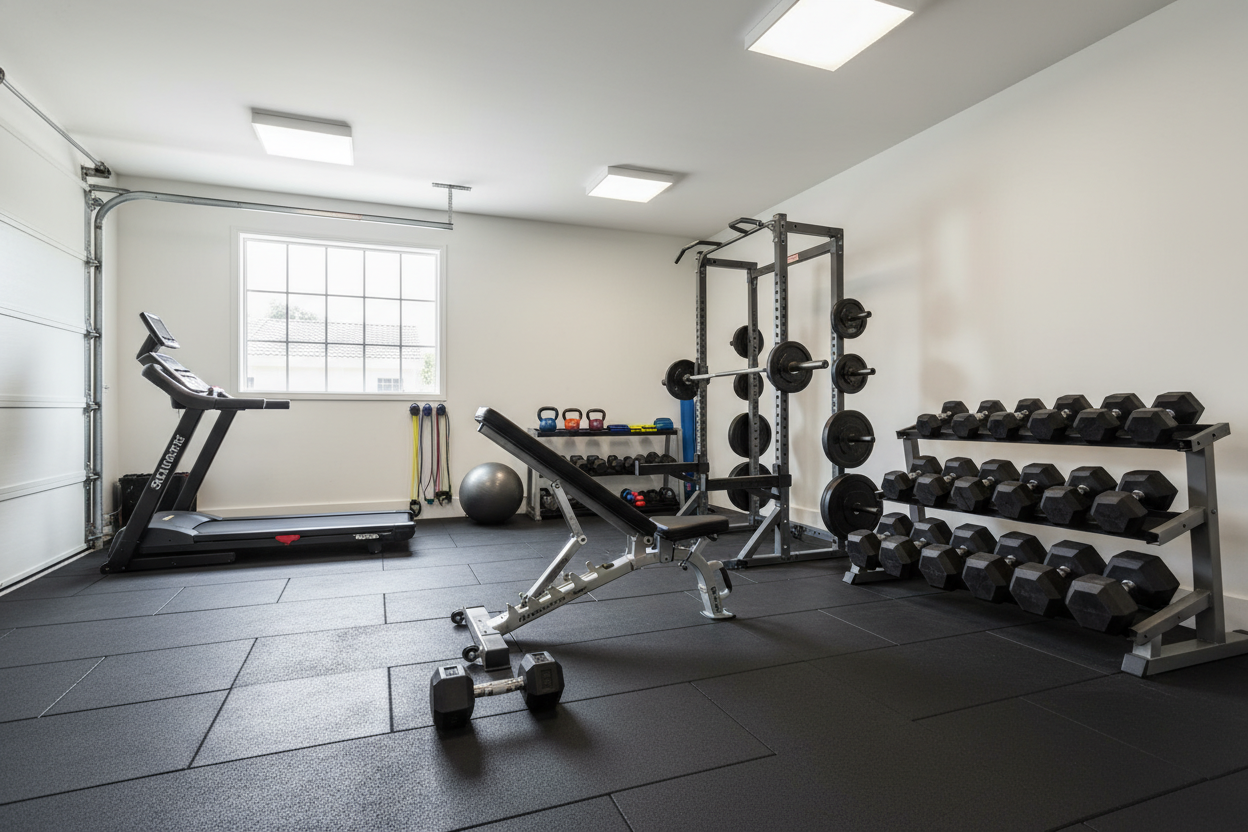
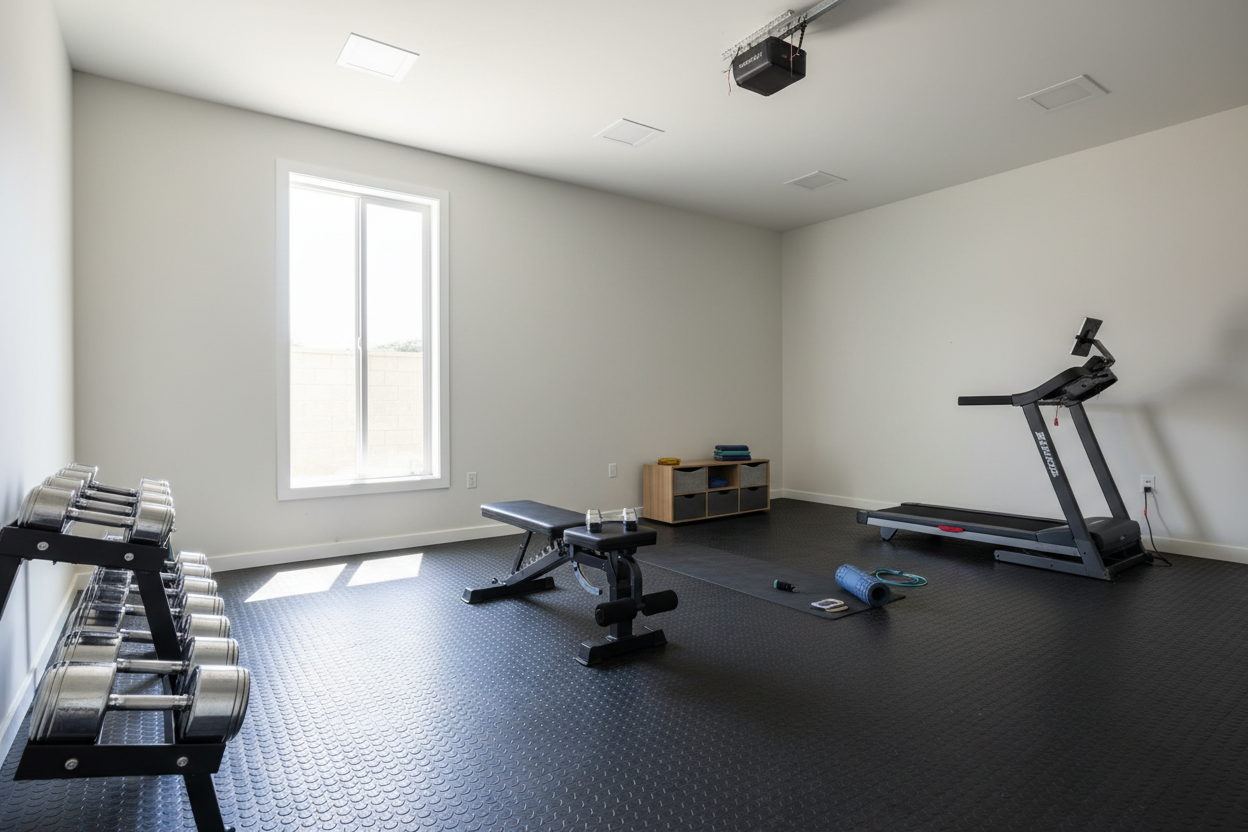
For a basement or a two-car garage, rolled rubber offers a clean, seamless look. It typically comes in 4-foot wide rolls with thicknesses ranging from 1/4-inch to 3/8-inch. Commercial gyms use this material because it minimizes tripping hazards.
Fewer seams mean less dirt and chalk getting trapped in the cracks over time. From a performance standpoint, rolled rubber provides a firm, slip-resistant surface that is perfect for agility drills and sled pushes.
The installation is slightly more permanent than dropping stall mats. You usually need to glue or double-sided tape the rolls to the subfloor. It is also more expensive, often running $2 to $3 per square foot. If you want a professional-looking space and don't plan on dropping heavy barbells from overhead, rolled rubber is an excellent choice.
Matching Your Floor to Your Training Style
Finding the right setup for workout efficiency means matching the material to your specific demands. If you mostly stick to minimalist home gym routines using kettlebells or a suspension trainer, a 3/8-inch rolled rubber floor is plenty.
You get the traction you need without paying for extreme shock absorption. On the other hand, if you are a powerlifter pulling 400 pounds off the floor, you absolutely need the 3/4-inch thickness of horse stall mats. Anything thinner will eventually allow the concrete underneath to crack.
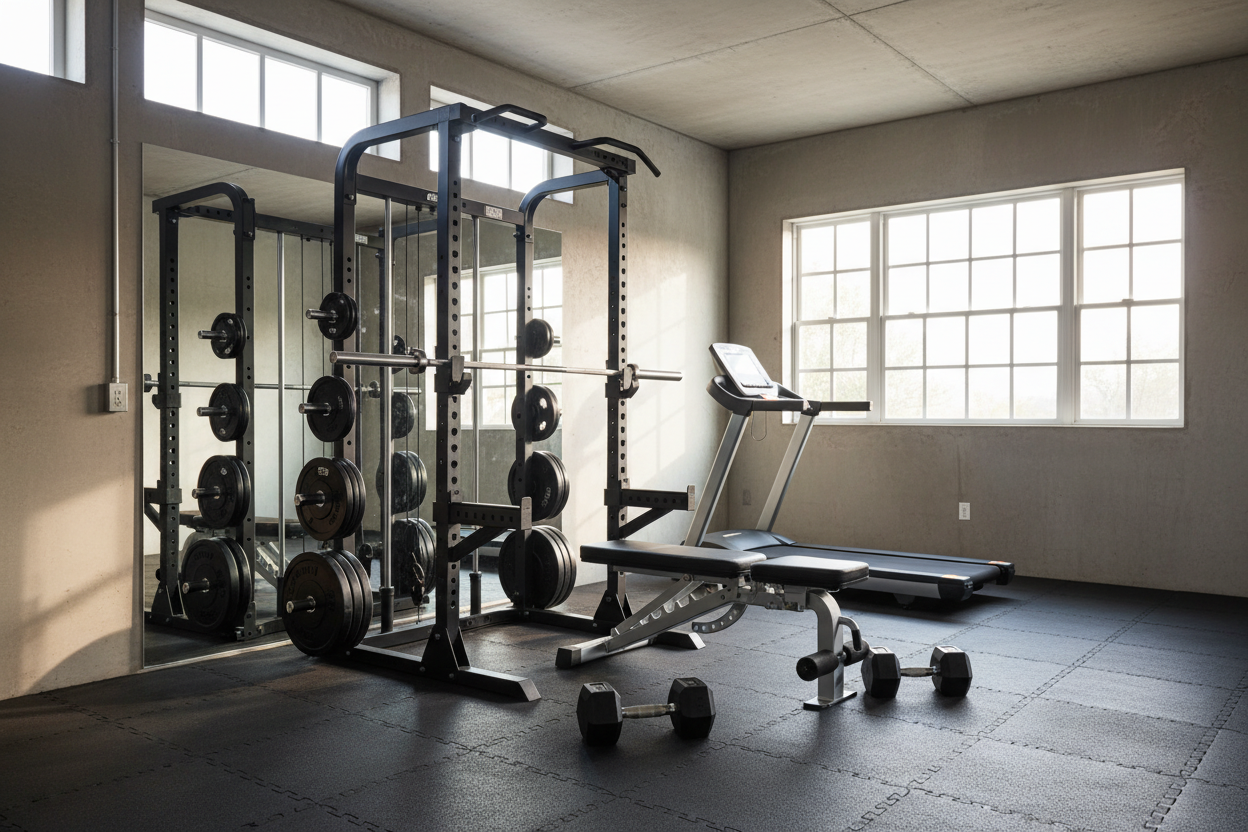
For those who do a mix of high-intensity interval training and light dumbbell work, a 1/2-inch interlocking rubber tile (not foam) offers a solid middle ground. Think about the heaviest weight you plan to drop and the most dynamic movement you plan to perform.
Your floor needs to handle your worst-case scenario. When I design a hybrid space for clients, I often put 3/8-inch rolled rubber across the whole room, then build an 8x8 foot platform using thicker stall mats specifically for barbell work.
Budget-Friendly Installation Tips
Before you start adapting any workout exercise for your home space, you need a stable surface. You don't need to hire a contractor to lay gym flooring.
For stall mats, the best cutting tool is a fresh utility knife. Place a 2x4 wooden board under the mat where you want to cut. This bends the rubber slightly, opening the seam as you score it. It usually takes three or four passes with the blade to get a clean cut. Do not try to cut through it in one slice.
To keep mats from shifting, flip them over and apply heavy-duty Gorilla tape along the bottom seams. This locks them together without permanently gluing them to your concrete floor. Leave a quarter-inch gap near the walls because rubber expands and contracts with temperature changes.
Maintenance and Cleaning for Workout Floors
Rubber is porous. Sweat, spilled pre-workout, and dead skin cells will eventually make it smell like a locker room if you don't stay on top of it. I recommend sweeping or vacuuming your floor twice a week to remove dirt and chalk dust.
Every two weeks, mop the surface using a mixture of warm water and a few drops of mild dish soap. Avoid harsh chemicals like bleach or ammonia. These will dry out the rubber, causing it to flake and crumble over time. If you have foam tiles, wipe them down with a simple antibacterial spray.
Frequently Asked Questions
What is the minimum thickness for dropping weights?
If you are dropping heavy barbells or dumbbells, you need at least 3/4-inch thick dense rubber. Anything thinner risks damaging the subfloor and the equipment.
Can I put gym flooring directly over carpet?
You can, but it's not ideal. The rubber will sink into the carpet padding, creating an uneven surface. For a stable base, lay down 5/8-inch plywood sheets over the carpet, then place your rubber mats on top.
How do I get rid of the new rubber smell?
Vulcanized rubber off-gasses for a few weeks. Wash the mats with a citrus-based cleaner like Simple Green, let them bake in the sun for a few days, and keep your gym well-ventilated.