
Chest Exercises EMG Insights for Maximum Muscle Activation
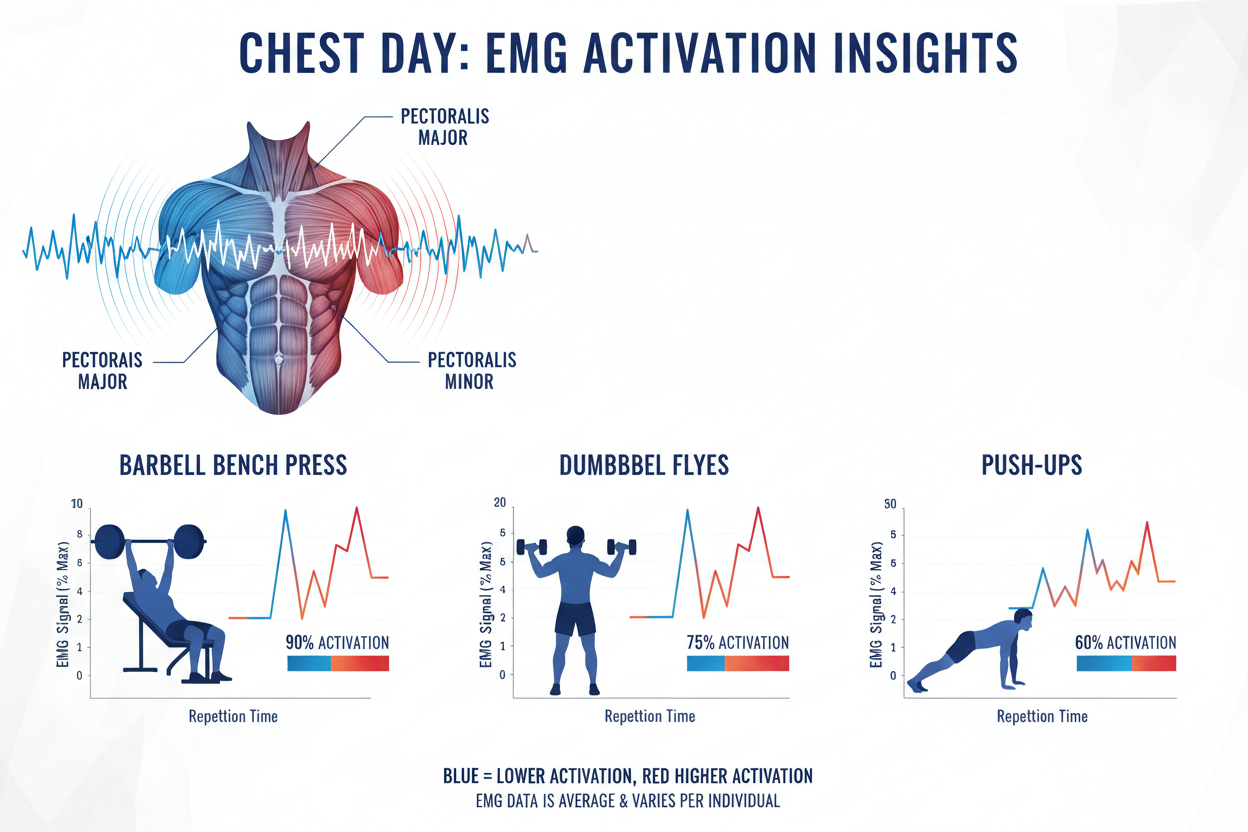
Understanding how different chest exercises activate the pectoral muscles can greatly improve workout efficiency. Electromyography (EMG) studies measure the electrical activity in muscles during exercise, providing objective data on which movements recruit muscle fibers most effectively. For anyone aiming to build strength, improve aesthetics, or enhance functional performance, chest EMG data can be an invaluable resource.
Why EMG Matters in Chest Training
Many people select chest exercises based on tradition or visual appeal, yet scientific measurements from EMG testing offer deeper insights. EMG readings show us which parts of the chest are engaged and to what degree. This allows for precise programming and avoids relying solely on guesswork. By knowing which exercises produce higher activation, you can tailor your training for optimal results while reducing time wasted on less effective movements.
Key Findings from Chest EMG Studies
According to several published biomechanical investigations, variations in bench press angle, grip width, and type of resistance can significantly alter pectoral activation. For example, incline pressing tends to recruit more of the clavicular head of the pectoralis major, whereas flat pressing emphasizes the sternal head. Fly movements, whether with cables or dumbbells, often provide more isolation but may result in lower overall EMG readings compared to compound lifts.
Best Chest Exercises EMG Research Highlights
- Barbell Bench Press (Flat): Consistently ranks among the highest for overall pectoral activation in EMG tests, engaging both sternal and clavicular fibers.
- Incline Dumbbell Press: Shows superior activation in the upper chest compared to flat pressing.
- Cable Fly: While overall activation is slightly lower, the constant tension from cables makes it ideal for isolation and muscle shaping.
- Weighted Dips (Chest Lean): When performed with torso leaning forward, EMG data reveals strong lower chest engagement.
Optimizing Your Training Based on EMG
The goal is not to blindly follow EMG rankings but to combine the most effective exercises for each area of the chest. For balanced development, a mix of compound lifts and isolation work is recommended. Compound movements create the bulk of strength and mass, while isolation exercises refine shape and symmetry.
Upper Chest Focus
If EMG data shows the incline dumbbell press as the superior upper chest activator, structure your routine to include this early in your workout when energy levels are highest. This maximizes your ability to lift heavier and stimulate the targeted fibers effectively.
Lower Chest Engagement
Weighted dips with a forward lean often score high in EMG readings for the lower chest. Including them towards the end of your routine helps finish the muscles with a strong pump while reinforcing strength in pressing patterns.
Personal Experience with EMG-Inspired Training
After years of plateauing on chest size, I incorporated EMG research into my programming. By replacing a secondary flat bench session with incline dumbbell presses and adding weighted dips, I noticed significant fullness in the upper and lower chest within three months. While anecdotal, the consistency of measurable improvements in my lifts supported the EMG-based adjustments, affirming the value of scientific guidance over habit-driven routines.
Practical Tips for Applying Chest EMG Insights
- Start workouts with heavy compound lifts in the plane of motion supported by EMG data for your target area.
- Use isolation exercises later for shaping and addressing weaker points.
- Pay attention to form and tempo; EMG activation can drop when technique falters.
- Rotate exercises every 6–8 weeks to avoid adaptation and maintain stimulus.
Limitations and Considerations
It’s important to remember that EMG results vary with individual anatomy, training experience, and execution. A high reading for one person may not mean identical activation for another. Combining EMG insights with self-assessment and progressive overload remains the most holistic approach to chest development.
Conclusion
Chest EMG studies offer practical guidance for building effective workouts. By leveraging these insights, you can prioritize exercises with proven activation levels, optimize muscle recruitment, and confidently progress towards strength and aesthetic goals. Whether you’re a beginner or seasoned lifter, aligning your training choices with solid physiological data can yield faster and more sustainable results.

%20studies%20measure%20the%20electrical%20activity%20in%20muscles%20during%20ex...)