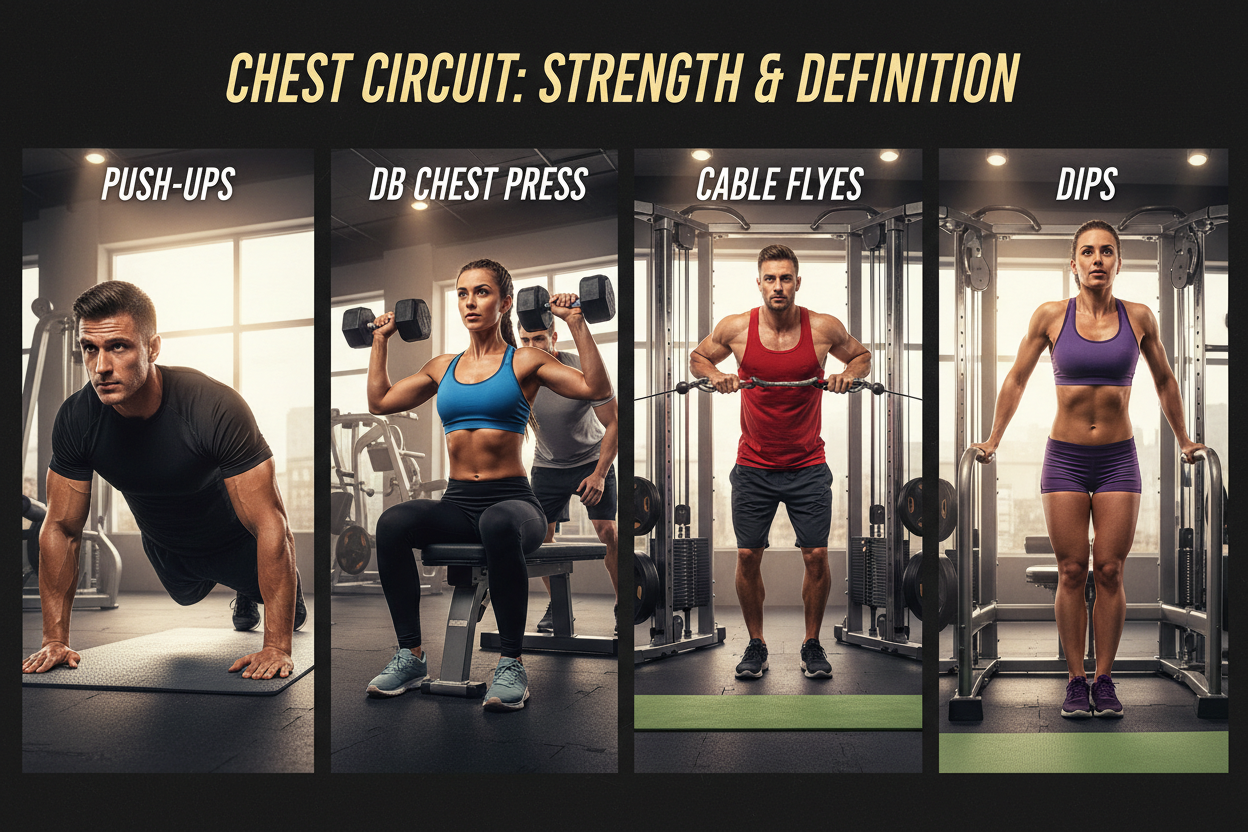
Chest Circuit Workout for Strength and Definition
Building a strong and well-defined chest takes consistent effort, proper technique, and a smart workout structure. One highly effective method to achieve this is through a chest circuit workout, which blends different exercises together in a sequence to maximize muscle engagement and minimize rest time. By working your chest in a circuit, you improve strength, endurance, and muscle definition at the same time.
Why Chest Circuit Training Works
Circuit training for chest muscles is designed to keep your heart rate elevated while targeting both upper and lower portions of the pectoral muscles. This approach not only develops muscular strength but also boosts cardiovascular fitness. Since rest periods are short, your muscles adapt to working under fatigue, which can improve functional strength in everyday activities and sports.
Key Principles for an Effective Chest Exercise Circuit
To design a productive chest circuit, choose exercises that target various angles and movement patterns. Incorporate both pressing and fly movements, and alternate between heavy compound lifts and lighter isolation exercises. The variety keeps your muscles challenged and promotes balanced development.
Example Chest Circuit Routine
Here’s a sample routine you can follow:
- Bench Press – 10 reps
- Push-Ups – 15 reps
- Incline Dumbbell Press – 12 reps
- Cable Fly – 15 reps
- Medicine Ball Push-Up Hold – 20 seconds
Perform each exercise back-to-back without resting. After completing all five movements, rest for 90 seconds. Repeat for 3–4 rounds depending on your fitness level.
Tips to Maximize Your Chest Circuit
Proper form should be the top priority to prevent injury and ensure muscle activation. Keep your shoulders retracted during presses, maintain a controlled tempo, and avoid locking your elbows fully at the top of pressing movements. Varying the tempo — such as slowing down the eccentric phase — can make the circuit more challenging and stimulate growth.
Progressive Overload for Continuous Gains
As with any workout plan, increasing resistance or reps over time is essential for progress. You can make your chest circuit tougher by adding weight to exercises, decreasing rest between movements, or adding an extra round to the workout.
Balancing Chest Training with Recovery
Although chest circuits are intense, recovery is vital for muscle growth. Avoid working your chest on consecutive days, and prioritize adequate sleep, hydration, and nutrition. Fit your chest workouts into a balanced plan that trains other major muscle groups to prevent muscular imbalances.
My Experience with Chest Circuit Workouts
When I first tried circuit training for chest, I was surprised by how demanding it felt compared to traditional strength training. After three weeks of consistent sessions, I noticed a significant improvement in definition and endurance during push-ups. The quick transitions between exercises kept me mentally engaged, and I became more aware of my form under fatigue. This helped me push harder in my regular bench press sessions as well.
Warm-Up and Cool-Down Essentials
Before starting any chest circuit, spend at least 5–10 minutes warming up. Include dynamic stretches like arm circles and light resistance band presses to activate your shoulders and chest safely. At the end of your circuit, perform lower-intensity movements such as chest stretches and foam rolling to aid recovery and reduce muscle stiffness.
Adjusting for Different Fitness Levels
Beginners can modify these circuits by reducing weight, lowering reps, or increasing rest time. Intermediate and advanced individuals can add resistance bands, change incline angles, or incorporate plyometric movements like explosive push-ups to challenge the muscles further.
The Benefits Go Beyond the Chest
While the primary goal is to strengthen and define the chest, circuit workouts also engage secondary muscles such as shoulders, triceps, and core. The elevated heart rate from the rapid exercise transitions can also promote overall fitness and calorie-burning, making it a great choice for those looking to combine strength and conditioning.
Whether performed at the gym or with minimal equipment at home, chest circuit training is a versatile and powerful way to elevate your upper body performance. With consistency, progressive load, and mindful recovery, you'll not only build a stronger chest but also enjoy better stamina and functional strength.