Carpet Tiles for Gym: Are They Actually Worth the Investment?
If you have ever tried doing burpees on a freezing concrete basement floor or cringed at the deafening echo of a dropped dumbbell in your garage, you know that your flooring choice makes or breaks your workout space. While heavy-duty rubber stall mats are the traditional go-to, they aren't always the most practical or aesthetically pleasing option for residential spaces. That is where carpet tiles for gym setups come into play.
Offering a unique blend of sound dampening, insulation, and modular flexibility, these tiles are rapidly becoming a favorite for North American home gym owners. But are they durable enough to handle heavy lifting and sweaty cardio sessions? In this guide, we will break down exactly what you need to know before laying down your new floor.
Key Takeaways
- Modular Convenience: If one tile gets damaged or stained, you can replace it without tearing up the entire floor.
- Insulation & Acoustics: Gym carpet tiles provide superior thermal insulation over concrete and drastically reduce room echo.
- Best For: Ideal for cardio zones, functional training, and light-to-moderate free weights. Heavy deadlifting still requires a dedicated lifting platform.
- Easy Installation: Most carpet tiles for gym floor applications feature peel-and-stick or interlocking designs, making them a weekend DIY project.
Choosing the Right Carpet Tiles for Gym Floor Spaces
Not all commercial carpets are created equal. When selecting a gym floor covering carpet tile, you need to look past the color and focus on the engineering. Here is what separates entry-level options from commercial-grade durability.
Pile Density and Material
For a fitness environment, you want a low-pile or flat-ribbed carpet. High-pile carpets (like the ones in your living room) will trap chalk, sweat, and dirt, and they compress unevenly under heavy equipment like power racks. Look for nylon or polypropylene fibers—these materials are naturally moisture-resistant and designed to withstand high foot traffic.
The Backing Matters
The secret to great home gym carpet tiles lies underneath. Opt for tiles with an integrated rubber or PVC backing. A thick, closed-cell foam or rubberized backing adds crucial shock absorption to protect your joints during plyometrics and prevents the tiles from sliding under lateral movements.
Space Planning and Installation
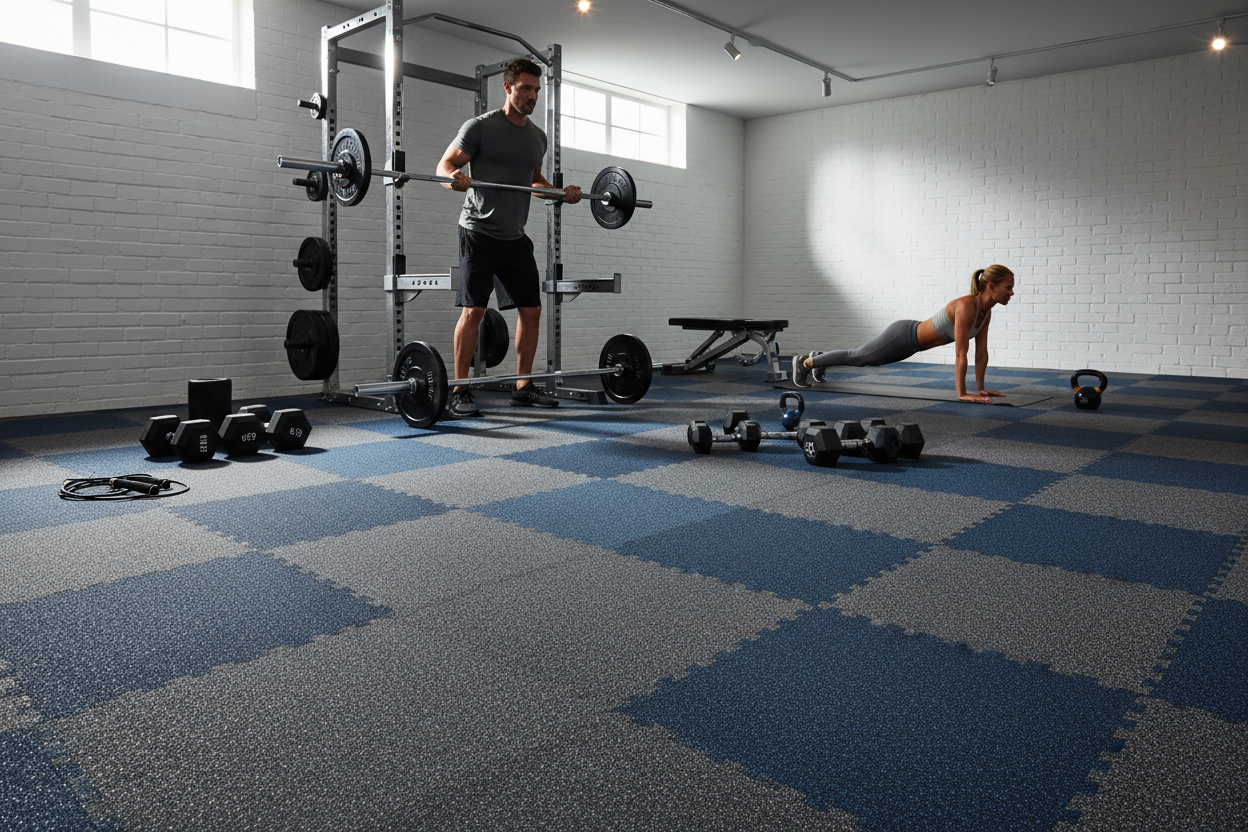
One of the biggest advantages of modular flooring is how well it adapts to awkward residential spaces. Whether you are outfitting a 10x10 spare bedroom or a sprawling unfinished basement, you can cut these tiles to fit around support columns, baseboards, and HVAC vents with nothing more than a utility knife and a straight edge.
Layout Pro-Tips
When planning your layout, consider a quarter-turn (parquet) installation method. By rotating every alternating tile 90 degrees, you hide the seams perfectly and create a professional, cohesive look. Ensure your subfloor is completely dry and swept clean of dust before applying any adhesive or double-sided carpet tape.
From Our Gym: Honest Take
We recently installed heavy-duty gym floor carpet tiles in our 400-square-foot basement testing facility. The immediate difference in room temperature and acoustics was mind-blowing—the space finally felt like a premium commercial studio rather than a cold storage room.
Here is my honest takeaway after six months of daily use: The traction is incredible for sled pushes and agility work. My chalked hands don't slip during push-ups, and vacuuming up spilled pre-workout powder takes seconds. However, I learned the hard way that you cannot drop a 45-pound bumper plate directly on them from overhead without risking subfloor damage. You still absolutely need a 3/4-inch rubber mat or a wooden platform under your squat rack for heavy barbell drops. But as an overall gym floor covering, the comfort and aesthetic upgrade are well worth the investment.
Frequently Asked Questions
Are carpet tiles good for a home gym?
Yes, they are excellent for home gyms focused on cardio, HIIT, machine work, and moderate free weights. They provide excellent traction, sound dampening, and insulation against cold subfloors.
How do you clean gym carpet tiles?
Routine maintenance is simple: vacuum weekly to remove dust and chalk. For sweat or liquid spills, a standard carpet spot-cleaner works perfectly. Because they are modular, you can literally pull up a ruined tile, wash it in the sink, and put it back once dry.
Can I put heavy equipment like a treadmill on carpet tiles?
Absolutely. Low-pile, high-density carpet tiles can easily support the weight of treadmills, ellipticals, and power racks without permanent crushing, especially if the tiles have a rigid PVC or heavy rubber backing.