Can You Really Get Big With Just 5 Exercises for Muscular Strength?
I remember the exact moment I realized my training was a mess. I was standing in my garage, surrounded by three different types of curl bars and a cable attachment I’d bought on a 2 AM Amazon bender, trying to figure out if I should do 'incline' or 'decline' flyes. My bench press hadn't moved in eighteen months, and my legs still looked like I spent my weekends exclusively on a couch. I was doing everything, yet achieving nothing. That’s when I stripped it all back to 5 exercises for muscular strength and finally started seeing the scale and the bar move in the right direction.
Quick Takeaways
- Focusing on five compound movements maximizes mechanical tension and hormonal response.
- Neurological adaptation happens faster when you stop constantly changing your routine.
- You don't need a massive commercial gym; a solid power rack and a barbell are the core requirements.
- Progressive overload is easier to track when you aren't managing twenty different variables.
The Trap of the 90-Minute Garage Gym 'Bro Split'
We’ve all been there. You see a pro bodybuilder’s routine online and think that if you just do six variations of bicep curls and four types of chest flyes, you’ll look like them. In reality, most of us in home gyms are just wasting valuable recovery energy. When you spend 90 minutes chasing a 'pump' with isolation moves, you’re often too fatigued to put real effort into the lifts that actually drive growth.
The 'bro split' is a trap because it prioritizes volume over intensity. I used to spend twenty minutes just setting up different cable angles. By the time I got to my heavy work, my central nervous system was fried. Real mechanical tension—the kind that forces a muscle to adapt and grow—comes from heavy, multi-joint movements. If you aren't adding weight to the bar every week, you aren't getting stronger; you're just exercising.
Why Less Variation Equals More Weight on the Bar
There is a concept called neurological adaptation. Your brain needs to learn how to efficiently fire the muscles required for a specific movement. When you rotate through 5 muscular strength exercises consistently, you get 'greasaning the groove.' You become technically proficient. When your technique is dialed in, you can safely push much heavier loads.
If you change your exercises every week, you never get past the 'clumsy' phase. You spend more time trying to figure out the balance of a new movement than you do actually straining against the weight. By narrowing your focus, you allow your body to master the movement pattern. This mastery is what allows you to eventually load a barbell with four plates instead of two. It isn’t boring; it’s effective.
The Only 5 Exercises for Muscular Strength You Actually Need
You don't need a 40-page PDF to get strong. You need to push, pull, and squat. These five movements cover every major muscle group in the body and provide the highest return on investment for every minute you spend in the gym.
1. The Heavy Barbell Squat
The squat is the undisputed king. It’s not just a leg exercise; it’s a full-body test of will. When you have 300 pounds on your back, your core, your lats, and even your upper back are screaming to keep you upright. I prefer a low-bar position because it allows me to move more weight by engaging the posterior chain, but the key is depth. If you aren't hitting parallel, you're leaving gains on the table.
I’ve tested dozens of racks, and you need something with 11-gauge steel to feel safe during a heavy squat. When you're grinding out that last rep, the last thing you want is a rack that wobbles. Squatting heavy once or twice a week is the fastest way to build overall body mass, period.
2. The Deadlift (or Heavy Hinge)
Nothing builds a thick back like pulling heavy weight off the floor. The deadlift is the ultimate 'functional' move. It targets the hamstrings, glutes, and the entire spinal erector chain. If you want that 'powerlifter look'—that thick, dense muscle that shows through a t-shirt—you have to deadlift.
I usually pull conventional, but a trap bar is a great alternative if you have lower back issues. The goal is the same: progressive overload. Start with a weight you can handle for five reps with perfect form, and add five pounds every single week. Eventually, you’ll be moving loads you never thought possible.
3. The Strict Overhead Press
Forget the seated dumbbell press for a while. The standing strict press is the true measure of upper body strength. Because you're standing, your entire core and glutes have to stabilize the load. It builds massive shoulders and triceps while teaching you how to stay rigid under pressure.
It’s a humbling lift. You won't be able to move nearly as much weight as you do on the bench, but the carryover to other movements is massive. A 200-pound overhead press is a hallmark of a truly strong individual.
4. The Bench Press (or Weighted Dips)
The bench press is the gold standard for horizontal pushing. While there are plenty of chest exercises to build strength, mastering the flat barbell bench is the most efficient way to pack meat onto your pecs and triceps. It allows for the greatest amount of weight to be moved compared to any other chest movement.
I recommend using a bar with a decent knurling so your hands don't slip when you're sweating. Focus on keeping your shoulder blades tucked and driving your feet into the floor. This isn't just a chest move; it’s a full-body effort when done correctly.
5. The Weighted Pull-Up (or Barbell Row)
To balance out all that pressing, you need a heavy pull. I’m a huge fan of the weighted pull-up. Once you can do ten bodyweight reps, start hanging plates from a belt. It builds width in the lats that rows just can't match. If you can't do pull-ups yet, the barbell row is your best friend.
Keep the rows heavy and the form strict. Don't use momentum to swing the weight up. You want your lats and rhomboids doing the work, not your ego. A strong back protects your shoulders and gives you that V-taper everyone is chasing.
Setting Up Your Space for the Basics
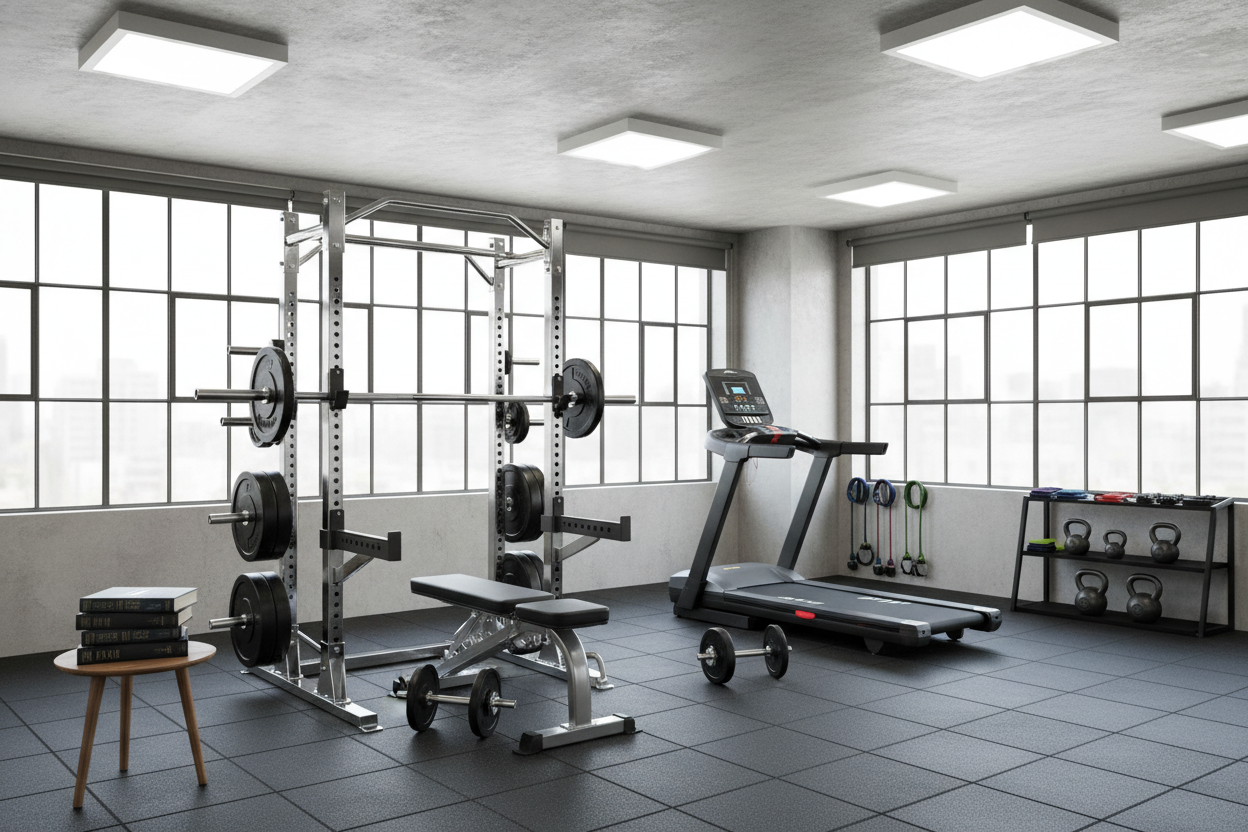
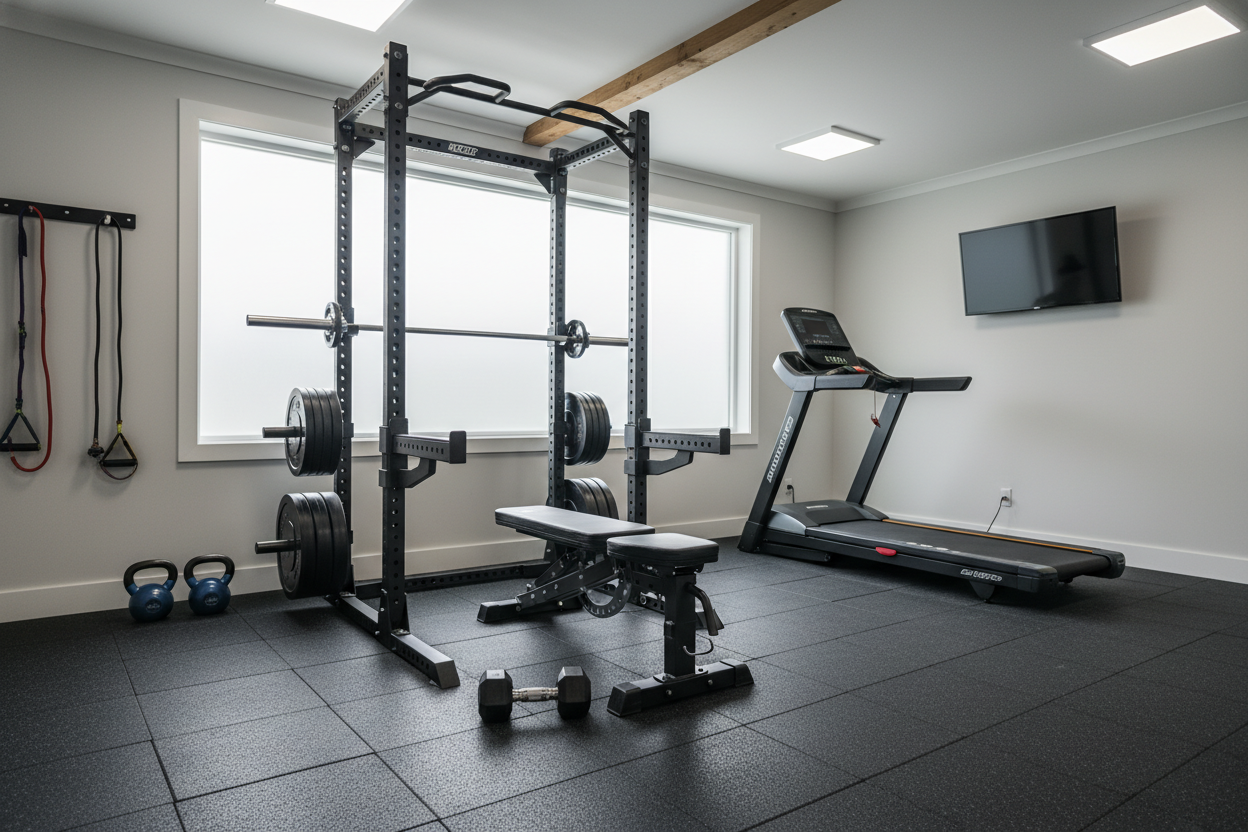
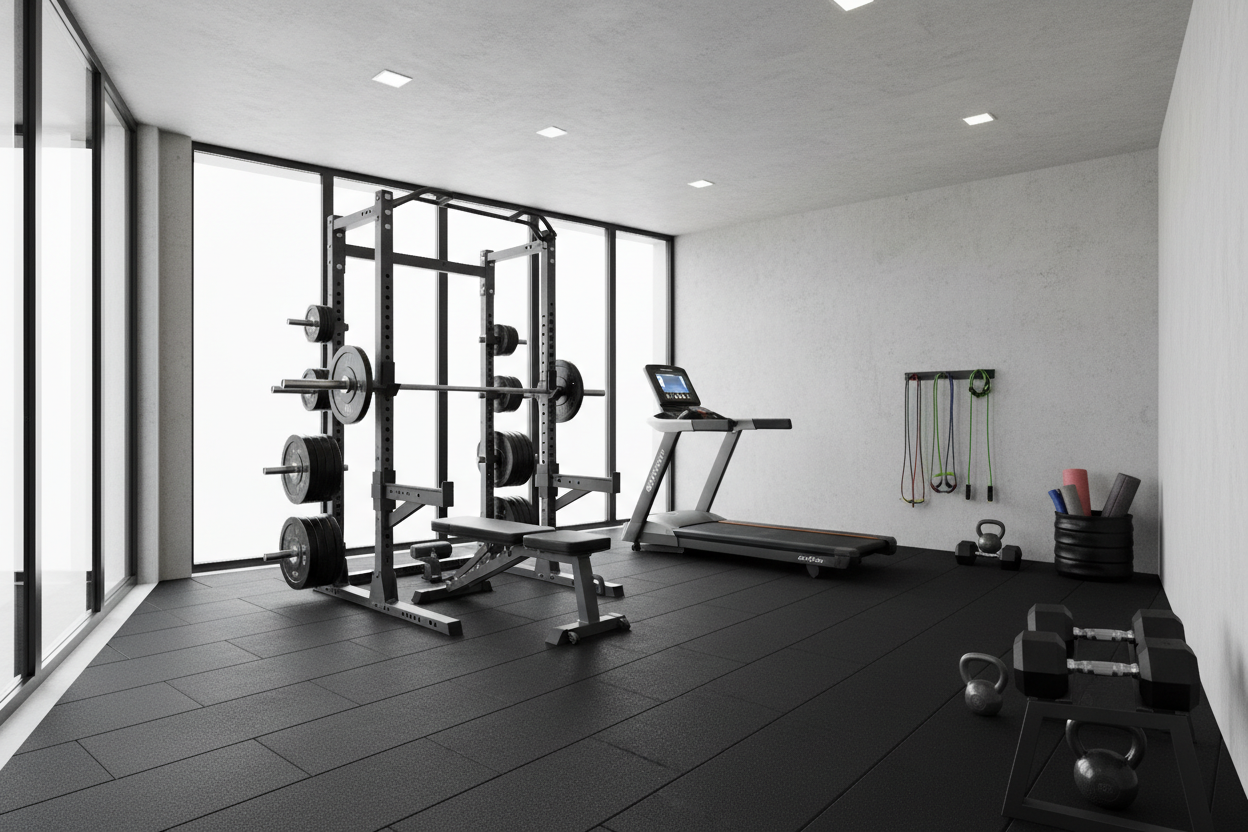
You don't need a 2,000-square-foot facility to get elite results. In fact, most of the best physiques I know were built in a one-car garage. You need a quality power rack, a 20kg barbell, and enough plates to keep you challenged. Investing in high-quality strength equipment is a one-time cost that pays dividends for decades.
One thing people overlook is the floor. If you're deadlifting 400+ pounds, you’re going to crack your concrete if you don't have protection. I use a heavy-duty gym flooring for home workout setup to dampen the noise and save my foundation. It also makes the garage a lot more comfortable when you're doing floor work or stretching.
How to Program This Minimalist Routine
The beauty of this is the simplicity. You can run an A/B split three days a week. Workout A: Squat, Bench, Row. Workout B: Deadlift, Overhead Press, Pull-up. Alternate them every time you hit the gym. This ensures you're hitting every movement frequently enough to stay sharp but gives you enough recovery time to actually grow.
Keep the sets between 3 and 5, and the reps between 5 and 8. This is the 'sweet spot' for both strength and hypertrophy. If you can do all your reps with a certain weight, add 2.5 to 5 pounds the next time. It’s not fancy, but it works better than any 'shred' program you'll find on Instagram.
Personal Experience: The 5-Pound Lesson
I spent years trying to 'confuse' my muscles. I’d do drop sets, supersets, and giant sets. I was exhausted but I looked exactly the same. When I finally committed to just these five lifts, I felt like a beginner again. I had to swallow my pride and lower the weight to get my form right. But once I did? My bench went from 225 to 315 in a year. The downside? I had to buy all new jeans because my quads finally decided to show up. Don't make the mistake of thinking 'more' is 'better.' Better is better.
FAQ
Can I add bicep curls to this?
Sure, if you have the energy at the end. But they are the dessert, not the main course. If you're too tired for heavy rows because you spent 20 minutes on curls, you're doing it wrong.
How often should I train?
Three days a week is plenty for most people. Recovery is where the actual muscle growth happens. If you're hitting these five lifts with high intensity, you'll need those rest days.
What if I don't have a barbell?
You can mimic these moves with heavy dumbbells, but you'll eventually run out of weight. For true muscular strength, the barbell is the most effective tool for loading.